What does 2 Kings 25:1 mean?
"And it came to pass in the ninth year of his reign, in the tenth month, in the tenth day of the month, that Nebuchadnezzar king of Babylon came, he, and all his host, against Jerusalem, and pitched against it; and they built forts against it round about." - 2 Kings 25:1

2 Kings 25:1 (KJV): "And it came to pass in the ninth year of his reign, in the tenth month, in the tenth day of the month, that Nebuchadnezzar king of Babylon came, he, and all his host, against Jerusalem, and pitched against it; and they built forts against it round about."
The verse from 2 Kings 25:1 captures a critical moment in the history of Israel – the siege of Jerusalem by the Babylonian king, Nebuchadnezzar. This event marked the end of the Kingdom of Judah and the fall of Jerusalem, leading to the exile of the Israelites to Babylon. The significance of this event in the history and theology of the Israelites is profound and provides important context for understanding the broader themes and symbolism in the biblical narrative.
One of the key themes in this verse is the concept of divine judgment and the consequences of disobedience to God's commands. Throughout the Bible, the Israelites are depicted as a chosen people who are expected to follow God's laws and live in accordance with His will. In the case of Judah, their failure to do so led to their downfall and the eventual destruction of Jerusalem. This theme of divine judgment serves as a powerful reminder of the importance of obedience and faithfulness to God in the biblical narrative.
The verse also highlights the theme of power and the geopolitical realities of the ancient Near East. The Babylonian empire, under the rule of Nebuchadnezzar, was a dominant force in the region at the time, and their invasion of Jerusalem signified the overwhelming might of their military power. This theme serves as a reminder of the transient nature of human power and the ultimate authority of God over the affairs of nations.
Furthermore, the verse also conveys a sense of impending doom and the inevitability of the fall of Jerusalem. The meticulous detail in the timing of the Babylonian siege – the ninth year of King Zedekiah's reign, in the tenth month, on the tenth day of the month – creates a sense of foreboding and impending catastrophe. This attention to detail serves to emphasize the precise fulfillment of God's judgment upon the kingdom of Judah.
Symbolism in this verse can be found in the depiction of Nebuchadnezzar and the Babylonian army as agents of divine judgment. Throughout the Bible, foreign powers are often used as instruments of God's will to bring about judgment and punishment on the Israelites. In this sense, Nebuchadnezzar and his army serve as symbols of God's authority and justice, executing His judgment upon the unfaithful kingdom of Judah.
In a broader theological context, the events described in this verse point to the overarching narrative of redemption and restoration in the Bible. While the fall of Jerusalem and the exile to Babylon were devastating events, they ultimately paved the way for the eventual return of the Israelites to their homeland and the restoration of Jerusalem. This theme of redemption and restoration is a central motif in the Bible, culminating in the ultimate act of redemption through the life, death, and resurrection of Jesus Christ.
In conclusion, 2 Kings 25:1 captures a pivotal moment in the history of Israel, conveying important themes of divine judgment, power, and impending doom. The verse serves as a stark reminder of the consequences of disobedience to God's commands and the transient nature of human power. However, the events described in this verse also point to the broader narrative of redemption and restoration that is central to the biblical message. Overall, this verse provides rich theological and historical significance that contributes to the overarching narrative of the Bible.
Have questions about 2 Kings 25:1?
Dive deeper into this scripture with Bible Chat — an AI-powered tool for exploring God's Word through conversation. Ask questions, get context, and grow in your understanding of the Bible.
Get Our Apps


2 Kings 25:1 Artwork

2 Kings 25:1 show King Nebuchadnezzar in war zone

2 Kings 25:1 show King Nebuchadnezzar and the army and the Temple

2 Kings 25:1 - "And it came to pass in the ninth year of his reign, in the tenth month, in the tenth day of the month, that Nebuchadnezzar king of Babylon came, he, and all his host, against Jerusalem, and pitched against it; and they built forts against it round about."

"And it came to pass in the ninth year of his reign, in the tenth month, in the tenth day of the month, that Nebuchadnezzar king of Babylon came, he, and all his host, against Jerusalem, and pitched against it; and they built forts against it round about." - 2 Kings 25:1

1 Kings 2:25 - "And king Solomon sent by the hand of Benaiah the son of Jehoiada; and he fell upon him that he died."

2 Kings 25:2 - "And the city was besieged unto the eleventh year of king Zedekiah."

2 Kings 21:25 - "Now the rest of the acts of Amon which he did, are they not written in the book of the chronicles of the kings of Judah?"

2 Kings 25:28 - "And he spake kindly to him, and set his throne above the throne of the kings that were with him in Babylon;"

2 Kings 2:25 - "And he went from thence to mount Carmel, and from thence he returned to Samaria."

2 Kings 25:12 - "But the captain of the guard left of the poor of the land to be vinedressers and husbandmen."

Proverbs 25:2 - "It is the glory of God to conceal a thing: but the honour of kings is to search out a matter."

2 Kings 25:20 - "And Nebuzar-adan captain of the guard took these, and brought them to the king of Babylon to Riblah:"

Jehoiachin is released from Babylonian jail 2 kings 25: 27
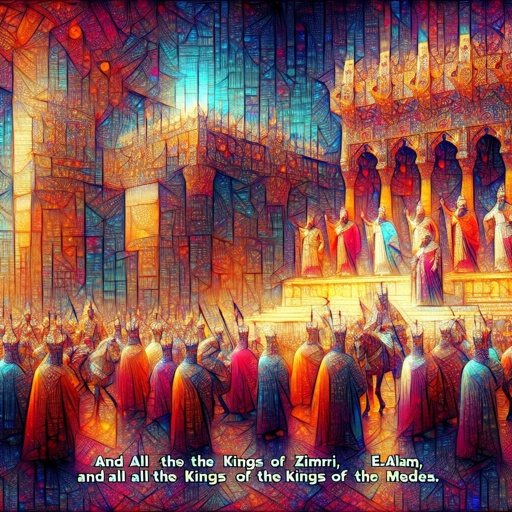
Jeremiah 25:25 - "And all the kings of Zimri, and all the kings of Elam, and all the kings of the Medes,"

"And the city was besieged unto the eleventh year of king Zedekiah." - 2 Kings 25:2

2 Kings 25:3 - "And on the ninth day of the fourth month the famine prevailed in the city, and there was no bread for the people of the land."

2 Kings 25:6 - "So they took the king, and brought him up to the king of Babylon to Riblah; and they gave judgment upon him."

2 Kings 25:14 - "And the pots, and the shovels, and the snuffers, and the spoons, and all the vessels of brass wherewith they ministered, took they away."

1 Kings 3:25 - "And the king said, Divide the living child in two, and give half to the one, and half to the other."

"And king Solomon sent by the hand of Benaiah the son of Jehoiada; and he fell upon him that he died." - 1 Kings 2:25

2 Kings 25:10 - "And all the army of the Chaldees, that were with the captain of the guard, brake down the walls of Jerusalem round about."

2 Kings 25:18 - "¶ And the captain of the guard took Seraiah the chief priest, and Zephaniah the second priest, and the three keepers of the door:"

2 Chronicles 25:26 - "Now the rest of the acts of Amaziah, first and last, behold, are they not written in the book of the kings of Judah and Israel?"

2 Kings 25:15 - "And the firepans, and the bowls, and such things as were of gold, in gold, and of silver, in silver, the captain of the guard took away."

1 Kings 14:25 - "¶ And it came to pass in the fifth year of king Rehoboam, that Shishak king of Egypt came up against Jerusalem:"

2 Kings 8:25 - "¶ In the twelfth year of Joram the son of Ahab king of Israel did Ahaziah the son of Jehoram king of Judah begin to reign."

1 Kings 6:25 - "And the other cherub was ten cubits: both the cherubims were of one measure and one size."

2 Kings 25:26 - "And all the people, both small and great, and the captains of the armies, arose, and came to Egypt: for they were afraid of the Chaldees."

2 Kings 25:30 - "And his allowance was a continual allowance given him of the king, a daily rate for every day, all the days of his life."

2 Kings 25:25 - "But it came to pass in the seventh month, that Ishmael the son of Nethaniah, the son of Elishama, of the seed royal, came, and ten men with him, and smote Gedaliah, that he died, and the Jews and the Chaldees that were with him at Mizpah."