What does 2 Kings 23:9 mean?
"Nevertheless the priests of the high places came not up to the altar of the LORD in Jerusalem, but they did eat of the unleavened bread among their brethren." - 2 Kings 23:9

2 Kings 23:9 (KJV) states, "Nevertheless the priests of the high places came not up to the altar of the Lord in Jerusalem, but they did eat of the unleavened bread among their brethren."
In order to understand the full significance of this verse, it is important to consider the historical context and the events leading up to it. This verse is part of the account of King Josiah's religious reforms in Judah. Josiah became king at a young age and sought to restore the worship of Yahweh and eliminate idolatry in the land. In 2 Kings 23, we see the culmination of his efforts as he destroys the altars and images of foreign gods throughout Judah.
The verse specifically addresses the priests of the high places, who were responsible for performing religious rituals at the pagan sanctuaries scattered throughout the land. These high places were sites of idolatrous worship and were a significant threat to the proper worship of Yahweh in Jerusalem.
When the verse says "the priests of the high places came not up to the altar of the Lord in Jerusalem," it is highlighting the fact that despite the eradication of idolatrous practices, these priests did not give up their positions or reject their previous beliefs. Instead, they continued to hold onto their roles and practices, even though they were in direct contradiction to the worship of Yahweh that had been reestablished in Jerusalem.
The mention of the priests eating unleavened bread among their brethren is significant in light of the symbolism associated with unleavened bread in the Old Testament. During the time of Passover, the Israelites were commanded to eat unleavened bread as a symbol of their hasty departure from Egypt, where they did not have time to let their bread rise. This unleavened bread also became a symbol of the removal of sin and impurity from their lives.
In this context, the fact that the priests of the high places were eating unleavened bread among their brethren carries a symbolic meaning. It suggests that despite their continued involvement in idolatrous practices, they were outwardly conforming to the religious observances of the people of Judah. This could be seen as an attempt to maintain the appearance of religious conformity, while still holding onto their old ways.
This verse highlights the complex nature of religious reform and the challenges inherent in transforming deeply ingrained belief systems and practices. It serves as a reminder that external changes to religious practices do not always result in true spiritual transformation. The priests of the high places may have been following the letter of the law by participating in the observances of unleavened bread, but their hearts were still far from the worship of Yahweh.
The broader themes of this verse include the struggle for spiritual purity and the importance of genuine faith and obedience. It also serves as a cautionary tale about the dangers of religious hypocrisy and the potential for outward conformity to mask inner unfaithfulness.
In conclusion, 2 Kings 23:9 is a verse that holds significant meaning within the context of King Josiah's religious reforms. It serves as a reminder of the complexities of religious transformation and the challenge of addressing entrenched belief systems. It also underscores the importance of genuine faith and obedience in the worship of Yahweh. The symbolism of the priests of the high places eating unleavened bread among their brethren adds depth to the interpretation of this verse, highlighting the tension between outward conformity and true spiritual transformation.
Have questions about 2 Kings 23:9?
Dive deeper into this scripture with Bible Chat — an AI-powered tool for exploring God's Word through conversation. Ask questions, get context, and grow in your understanding of the Bible.
Get Our Apps


2 Kings 23:9 Artwork

2 Kings 23:9 - "Nevertheless the priests of the high places came not up to the altar of the LORD in Jerusalem, but they did eat of the unleavened bread among their brethren."

"Nevertheless the priests of the high places came not up to the altar of the LORD in Jerusalem, but they did eat of the unleavened bread among their brethren." - 2 Kings 23:9

2 Kings 9:23 - "And Joram turned his hands, and fled, and said to Ahaziah, There is treachery, O Ahaziah."

2 Chronicles 9:23 - "¶ And all the kings of the earth sought the presence of Solomon, to hear his wisdom, that God had put in his heart."

2 Kings 23:23 - "But in the eighteenth year of king Josiah, wherein this passover was holden to the LORD in Jerusalem."

"And Joram turned his hands, and fled, and said to Ahaziah, There is treachery, O Ahaziah." - 2 Kings 9:23

2 Kings 8:23 - "And the rest of the acts of Joram, and all that he did, are they not written in the book of the chronicles of the kings of Judah?"
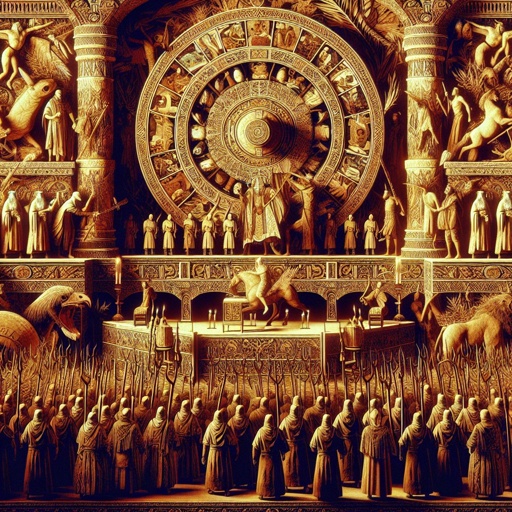
2 Kings 23:22 - "Surely there was not holden such a passover from the days of the judges that judged Israel, nor in all the days of the kings of Israel, nor of the kings of Judah;"

2 Kings 23:28 - "Now the rest of the acts of Josiah, and all that he did, are they not written in the book of the chronicles of the kings of Judah?"

2 Kings 3:23 - "And they said, This is blood: the kings are surely slain, and they have smitten one another: now therefore, Moab, to the spoil."

2 Kings 23:1 - "And the king sent, and they gathered unto him all the elders of Judah and of Jerusalem."

"¶ And all the kings of the earth sought the presence of Solomon, to hear his wisdom, that God had put in his heart." - 2 Chronicles 9:23

2 Kings 21:23 - "¶ And the servants of Amon conspired against him, and slew the king in his own house."

2 kings 9:34-36

1 Kings 9:23 - "These were the chief of the officers that were over Solomon's work, five hundred and fifty, which bare rule over the people that wrought in the work."

"But in the eighteenth year of king Josiah, wherein this passover was holden to the LORD in Jerusalem." - 2 Kings 23:23

2 Chronicles 9:22 - "And king Solomon passed all the kings of the earth in riches and wisdom."

2 Kings 9:9 - "And I will make the house of Ahab like the house of Jeroboam the son of Nebat, and like the house of Baasha the son of Ahijah:"

2 Kings 23:37 - "And he did that which was evil in the sight of the LORD, according to all that his fathers had done."

2 Kings 23:32 - "And he did that which was evil in the sight of the LORD, according to all that his fathers had done."

2 Kings 23:11 - "And he took away the horses that the kings of Judah had given to the sun, at the entering in of the house of the LORD, by the chamber of Nathan-melech the chamberlain, which was in the suburbs, and burned the chariots of the sun with fire."

2 Kings 23:21 - "¶ And the king commanded all the people, saying, Keep the passover unto the LORD your God, as it is written in the book of this covenant."

2 Kings 23:7 - "And he brake down the houses of the sodomites, that were by the house of the LORD, where the women wove hangings for the grove."

2 Kings 15:23 - "¶ In the fiftieth year of Azariah king of Judah Pekahiah the son of Menahem began to reign over Israel in Samaria, and reigned two years."

2 Kings 23:14 - "And he brake in pieces the images, and cut down the groves, and filled their places with the bones of men." The image should not depict explicit or offensive content but be symbolic.

2 Kings 9:4 - "¶ So the young man, even the young man the prophet, went to Ramoth-gilead."

2 Kings 9:29 - "And in the eleventh year of Joram the son of Ahab began Ahaziah to reign over Judah."

Generate Image of Valley of Hinnom With 2 kings 23 verse 10 quoeted within it

2 Kings 23:20 - "And he slew all the priests of the high places that were there upon the altars, and burned men's bones upon them, and returned to Jerusalem."

"And the rest of the acts of Joram, and all that he did, are they not written in the book of the chronicles of the kings of Judah?" - 2 Kings 8:23