What does 2 Kings 23:31 mean?
"¶ Jehoahaz was twenty and three years old when he began to reign; and he reigned three months in Jerusalem. And his mother's name was Hamutal, the daughter of Jeremiah of Libnah." - 2 Kings 23:31
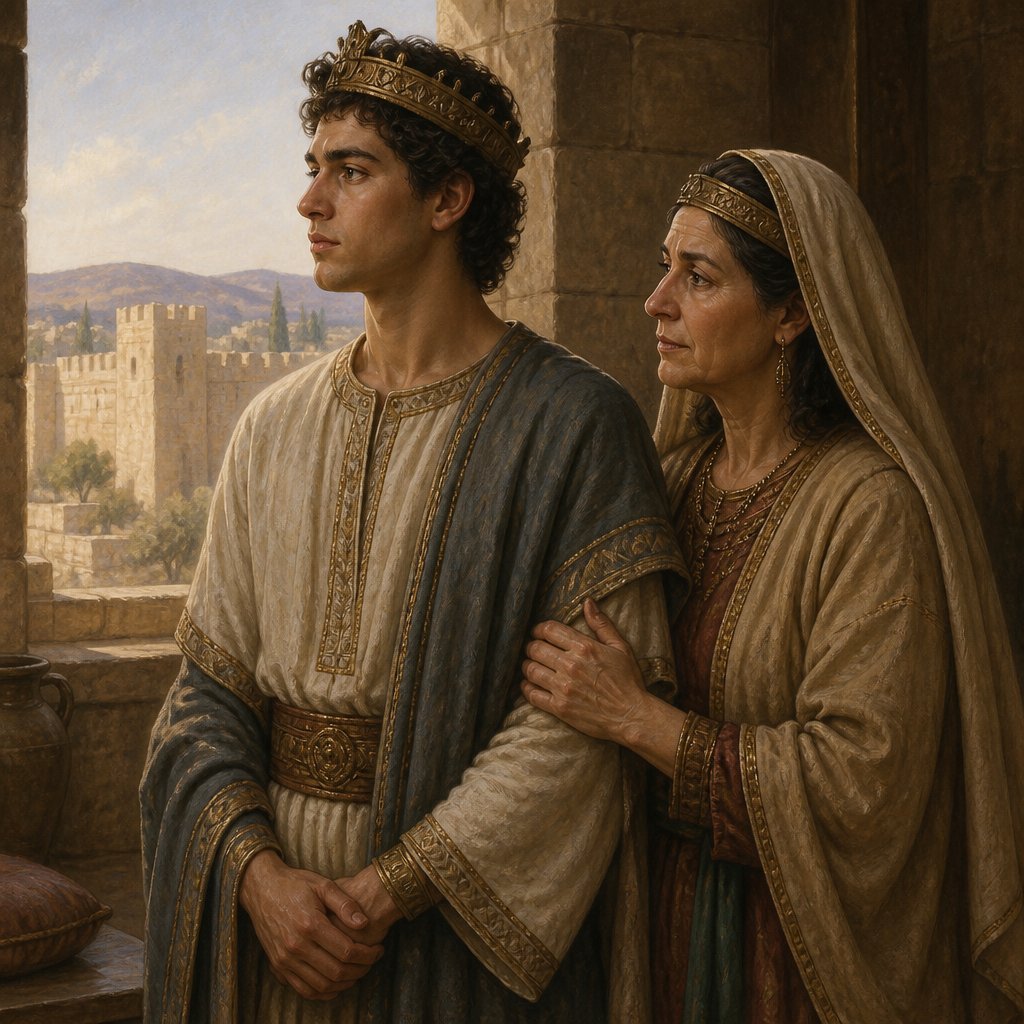
The verse 2 Kings 23:31 from the King James Version of the Bible reads, "Jehoahaz was twenty and three years old when he began to reign; and he reigned three months in Jerusalem. And his mother's name was Hamutal, the daughter of Jeremiah of Libnah."
2 Kings 23:31 is part of a larger narrative in the Old Testament that details the reign of various kings in the kingdoms of Israel and Judah. This particular verse refers to the brief reign of Jehoahaz, who only ruled for three months before being succeeded by his brother Jehoiakim.
To understand the meaning and significance of this verse, it is important to consider the context in which it appears. At this point in the biblical narrative, the kingdom of Judah was in a state of turmoil. The people had turned away from God and were engaging in idolatry and other sinful practices. This led to a series of weak and ineffective kings who were unable to lead the nation back to God.
Jehoahaz's reign is a part of this larger pattern of unfaithful leadership in Judah. His short reign reflects the unstable and turbulent political climate of the time. The fact that he only ruled for three months highlights the lack of stability and continuity in the kingdom. It also serves as a reminder of the consequences of turning away from God, as the nation struggled under ineffective leadership.
The mention of Jehoahaz's mother, Hamutal, also holds significance. In biblical times, the mother of a king often held a position of influence and power. Hamutal's identity as the daughter of Jeremiah of Libnah is a detail that would have been important to the original audience, as it establishes her lineage and social standing. This information would have contributed to the contemporary understanding of Jehoahaz's reign and the political dynamics during that time.
Symbolism plays a significant role in this verse as well. The brevity of Jehoahaz's reign symbolizes the fleeting nature of earthly power and the consequences of unfaithfulness to God. It serves as a cautionary tale about the importance of serving God faithfully and the futility of placing one's trust in human leaders.
Furthermore, the mention of Jehoahaz's mother and her lineage may also carry symbolic significance. In biblical literature, genealogy often holds symbolic meaning, and the inclusion of this detail may serve to underscore the legitimacy of Jehoahaz's claim to the throne, while also reminding the readers of the importance of lineage and heritage in the context of Israel's monarchy.
Overall, 2 Kings 23:31 serves as a poignant reminder of the consequences of unfaithfulness and the fleeting nature of human power. It also underscores the importance of leadership and the impact it can have on a nation. By delving into the historical and cultural context of this verse, as well as considering its symbolic significance, we can gain a deeper understanding of the message it conveys and its relevance to the larger biblical narrative.
Have questions about 2 Kings 23:31?
Dive deeper into this scripture with Bible Chat — an AI-powered tool for exploring God's Word through conversation. Ask questions, get context, and grow in your understanding of the Bible.
Get Our Apps


2 Kings 23:31 Artwork

2 Kings 23:31 - "¶ Jehoahaz was twenty and three years old when he began to reign; and he reigned three months in Jerusalem. And his mother's name was Hamutal, the daughter of Jeremiah of Libnah."
"¶ Jehoahaz was twenty and three years old when he began to reign; and he reigned three months in Jerusalem. And his mother's name was Hamutal, the daughter of Jeremiah of Libnah." - 2 Kings 23:31

2 Samuel 23:31 - "Abi-albon the Arbathite, Azmaveth the Barhumite,"

2 Kings 23:23 - "But in the eighteenth year of king Josiah, wherein this passover was holden to the LORD in Jerusalem."

2 Kings 15:31 - "And the rest of the acts of Pekah, and all that he did, behold, they are written in the book of the chronicles of the kings of Israel."

2 Kings 8:23 - "And the rest of the acts of Joram, and all that he did, are they not written in the book of the chronicles of the kings of Judah?"
2 Kings 23:22 - "Surely there was not holden such a passover from the days of the judges that judged Israel, nor in all the days of the kings of Israel, nor of the kings of Judah;"

2 Kings 23:28 - "Now the rest of the acts of Josiah, and all that he did, are they not written in the book of the chronicles of the kings of Judah?"

2 Kings 3:23 - "And they said, This is blood: the kings are surely slain, and they have smitten one another: now therefore, Moab, to the spoil."

"Abi-albon the Arbathite, Azmaveth the Barhumite," - 2 Samuel 23:31

2 Kings 9:31 - "And as Jehu entered in at the gate, she said, Had Zimri peace, who slew his master?"

2 Kings 23:1 - "And the king sent, and they gathered unto him all the elders of Judah and of Jerusalem."

2 Kings 21:23 - "¶ And the servants of Amon conspired against him, and slew the king in his own house."

2 Kings 19:31 - "For out of Jerusalem shall go forth a remnant, and they that escape out of mount Zion: the zeal of the LORD of hosts shall do this."

2 Kings 9:23 - "And Joram turned his hands, and fled, and said to Ahaziah, There is treachery, O Ahaziah."

2 Kings 6:31 - "Then he said, God do so and more also to me, if the head of Elisha the son of Shaphat shall stand on him this day."

"But in the eighteenth year of king Josiah, wherein this passover was holden to the LORD in Jerusalem." - 2 Kings 23:23

"And the rest of the acts of Pekah, and all that he did, behold, they are written in the book of the chronicles of the kings of Israel." - 2 Kings 15:31

2 Kings 23:37 - "And he did that which was evil in the sight of the LORD, according to all that his fathers had done."

2 Kings 23:32 - "And he did that which was evil in the sight of the LORD, according to all that his fathers had done."

2 Kings 23:11 - "And he took away the horses that the kings of Judah had given to the sun, at the entering in of the house of the LORD, by the chamber of Nathan-melech the chamberlain, which was in the suburbs, and burned the chariots of the sun with fire."

2 Kings 23:21 - "¶ And the king commanded all the people, saying, Keep the passover unto the LORD your God, as it is written in the book of this covenant."

2 Kings 23:7 - "And he brake down the houses of the sodomites, that were by the house of the LORD, where the women wove hangings for the grove."

2 Kings 17:31 - "And the Avites made Nibhaz and Tartak, and the Sepharvites burnt their children in fire to Adrammelech and Anammelech, the gods of Sepharvaim." The image should not depict explicit or offensive content but be symbolic.

2 Chronicles 9:23 - "¶ And all the kings of the earth sought the presence of Solomon, to hear his wisdom, that God had put in his heart."

2 Kings 15:23 - "¶ In the fiftieth year of Azariah king of Judah Pekahiah the son of Menahem began to reign over Israel in Samaria, and reigned two years."

2 Kings 10:31 - "But Jehu took no heed to walk in the law of the LORD God of Israel with all his heart: for he departed not from the sins of Jeroboam, which made Israel to sin."

2 Kings 23:9 - "Nevertheless the priests of the high places came not up to the altar of the LORD in Jerusalem, but they did eat of the unleavened bread among their brethren."

2 Kings 23:14 - "And he brake in pieces the images, and cut down the groves, and filled their places with the bones of men." The image should not depict explicit or offensive content but be symbolic.

Proverbs 31:4 - "It is not for kings, O Lemuel, it is not for kings to drink wine; nor for princes strong drink:"