What does 2 Kings 1:9 mean?
"Then the king sent unto him a captain of fifty with his fifty. And he went up to him: and, behold, he sat on the top of an hill. And he spake unto him, Thou man of God, the king hath said, Come down." - 2 Kings 1:9
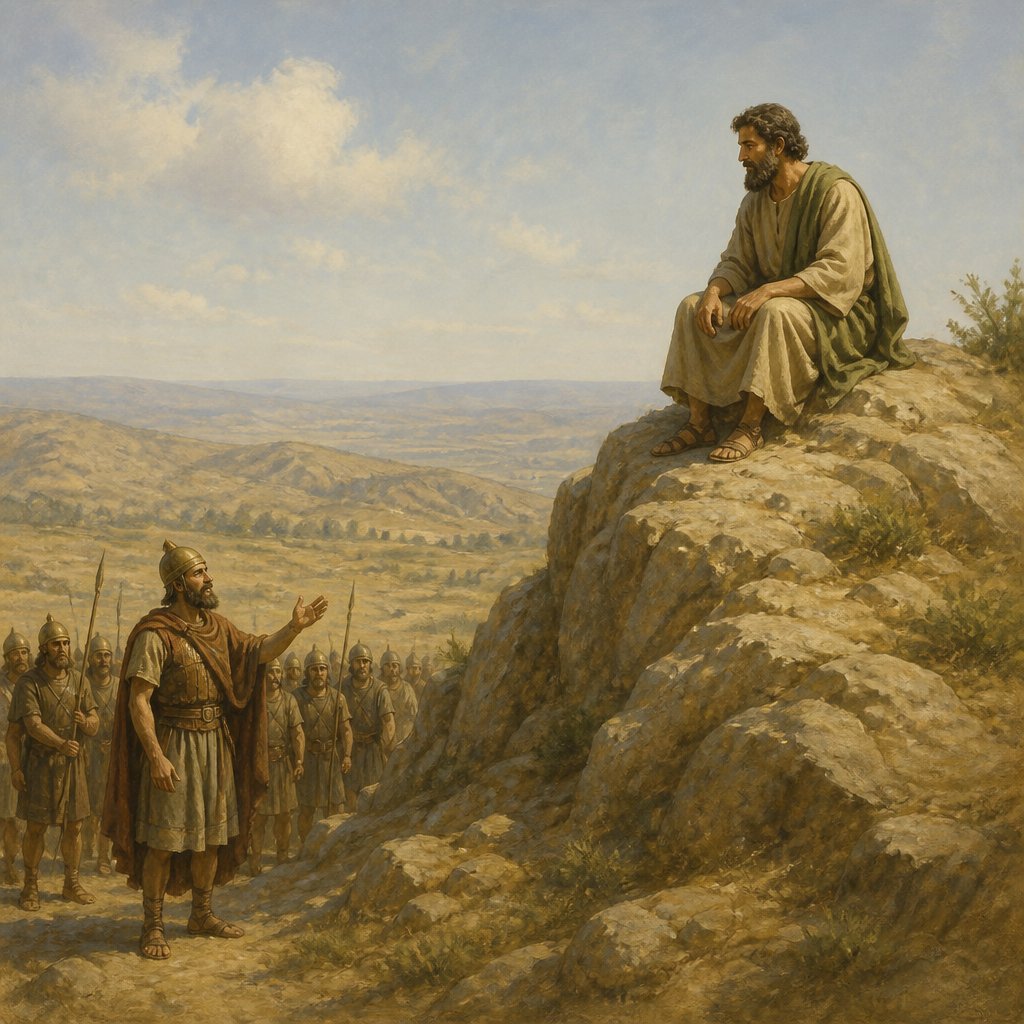
2 Kings 1:9 (KJV) states, "Then the king sent unto him a captain of fifty with his fifty. And he went up to him: and, behold, he sat on the top of an hill. And he spake unto him, Thou man of God, the king hath said, Come down."
This verse is part of the story of the prophet Elijah and his encounter with King Ahaziah's messengers. The context of this verse is crucial to understanding its full meaning and significance. This verse takes place during a time of political and spiritual turmoil in the land of Israel. King Ahaziah had fallen ill, and instead of seeking God for guidance and healing, he sent messengers to inquire of a pagan god, Baal-Zebub, the god of Ekron. This act angered the Lord, and He sent the prophet Elijah to intercept the messengers and deliver a strong message to the king. It is within this context that the captain of fifty is sent to confront Elijah.
The themes present in 2 Kings 1:9 are authority, faithfulness, and the sovereignty of God. The captain of fifty represents the earthly authority and power of the king, while Elijah represents the spiritual authority and power of God. The captain's insistence that Elijah come down signifies the king's attempt to assert his authority over God's messenger. The confrontation between the captain and Elijah serves as a demonstration of the conflict between the earthly powers and the divine authority of God.
The symbolism in this verse is rich and multi-layered. The hill where Elijah sat on top represents the spiritual high ground that the prophet occupies. It symbolizes his closeness to God and his elevated status as a man of God. The act of speaking to Elijah as "Thou man of God" acknowledges Elijah's divine calling and the authority with which he speaks. It also underscores the contrast between the worldly power of the king and the spiritual authority of the prophet.
Elijah's refusal to come down from the hill carries a deeper spiritual meaning. It signifies his unwavering faithfulness to God and his refusal to compromise his obedience to God's commands. By refusing to come down, he maintains his position of spiritual strength and demonstrates that he will not be swayed by the demands of earthly authority. This act of defiance serves as a powerful symbol of the prophet's unwavering faith and commitment to God.
The verse also highlights the sovereignty of God over human authorities. Despite the captain's demands, Elijah remains unmoved, knowing that he is acting in accordance with God's will. This emphasizes the overarching power and authority of God over earthly kings and their messengers. It serves as a reminder that God's will cannot be subverted by human authority, and that His divine purposes will ultimately prevail.
In conclusion, 2 Kings 1:9 is a pivotal verse in the narrative of Elijah's confrontation with King Ahaziah's messengers. It conveys powerful themes of spiritual authority, faithfulness, and the sovereignty of God. The verse's rich symbolism underscores the ongoing struggle between earthly powers and divine authority, and serves as a timeless reminder of the unwavering faithfulness and obedience to God that believers are called to emulate.
Have questions about 2 Kings 1:9?
Dive deeper into this scripture with Bible Chat — an AI-powered tool for exploring God's Word through conversation. Ask questions, get context, and grow in your understanding of the Bible.
Get Our Apps


2 Kings 1:9 Artwork

2 Kings 1:9 - "Then the king sent unto him a captain of fifty with his fifty. And he went up to him: and, behold, he sat on the top of an hill. And he spake unto him, Thou man of God, the king hath said, Come down."
"Then the king sent unto him a captain of fifty with his fifty. And he went up to him: and, behold, he sat on the top of an hill. And he spake unto him, Thou man of God, the king hath said, Come down." - 2 Kings 1:9

1 Kings 9:2 - "That the LORD appeared to Solomon the second time, as he had appeared unto him at Gibeon."

1 Kings 3:9

2 kings 9:34-36

2 Kings 9:1 - "And Elisha the prophet called one of the children of the prophets, and said unto him, Gird up thy loins, and take this box of oil in thine hand, and go to Ramoth-gilead:"

1 Kings 9:18 - "And Baalath, and Tadmor in the wilderness, in the land,"

2 Chronicles 9:22 - "And king Solomon passed all the kings of the earth in riches and wisdom."

1 Kings 9:14 - "And Hiram sent to the king sixscore talents of gold."

2 Kings 9:9 - "And I will make the house of Ahab like the house of Jeroboam the son of Nebat, and like the house of Baasha the son of Ahijah:"

1 Kings 2:9 - "Now therefore hold him not guiltless: for thou art a wise man, and knowest what thou oughtest to do unto him; but his hoar head bring thou down to the grave with blood."

1 Kings 9:17 - "And Solomon built Gezer, and Beth-horon the nether,"

2 Kings 1:1 - "Then Moab rebelled against Israel after the death of Ahab."

2 Kings 19:2

2 Kings 19:2

"That the LORD appeared to Solomon the second time, as he had appeared unto him at Gibeon." - 1 Kings 9:2

2 Kings 19:2

1 Kings 1:9 - "And Adonijah slew sheep and oxen and fat cattle by the stone of Zoheleth, which is by En-rogel, and called all his brethren the king's sons, and all the men of Judah the king's servants:"

1 Kings 15:9 - "¶ And in the twentieth year of Jeroboam king of Israel reigned Asa over Judah."

2 Kings 9:4 - "¶ So the young man, even the young man the prophet, went to Ramoth-gilead."

2 Kings 9:23 - "And Joram turned his hands, and fled, and said to Ahaziah, There is treachery, O Ahaziah."

2 Kings 9:29 - "And in the eleventh year of Joram the son of Ahab began Ahaziah to reign over Judah."

1 Kings 22:9 - "Then the king of Israel called an officer, and said, Hasten hither Micaiah the son of Imlah."

2 Kings 5:9 - "So Naaman came with his horses and with his chariot, and stood at the door of the house of Elisha."

1 Kings 4:9 - "The son of Dekar, in Makaz, and in Shaalbim, and Beth-shemesh, and Elon-beth-hanan:"

2 Peter 2:9

2 Peter 2:9

2 Kings 9:31 - "And as Jehu entered in at the gate, she said, Had Zimri peace, who slew his master?"

2 Kings 9:35 - "And they went to bury her: but they found no more of her than the skull, and the feet, and the palms of her hands."

2 Kings 24:9 - "And he did that which was evil in the sight of the LORD, according to all that his father had done."