What does 2 Kings 1:4 mean?
"Now therefore thus saith the LORD, Thou shalt not come down from that bed on which thou art gone up, but shalt surely die. And Elijah departed." - 2 Kings 1:4
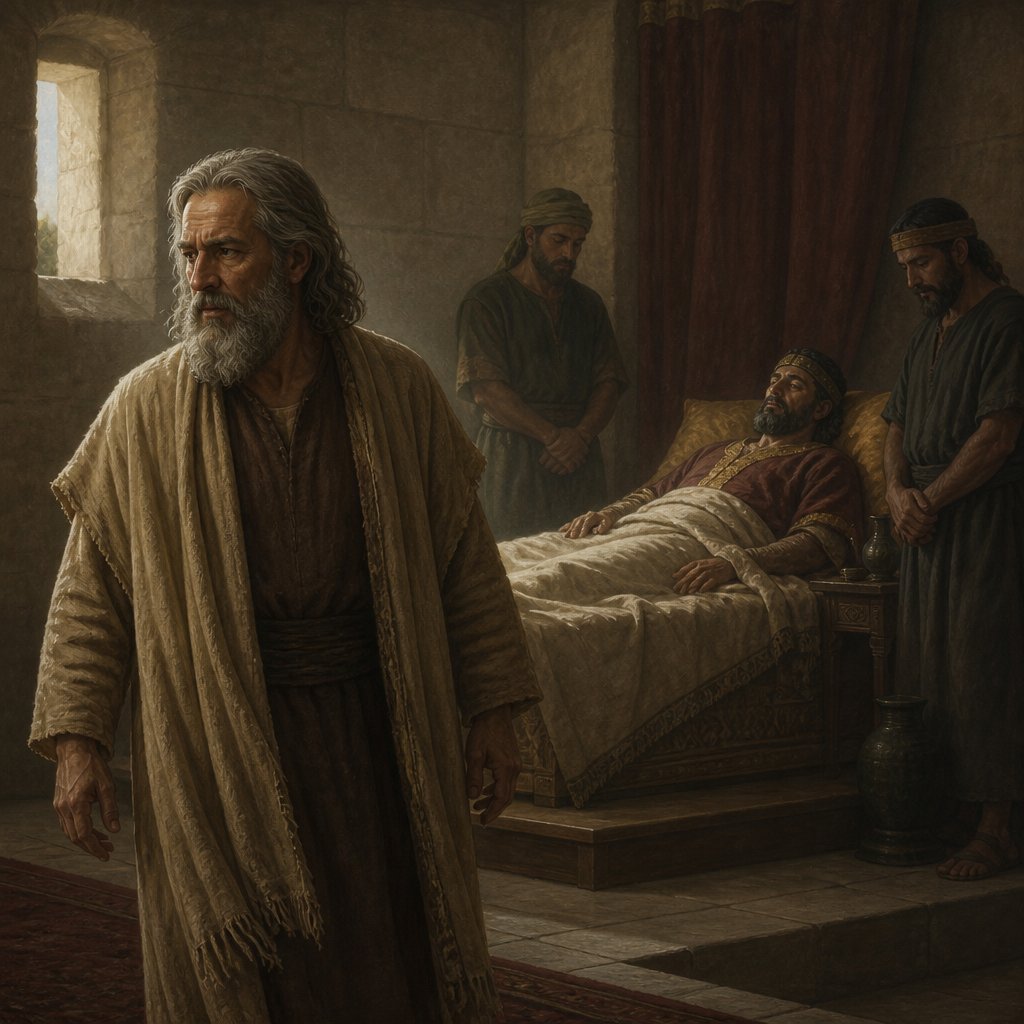
The Bible verse 2 Kings 1:4 in the King James Version reads, "Now therefore, thus saith the Lord, Thou shalt not come down from that bed on which thou art gone up, but shalt surely die. And Elijah departed."
This verse is part of the Old Testament narrative that recounts the reign of Ahaziah, the king of Israel. The verse is situated within a story in which Ahaziah falls ill and instead of seeking the Lord for guidance, he turns to Baal-Zebub, the god of Ekron, to inquire about his fate. This action displeases the Lord and prompts Him to send the prophet Elijah to intervene.
The context of this verse is set against the backdrop of a nation that had turned away from the one true God and chosen to worship idols. Ahaziah's reliance on Baal-Zebub reflects the spiritual depravity of the Israelites at that time. By refusing to seek the counsel of the Lord, Ahaziah further demonstrates his rejection of God and His authority over his life and kingdom.
The verse highlights several important themes that are prevalent throughout the Bible. One of the central themes is the sovereignty of God. The verse emphasizes God's authority over life and death, as He decrees that Ahaziah will not recover from his illness but will die. This serves as a reminder that God is the ultimate authority and His will cannot be thwarted.
Another theme is the consequence of disobedience. Ahaziah's refusal to seek the Lord and instead consult a false god leads to his downfall. This serves as a cautionary tale about the dangers of turning away from God and seeking guidance from sources that are contrary to His will.
The verse also underscores the role of prophets in conveying God's message. Elijah, as a prophet of the Lord, is tasked with delivering the divine decree to Ahaziah. This illustrates the significance of prophets in communicating God's will to the people and holding them accountable for their actions.
Additionally, the verse showcases the mercy and justice of God. Despite Ahaziah's disobedience, God sends Elijah to warn him of the impending judgment. This demonstrates God's willingness to extend mercy and give individuals the opportunity to repent, even in the face of their rebellion. However, it also reveals God's unwavering commitment to uphold justice and righteousness.
Symbolically, the bed on which Ahaziah lies represents his state of illness and impending death. It symbolizes his physical and spiritual condition, reflecting the consequences of his disobedience and rejection of God. Ahaziah's refusal to leave the bed parallels his refusal to repent and turn back to the Lord.
In conclusion, 2 Kings 1:4 serves as a powerful reminder of God's sovereignty, the consequences of disobedience, the role of prophets, and the mercy and justice of God. It urges individuals to seek the Lord and obey His commandments, while also highlighting the severe repercussions of turning away from Him. Through this verse, we are called to recognize and submit to God's authority, seek His guidance, and repent of our sins. It stands as a timeless admonition to heed God's word and live in accordance with His will.
Have questions about 2 Kings 1:4?
Dive deeper into this scripture with Bible Chat — an AI-powered tool for exploring God's Word through conversation. Ask questions, get context, and grow in your understanding of the Bible.
Get Our Apps


2 Kings 1:4 Artwork

2 Kings 1:4 - "Now therefore thus saith the LORD, Thou shalt not come down from that bed on which thou art gone up, but shalt surely die. And Elijah departed."
"Now therefore thus saith the LORD, Thou shalt not come down from that bed on which thou art gone up, but shalt surely die. And Elijah departed." - 2 Kings 1:4

1 Kings 4:2 - "And these were the princes which he had; Azariah the son of Zadok the priest,"

2 Kings 4:4-5

1 Kings 1:4 - "And the damsel was very fair, and cherished the king, and ministered to him: but the king knew her not."

1 Kings 4:1 - "So king Solomon was king over all Israel."
"And these were the princes which he had; Azariah the son of Zadok the priest," - 1 Kings 4:2

1 Kings 4:4 - "And Benaiah the son of Jehoiada was over the host: and Zadok and Abiathar were the priests:"

2 Kings 10:4 - "But they were exceedingly afraid, and said, Behold, two kings stood not before him: how then shall we stand?"

1 Kings 4:18 - "Shimei the son of Elah, in Benjamin:"

2 Kings 1:1 - "Then Moab rebelled against Israel after the death of Ahab."

1 Kings 4:17 - "Jehoshaphat the son of Paruah, in Issachar:"

2 Kings 19:2

2 Kings 19:2

2 Kings 19:2

1 Kings 4:8 - "And these are their names: The son of Hur, in mount Ephraim:"

1 Kings 4:14 - "Ahinadab the son of Iddo had Mahanaim:"

1 Kings 4:16 - "Baanah the son of Hushai was in Asher and in Aloth:"

1 Kings 6:4 - "And for the house he made windows of narrow lights."

1 Kings 4:34 - "And there came of all people to hear the wisdom of Solomon, from all kings of the earth, which had heard of his wisdom."

2 Kings 4:11 - "And it fell on a day, that he came thither, and he turned into the chamber, and lay there."

2 Kings 6:4 - "So he went with them. And when they came to Jordan, they cut down wood."

2 Kings 9:4 - "¶ So the young man, even the young man the prophet, went to Ramoth-gilead."

1 Kings 4:6 - "And Ahishar was over the household: and Adoniram the son of Abda was over the tribute."

2 Kings 16:4 - "And he sacrificed and burnt incense in the high places, and on the hills, and under every green tree."

2 Kings 4:33 - "He went in therefore, and shut the door upon them twain, and prayed unto the LORD."

1 Kings 4:15 - "Ahimaaz was in Naphtali; he also took Basmath the daughter of Solomon to wife:"

1 Kings 4:10 - "The son of Hesed, in Aruboth; to him pertained Sochoh, and all the land of Hepher:"

1 Kings 4:9 - "The son of Dekar, in Makaz, and in Shaalbim, and Beth-shemesh, and Elon-beth-hanan:"

1 Kings 7:4 - "And there were windows in three rows, and light was against light in three ranks."