What does 2 Kings 19:33 mean?
"By the way that he came, by the same shall he return, and shall not come into this city, saith the LORD." - 2 Kings 19:33
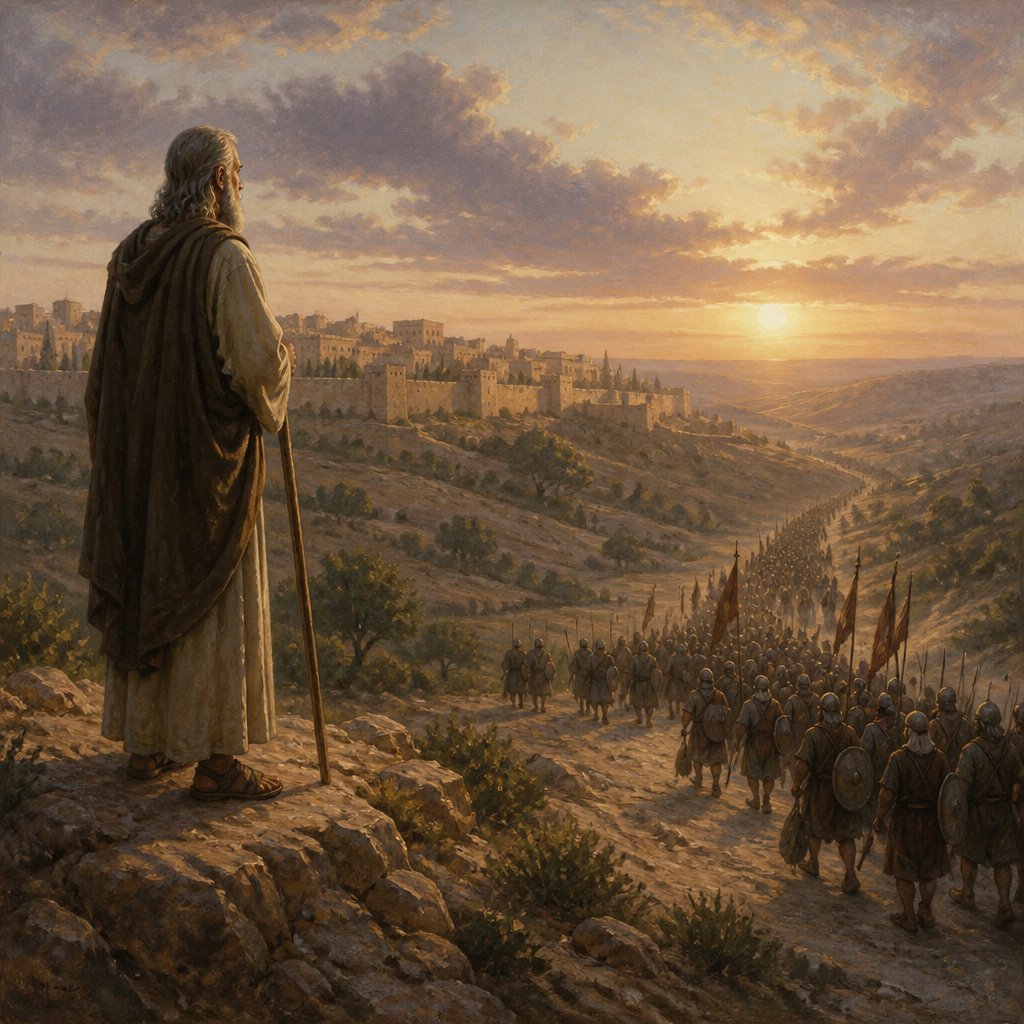
2 Kings 19:33 (KJV) - "By the way that he came, by the same shall he return, and shall not come into this city, saith the Lord."
This verse comes from the book of 2 Kings, which is a historical narrative of the kingdom of Israel and Judah, focusing on the reigns of various kings and their interactions with the prophets of God. In this particular chapter, King Hezekiah of Judah is under threat from the Assyrian king Sennacherib, who has besieged the city of Jerusalem. Hezekiah seeks the counsel of the prophet Isaiah, who assures him that God will protect the city and deliver them from the hands of their enemies.
The verse itself is a declaration from God, delivered through the prophet Isaiah, that Sennacherib will not enter the city of Jerusalem and will be forced to retreat by the same route he came. This is a powerful statement of God's sovereignty and protection over His people. It demonstrates God's ability to control the actions of rulers and nations for the ultimate fulfillment of His purposes.
One important theme in this verse is the sovereignty of God. Throughout the Bible, God is portrayed as the ultimate ruler and authority over all creation. This verse reinforces the idea that nothing happens outside of God's control, and He is able to determine the outcomes of even the most dire situations. This theme is a source of comfort and assurance for believers, knowing that God is in control and has the power to deliver them from any threat or danger.
Another theme in this verse is the faithfulness of God to His people. Despite the overwhelming force of the Assyrian army, God promises to protect Jerusalem and deliver them from their enemy. This is a consistent theme throughout the Bible, as God repeatedly demonstrates His faithfulness to His covenant with Israel, providing for their needs and defending them against their enemies. This theme of God's faithfulness is a source of hope and encouragement for believers, knowing that God will always keep His promises and never abandon His people.
The context of this verse is also important for understanding its significance. The Assyrian empire was a powerful and ruthless force in the ancient Near East, and the threat of invasion was a very real and terrifying prospect for the people of Judah. In the face of such overwhelming force, King Hezekiah turned to God for help, and God delivered them in a miraculous way. This context serves to emphasize the power and protection of God, demonstrating that He is able to overcome even the greatest of challenges and enemies.
Symbolically, this verse can be interpreted as a reminder of God's ability to reverse the plans of the enemy. The imagery of Sennacherib retreating by the same route he came serves as a powerful symbol of God's ability to turn the tables on those who seek to harm His people. This can be a source of encouragement for believers facing adversity, reminding them that God is able to thwart the schemes of the enemy and bring about deliverance in unexpected ways.
In conclusion, 2 Kings 19:33 is a powerful declaration of God's sovereignty and protection over His people. It underscores the themes of God's faithfulness and ability to reverse the plans of the enemy, providing assurance and hope for believers facing adversity. The context of the verse, set against the backdrop of the Assyrian threat, serves to further emphasize the magnitude of God's power and protection. This verse continues to serve as a source of encouragement and inspiration for believers, reminding them of God's ability to overcome any challenge and deliver them from the hands of their enemies.
Have questions about 2 Kings 19:33?
Dive deeper into this scripture with Bible Chat — an AI-powered tool for exploring God's Word through conversation. Ask questions, get context, and grow in your understanding of the Bible.
Get Our Apps


2 Kings 19:33 Artwork

2 Kings 19:33 - "By the way that he came, by the same shall he return, and shall not come into this city, saith the LORD."
"By the way that he came, by the same shall he return, and shall not come into this city, saith the LORD." - 2 Kings 19:33

2 Kings 19:2

2 Kings 19:2

2 Kings 19:2

2 Kings 19:17 - "Of a truth, LORD, the kings of Assyria have destroyed the nations and their lands,"

2 Kings 18:33 - "Hath any of the gods of the nations delivered at all his land out of the hand of the king of Assyria?"

2 Samuel 19:33 - "And the king said unto Barzillai, Come thou over with me, and I will feed thee with me in Jerusalem."

2 Kings 4:33 - "He went in therefore, and shut the door upon them twain, and prayed unto the LORD."

2 Kings 12:19 - "¶ And the rest of the acts of Joash, and all that he did, are they not written in the book of the chronicles of the kings of Judah?"

2 Kings 3:16-19

2 Kings 17:33 - "They feared the LORD, and served their own gods, after the manner of the nations whom they carried away from thence."

2 Kings 16:19 - "¶ Now the rest of the acts of Ahaz which he did, are they not written in the book of the chronicles of the kings of Judah?"

2 Kings 19:5 - "So the servants of king Hezekiah came to Isaiah."

2 Kings 19:36 - "So Sennacherib king of Assyria departed, and went and returned, and dwelt at Nineveh."

2 Kings 19:13 - "Where is the king of Hamath, and the king of Arpad, and the king of the city of Sepharvaim, of Hena, and Ivah?"

2 Kings 10:33 - "From Jordan eastward, all the land of Gilead, the Gadites, and the Reubenites, and the Manassites, from Aroer, which is by the river Arnon, even Gilead and Bashan."

Genesis 19-33

2 Kings 19:11 - "Behold, thou hast heard what the kings of Assyria have done to all lands, by destroying them utterly: and shalt thou be delivered?"

2 Kings 15:33 - "Five and twenty years old was he when he began to reign, and he reigned sixteen years in Jerusalem. And his mother's name was Jerusha, the daughter of Zadok."

2 Kings 19:2 - "And he sent Eliakim, which was over the household, and Shebna the scribe, and the elders of the priests, covered with sackcloth, to Isaiah the prophet the son of Amoz."

2 Kings 23:33 - "And Pharaoh-nechoh put him in bands at Riblah in the land of Hamath, that he might not reign in Jerusalem; and put the land to a tribute of an hundred talents of silver, and a talent of gold."

2 Kings 19:34 - "For I will defend this city, to save it, for mine own sake, and for my servant David's sake."

"Of a truth, LORD, the kings of Assyria have destroyed the nations and their lands," - 2 Kings 19:17

2 Kings 24:19 - "And he did that which was evil in the sight of the LORD, according to all that Jehoiakim had done."

2 Kings 17:19 - "Also Judah kept not the commandments of the LORD their God, but walked in the statutes of Israel which they made."

2 Chronicles 33:18 - "¶ Now the rest of the acts of Manasseh, and his prayer unto his God, and the words of the seers that spake to him in the name of the LORD God of Israel, behold, they are written in the book of the kings of Israel."

"So the servants of king Hezekiah came to Isaiah." - 2 Kings 19:5

2 Kings 11:19 - "And he took the rulers over hundreds, and the captains, and the guard, and all the people of the land; and they brought down the king from the house of the LORD, and came by the way of the gate of the guard to the king's house. And he sat on the throne of the kings."

2 Kings 19:27 - "But I know thy abode, and thy going out, and thy coming in, and thy rage against me."