What does 2 Kings 19:3 mean?
"And they said unto him, Thus saith Hezekiah, This day is a day of trouble, and of rebuke, and blasphemy: for the children are come to the birth, and there is not strength to bring forth." - 2 Kings 19:3
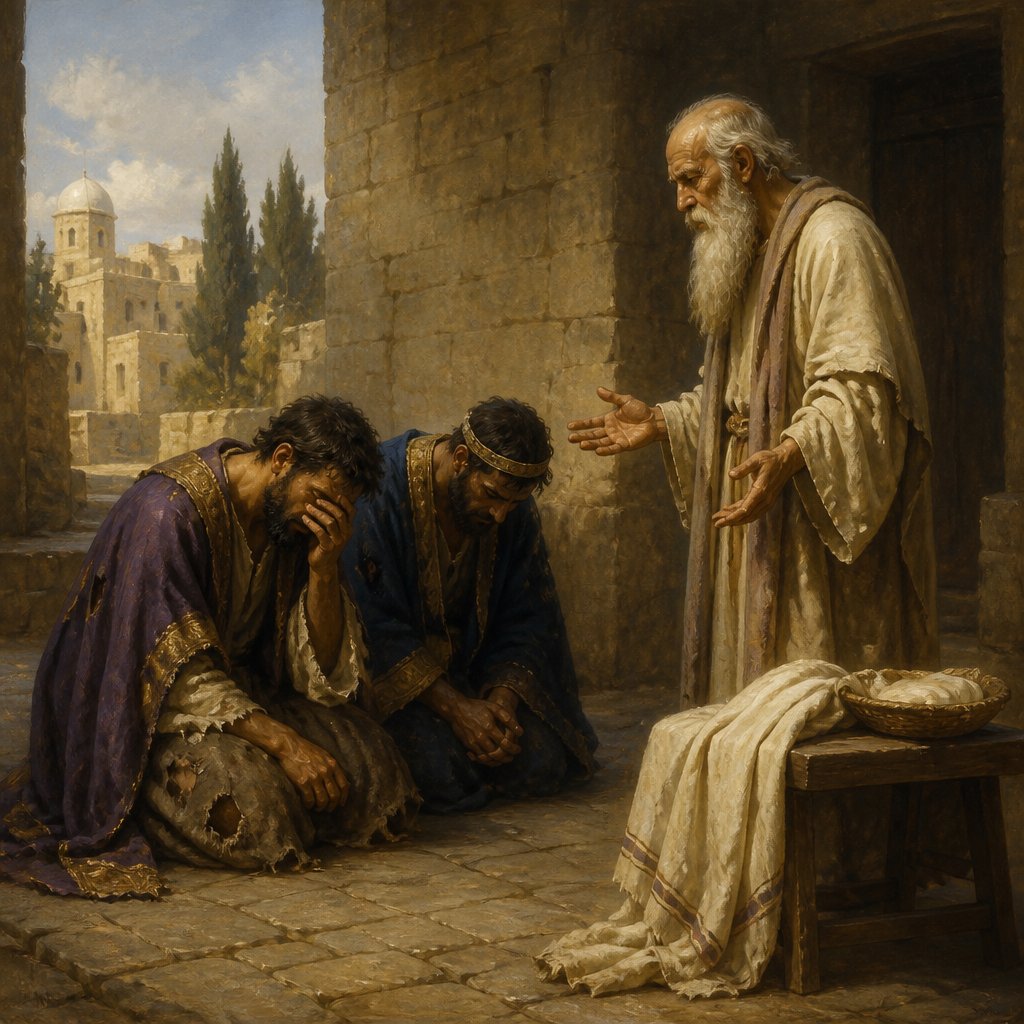
2 Kings 19:3 (KJV) reads, "And they said unto him, Thus saith Hezekiah, This day is a day of trouble, and of rebuke, and blasphemy: for the children are come to the birth, and there is not strength to bring forth."
This verse is a part of King Hezekiah's response to the Assyrian threat against Judah. The context of this verse is when King Hezekiah receives a threatening letter from Sennacherib, the king of Assyria, warning of imminent attack and destruction upon Jerusalem. Hezekiah, in fear and distress, seeks counsel from the prophet Isaiah. In this verse, we see Hezekiah's deep concern for the state of his kingdom and his people, as he describes the current situation as a day of trouble, rebuke, and blasphemy.
One of the primary themes evident in this verse is the concept of trust and reliance on God in the face of adversity. Hezekiah's response to the Assyrian threat reveals his utter dependency on God and his recognition of the spiritual battle taking place. Rather than trying to handle the situation on his own strength or with human strategies, he turns to God and seeks guidance from the prophet Isaiah. This demonstrates the importance of faith and reliance on God in times of trouble, serving as a reminder that human efforts are inadequate without God's intervention.
Another significant theme in this verse is the symbolism of childbirth and the imagery of a woman in labor. Hezekiah compares the state of his kingdom to a woman in labor, emphasizing the intensity and desperation of the situation. The imagery of childbirth is often used in the Bible to represent the pain, struggle, and ultimately, the deliverance and new life. In this context, it signifies the arduous and tumultuous situation faced by Judah, with the hope of deliverance and renewal on the horizon.
Furthermore, this verse highlights the spiritual warfare and the power of words. Hezekiah acknowledges the blasphemous words spoken by the Assyrian king, recognizing the spiritual battle taking place. The power of words and their impact on the spiritual realm is evident in this verse, emphasizing the importance of guarding one's speech and relying on the power of prayer and faith to overcome the enemy's attacks.
From a broader perspective, this verse serves as a powerful reminder of the sovereignty and faithfulness of God. Despite the impending threat and the intimidating nature of the Assyrian army, Hezekiah's response reflects his unwavering trust in God's faithfulness and deliverance. This highlights the enduring truth that God is in control of every situation, and His faithfulness and protection can be relied upon, even in the face of overwhelming odds.
In conclusion, 2 Kings 19:3 (KJV) is a profound and poignant expression of King Hezekiah's deep concern for his kingdom and his people in the face of the Assyrian threat. It is a testament to the themes of trust and reliance on God, the symbolism of childbirth and spiritual warfare, and the sovereignty and faithfulness of God. As readers, we are encouraged to emulate Hezekiah's unwavering faith and trust in God, especially in times of trouble and adversity, knowing that God is our ultimate source of strength and deliverance.
Have questions about 2 Kings 19:3?
Dive deeper into this scripture with Bible Chat — an AI-powered tool for exploring God's Word through conversation. Ask questions, get context, and grow in your understanding of the Bible.
Get Our Apps


2 Kings 19:3 Artwork

2 Kings 19:3 - "And they said unto him, Thus saith Hezekiah, This day is a day of trouble, and of rebuke, and blasphemy: for the children are come to the birth, and there is not strength to bring forth."
"And they said unto him, Thus saith Hezekiah, This day is a day of trouble, and of rebuke, and blasphemy: for the children are come to the birth, and there is not strength to bring forth." - 2 Kings 19:3

2 Kings 3:16-19

2 Kings 19:2

2 Kings 19:2

2 Kings 19:2

2 Kings 19:17 - "Of a truth, LORD, the kings of Assyria have destroyed the nations and their lands,"

1 Kings 3:19 - "And this woman's child died in the night; because she overlaid it."

2 Kings 3:19 - "And ye shall smite every fenced city, and every choice city, and shall fell every good tree, and stop all wells of water, and mar every good piece of land with stones."

2 Kings 12:19 - "¶ And the rest of the acts of Joash, and all that he did, are they not written in the book of the chronicles of the kings of Judah?"

2 Kings 16:19 - "¶ Now the rest of the acts of Ahaz which he did, are they not written in the book of the chronicles of the kings of Judah?"

2 Kings 19:5 - "So the servants of king Hezekiah came to Isaiah."

2 Kings 19:36 - "So Sennacherib king of Assyria departed, and went and returned, and dwelt at Nineveh."

2 Kings 19:13 - "Where is the king of Hamath, and the king of Arpad, and the king of the city of Sepharvaim, of Hena, and Ivah?"

2 Kings 3:15

2 Kings 3:15

2 Kings 3:15

Soothing the Soul: The Gospel of Gentle Care 1 Kings 19:3-8; 1 Samuel 16:14-23

Soothing the Soul: The Gospel of Gentle Care 1 Kings 19:3-8; 1 Samuel 16:14-23

2 Kings 19:11 - "Behold, thou hast heard what the kings of Assyria have done to all lands, by destroying them utterly: and shalt thou be delivered?"

1 Kings 19:3 - "And when he saw that, he arose, and went for his life, and came to Beer-sheba, which belongeth to Judah, and left his servant there."

2 Kings 3:10 - "And the king of Israel said, Alas! that the LORD hath called these three kings together, to deliver them into the hand of Moab!"

2 Kings 19:2 - "And he sent Eliakim, which was over the household, and Shebna the scribe, and the elders of the priests, covered with sackcloth, to Isaiah the prophet the son of Amoz."

2 Kings 19:34 - "For I will defend this city, to save it, for mine own sake, and for my servant David's sake."

2 Kings 3:23 - "And they said, This is blood: the kings are surely slain, and they have smitten one another: now therefore, Moab, to the spoil."

"Of a truth, LORD, the kings of Assyria have destroyed the nations and their lands," - 2 Kings 19:17

"And this woman's child died in the night; because she overlaid it." - 1 Kings 3:19

2 Kings 24:19 - "And he did that which was evil in the sight of the LORD, according to all that Jehoiakim had done."

2 Kings 17:19 - "Also Judah kept not the commandments of the LORD their God, but walked in the statutes of Israel which they made."

2 Kings 19:33 - "By the way that he came, by the same shall he return, and shall not come into this city, saith the LORD."