What does 2 Kings 16:7 mean?
"So Ahaz sent messengers to Tiglath-pileser king of Assyria, saying, I am thy servant and thy son: come up, and save me out of the hand of the king of Syria, and out of the hand of the king of Israel, which rise up against me." - 2 Kings 16:7
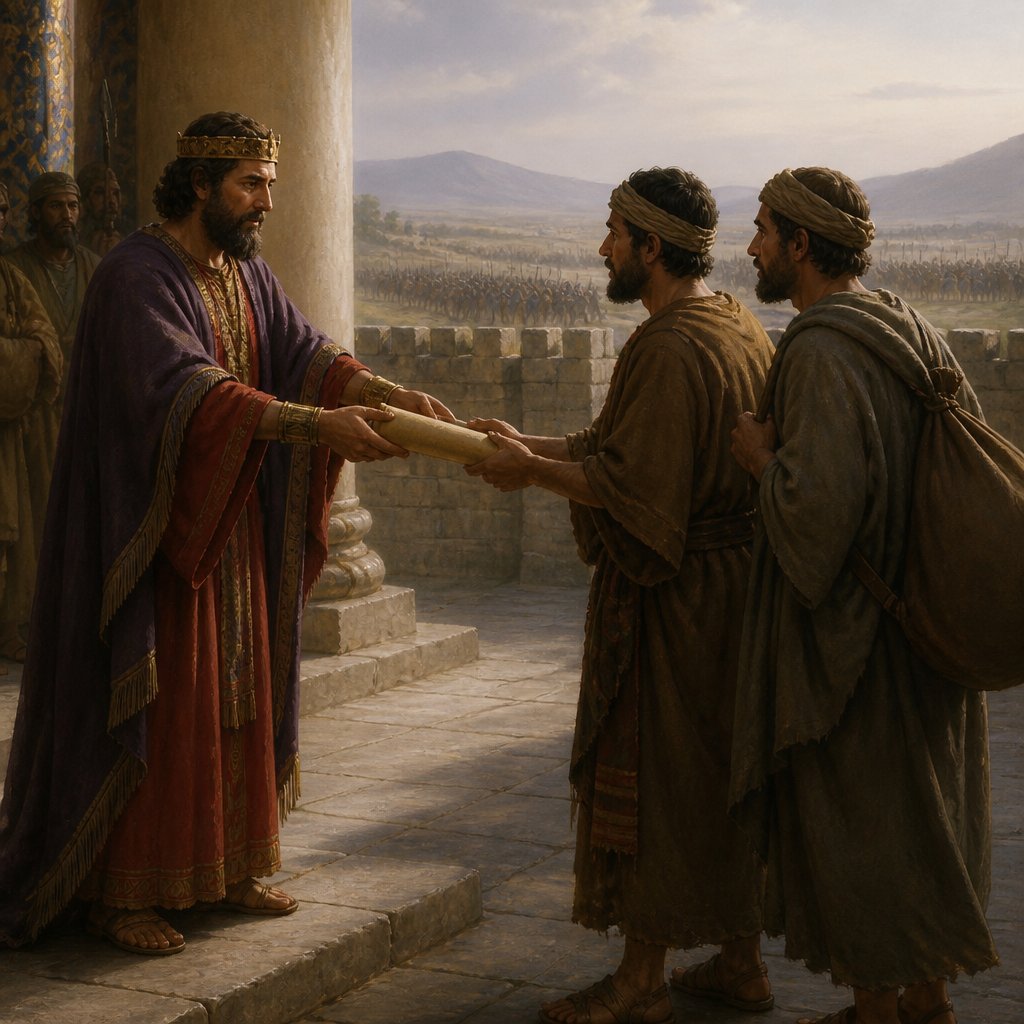
The verse 2 Kings 16:7 in the King James Version of the Bible states: "So Ahaz sent messengers to Tiglathpileser king of Assyria, saying, I [am] thy servant and thy son: come up, and save me out of the hand of the king of Syria, and out of the hand of the king of Israel, which rise up against me."
This verse is part of the Old Testament narrative and provides a glimpse into the political and military strategies of the ancient kingdom of Judah during the reign of King Ahaz. To fully understand the significance of this verse, it is important to explore the historical and cultural context in which it was written.
King Ahaz was the twelfth king of Judah and reigned from approximately 732 to 715 BC. During his reign, the kingdom of Judah faced significant threats from neighboring nations, particularly the kingdom of Israel to the north and the Aramean kingdom of Syria. The verse refers to Ahaz's decision to seek assistance from the powerful Assyrian king Tiglathpileser III in order to protect Judah from these threats.
From a historical perspective, this verse reflects the political complexities of the region during this time period. The Assyrians, under the leadership of Tiglathpileser III, were expanding their empire and exerting influence over the smaller kingdoms in the region. Ahaz's decision to appeal to Tiglathpileser for help indicates the precarious position of Judah and the desperate measures that Ahaz was willing to take in order to secure his kingdom's safety.
The verse also sheds light on the theme of power dynamics and alliances in the ancient Near East. By referring to himself as a servant and son of Tiglathpileser, Ahaz was acknowledging the Assyrian king's authority and seeking to align himself with a more powerful ruler in order to protect his own kingdom. This underscores the harsh reality of the political landscape at the time, where smaller kingdoms often had to rely on larger empires for protection.
Furthermore, the verse raises ethical and moral questions regarding allegiance and dependence on foreign powers. Ahaz's decision to seek help from the Assyrians, who were known for their brutal conquests and oppressive rule, could be seen as a compromising of Judah's independence and integrity. This theme of compromising one's values for the sake of security resonates throughout history and can prompt reflection on the choices that individuals and nations make in times of crisis.
Symbolically, the verse can be interpreted as a cautionary tale about the consequences of relying on human strength instead of trusting in God. Throughout the Bible, there is a recurring theme of the dangers of placing one's faith in earthly powers and the importance of seeking divine guidance and protection. Ahaz's decision to seek assistance from the Assyrians rather than turning to God for help serves as a reminder of the potential pitfalls of prioritizing human alliances over spiritual reliance.
In conclusion, 2 Kings 16:7 offers a rich tapestry of historical, political, ethical, and spiritual insights. Through its portrayal of Ahaz's decision to seek help from the Assyrians, the verse provides valuable lessons about the complexities of power dynamics, the consequences of compromised values, and the importance of placing one's trust in a higher power. It serves as a reminder of the timeless truths and principles that continue to resonate with readers today.
Have questions about 2 Kings 16:7?
Dive deeper into this scripture with Bible Chat — an AI-powered tool for exploring God's Word through conversation. Ask questions, get context, and grow in your understanding of the Bible.
Get Our Apps


2 Kings 16:7 Artwork

2 Kings 16:7 - "So Ahaz sent messengers to Tiglath-pileser king of Assyria, saying, I am thy servant and thy son: come up, and save me out of the hand of the king of Syria, and out of the hand of the king of Israel, which rise up against me."
"So Ahaz sent messengers to Tiglath-pileser king of Assyria, saying, I am thy servant and thy son: come up, and save me out of the hand of the king of Syria, and out of the hand of the king of Israel, which rise up against me." - 2 Kings 16:7

2 Kings 7:16 - "And the people went out, and spoiled the tents of the Syrians. So a measure of fine flour was sold for a shekel, and two measures of barley for a shekel, according to the word of the LORD."

2 Kings 7:2

2 Kings 16:16 - "Thus did Urijah the priest, according to all that king Ahaz commanded."

2 Kings 3:16-19

2 Kings 16:19 - "¶ Now the rest of the acts of Ahaz which he did, are they not written in the book of the chronicles of the kings of Judah?"

2 Kings 14:16 - "And Jehoash slept with his fathers, and was buried in Samaria with the kings of Israel; and Jeroboam his son reigned in his stead."

2 Kings 6:16 - "And he answered, Fear not: for they that be with us are more than they that be with them."

2 Kings 20:16 - "And Isaiah said unto Hezekiah, Hear the word of the LORD."

2 Kings 12:16 - "The trespass money and sin money was not brought into the house of the LORD: it was the priests'."

Isaiah 7:16 - "For before the child shall know to refuse the evil, and choose the good, the land that thou abhorrest shall be forsaken of both her kings."

2 Chronicles 28:16 - "¶ At that time did king Ahaz send unto the kings of Assyria to help him."

2 Kings 7:11 - "And he called the porters; and they told it to the king's house within."

2 Kings 7:7 - "Wherefore they arose and fled in the twilight, and left their tents, and their horses, and their asses, even the camp as it was, and fled for their life."

2 Kings 3:16 - "And he said, Thus saith the LORD, Make this valley full of ditches."

2 Kings 16:1 - "In the seventeenth year of Pekah the son of Remaliah Ahaz the son of Jotham king of Judah began to reign."

2 Kings 16:8 - "And Ahaz took the silver and gold that was found in the house of the LORD, and in the treasures of the king's house, and sent it for a present to the king of Assyria."

"Thus did Urijah the priest, according to all that king Ahaz commanded." - 2 Kings 16:16

2 Kings 2:7 - "And fifty men of the sons of the prophets went, and stood to view afar off: and they two stood by Jordan."

2 Kings 16:12 - "And when the king was come from Damascus, the king saw the altar: and the king approached to the altar, and offered thereon."

2 Kings 16:4 - "And he sacrificed and burnt incense in the high places, and on the hills, and under every green tree."

2 Kings 16:18 - "And the covert for the sabbath that they had built in the house, and the king's entry without, turned he from the house of the LORD for the king of Assyria."

2 Chronicles 16:11 - "¶ And, behold, the acts of Asa, first and last, lo, they are written in the book of the kings of Judah and Israel."

2 Kings 11:16 - "And they laid hands on her; and she went by the way by the which the horses came into the king's house: and there was she slain."

2 Kings 9:16 - "So Jehu rode in a chariot, and went to Jezreel; for Joram lay there. And Ahaziah king of Judah was come down to see Joram."

2 Kings 16:3 - "But he walked in the way of the kings of Israel, yea, and made his son to pass through the fire, according to the abominations of the heathen, whom the LORD cast out from before the children of Israel."

2 Corinthians 7:16 - "I rejoice therefore that I have confidence in you in all things."

1 Kings 7:16 - "And he made two chapiters of molten brass, to set upon the tops of the pillars: the height of the one chapiter was five cubits, and the height of the other chapiter was five cubits:"

2 Kings 22:7 - "Howbeit there was no reckoning made with them of the money that was delivered into their hand, because they dealt faithfully."