What does 2 Kings 16:13 mean?
"And he burnt his burnt offering and his meat offering, and poured his drink offering, and sprinkled the blood of his peace offerings, upon the altar." - 2 Kings 16:13
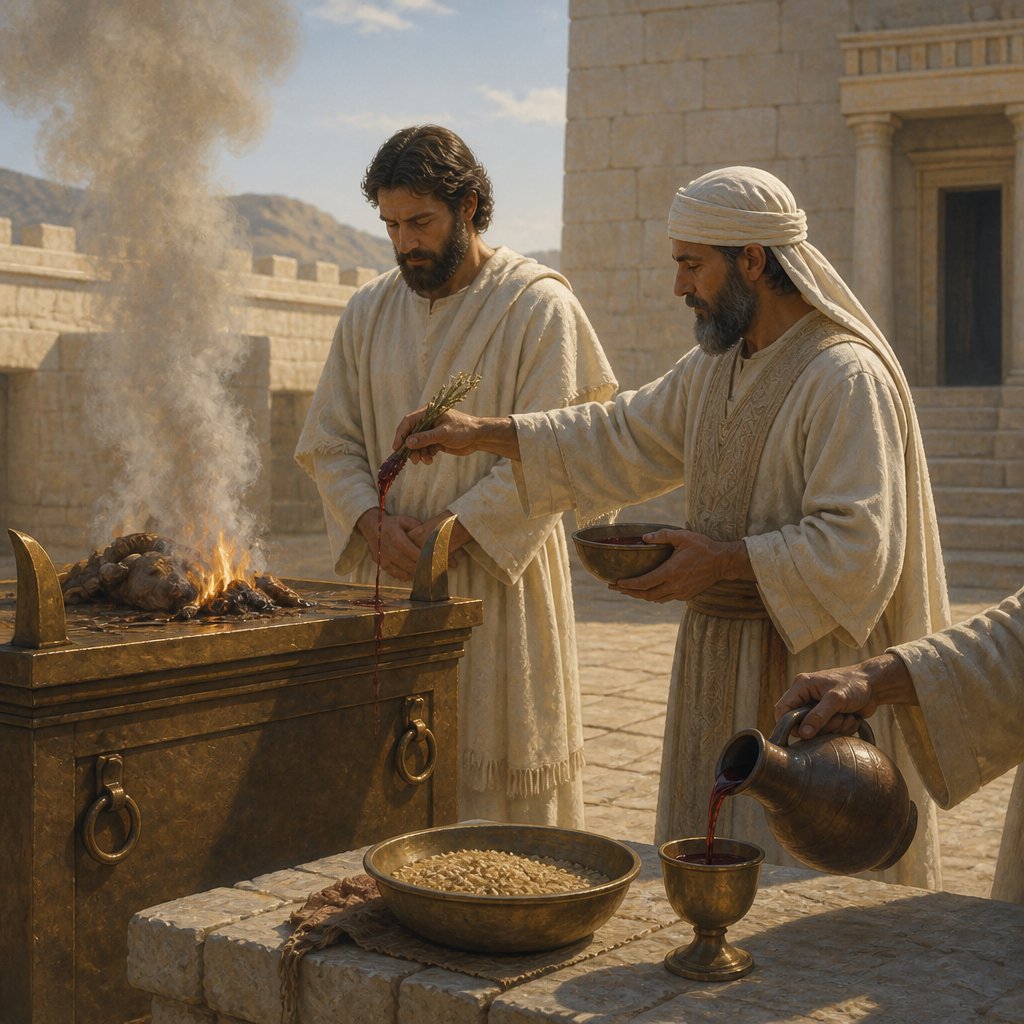
The Bible verse 2 Kings 16:13 in the King James Version (KJV) states: "And he burnt his burnt offering and his meat offering, and poured his drink offering, and sprinkled the blood of his peace offerings upon the altar."
This verse is part of a larger narrative in the book of 2 Kings, which documents the reigns of various kings in the divided kingdoms of Israel and Judah. In this particular verse, the focus is on Ahaz, the king of Judah, and his actions in the context of religious rituals and offerings.
To understand the deeper meaning and commentary of this verse, it is important to consider the broader historical and religious context in which the events are taking place. During the time of Ahaz's reign, the nation of Judah was facing significant threats from neighboring kingdoms, and there was also internal strife and idolatry within the nation. Ahaz is depicted as a king who turned away from following God and instead sought alliances with foreign powers and adopted their pagan religious practices.
In 2 Kings 16, Ahaz is described as visiting the Assyrian king Tiglath-pileser in Damascus, where he saw an altar and sent back the design to Urijah the priest to replicate in Jerusalem. Ahaz then went on to offer sacrifices on this new altar, essentially replacing the traditional worship of God with foreign practices.
The specific actions mentioned in 2 Kings 16:13 – burning burnt offerings, meat offerings, pouring drink offerings, and sprinkling the blood of peace offerings – were all part of the ritualistic system of worship prescribed in the Mosaic Law for the Israelites. However, the significance of these offerings lies not just in their physical actions, but in the deeper spiritual and symbolic meaning behind them.
The burnt offering, for example, symbolized complete surrender and dedication to God, as the entire animal was consumed on the altar. The meat offering, or grain offering, represented gratitude and recognition of God's provision. The drink offering symbolized the pouring out of one's life and resources as an act of worship. Finally, the blood of peace offerings signified reconciliation and atonement for sin, serving as a reminder of the need for forgiveness and restoration of relationship with God.
In the case of Ahaz, however, these offerings were being made not in obedience to God's commandments, but in the context of his apostasy and syncretism with foreign gods. By desecrating the holy practices of worship ordained by God and incorporating pagan elements, Ahaz was effectively defiling the true worship of God and leading the people of Judah astray.
This verse, therefore, serves as a poignant reminder of the dangers of compromising one's faith and deviating from the path of righteousness. It highlights the consequences of forsaking the true worship of God and succumbing to the influences of the world. The actions of Ahaz stand as a cautionary tale for believers, warning against the allure of worldly powers and the temptation to blend Christianity with the values and practices of secular culture.
Furthermore, this passage underscores the importance of genuine, heartfelt worship that is rooted in obedience to God's Word and aligned with His will. It serves as a call to uphold the purity and sanctity of worship, and to remain steadfast in faith even in the face of external pressures and opposition.
In conclusion, 2 Kings 16:13 carries deep significance within the broader narrative of the book of 2 Kings, shedding light on the spiritual and moral implications of Ahaz's actions in deviating from true worship. It serves as a timeless reminder for believers to uphold the purity of worship and to guard against the influences of the world that may lead them away from a sincere and devoted relationship with God.
Have questions about 2 Kings 16:13?
Dive deeper into this scripture with Bible Chat — an AI-powered tool for exploring God's Word through conversation. Ask questions, get context, and grow in your understanding of the Bible.
Get Our Apps


2 Kings 16:13 Artwork

2 Kings 16:13 - "And he burnt his burnt offering and his meat offering, and poured his drink offering, and sprinkled the blood of his peace offerings, upon the altar."
"And he burnt his burnt offering and his meat offering, and poured his drink offering, and sprinkled the blood of his peace offerings, upon the altar." - 2 Kings 16:13

2 Kings 13:16 - "And he said to the king of Israel, Put thine hand upon the bow. And he put his hand upon it: and Elisha put his hands upon the king's hands."

Proverbs 16:13 - "Righteous lips are the delight of kings; and they love him that speaketh right."

2 Kings 13:13 - "And Joash slept with his fathers; and Jeroboam sat upon his throne: and Joash was buried in Samaria with the kings of Israel."

2 Kings 16:16 - "Thus did Urijah the priest, according to all that king Ahaz commanded."

2 Kings 3:16-19

2 Kings 16:19 - "¶ Now the rest of the acts of Ahaz which he did, are they not written in the book of the chronicles of the kings of Judah?"

2 Kings 14:16 - "And Jehoash slept with his fathers, and was buried in Samaria with the kings of Israel; and Jeroboam his son reigned in his stead."

2 Kings 13:22 - "¶ But Hazael king of Syria oppressed Israel all the days of Jehoahaz."

2 Kings 6:16 - "And he answered, Fear not: for they that be with us are more than they that be with them."

2 Kings 20:16 - "And Isaiah said unto Hezekiah, Hear the word of the LORD."

2 Kings 13:8 - "¶ Now the rest of the acts of Jehoahaz, and all that he did, and his might, are they not written in the book of the chronicles of the kings of Israel?"

2 Kings 12:16 - "The trespass money and sin money was not brought into the house of the LORD: it was the priests'."

2 Chronicles 28:16 - "¶ At that time did king Ahaz send unto the kings of Assyria to help him."

2 Kings 19:13 - "Where is the king of Hamath, and the king of Arpad, and the king of the city of Sepharvaim, of Hena, and Ivah?"
"Righteous lips are the delight of kings; and they love him that speaketh right." - Proverbs 16:13

2 Kings 3:16 - "And he said, Thus saith the LORD, Make this valley full of ditches."

1 Kings 13:16 - "And he said, I may not return with thee, nor go in with thee: neither will I eat bread nor drink water with thee in this place:"
1 Kings 16:13 - "For all the sins of Baasha, and the sins of Elah his son, by which they sinned, and by which they made Israel to sin, in provoking the LORD God of Israel to anger with their vanities."

2 Kings 2:13 - "He took up also the mantle of Elijah that fell from him, and went back, and stood by the bank of Jordan;"

2 Kings 16:1 - "In the seventeenth year of Pekah the son of Remaliah Ahaz the son of Jotham king of Judah began to reign."

2 Kings 16:8 - "And Ahaz took the silver and gold that was found in the house of the LORD, and in the treasures of the king's house, and sent it for a present to the king of Assyria."

"Thus did Urijah the priest, according to all that king Ahaz commanded." - 2 Kings 16:16

2 Kings 13:12 - "And the rest of the acts of Joash, and all that he did, and his might wherewith he fought against Amaziah king of Judah, are they not written in the book of the chronicles of the kings of Israel?"

2 Kings 16:12 - "And when the king was come from Damascus, the king saw the altar: and the king approached to the altar, and offered thereon."

2 Chronicles 13:16 - "And the children of Israel fled before Judah: and God delivered them into their hand."

2 Kings 16:4 - "And he sacrificed and burnt incense in the high places, and on the hills, and under every green tree."

2 Kings 16:18 - "And the covert for the sabbath that they had built in the house, and the king's entry without, turned he from the house of the LORD for the king of Assyria."

2 Kings 13:20 - "¶ And Elisha died, and they buried him. And the bands of the Moabites invaded the land at the coming in of the year."