What does 2 Corinthians 12:9-10 mean?
"But he said to me, My grace is sufficient for thee: for my strength is made perfect in weakness. Most gladly therefore will I rather glory in my infirmities, that the power of Christ may rest upon me. Therefore I take pleasure in infirmities, in reproaches, in necessities, in persecutions, in distresses for Christ's sake: for when I am weak, then am I strong." - 2 Corinthians 12:9-10

In 2 Corinthians 12:9–10, Paul is drawing back the curtain on a private struggle and showing how God reframes suffering for the believer. The words come from the King James Version: “And he said unto me, My grace is sufficient for thee: for my strength is made perfect in weakness.” Paul then answers with a startling resolve: “Most gladly therefore will I rather glory in my infirmities, that the power of Christ may rest upon me. Therefore I take pleasure in infirmities, in reproaches, in necessities, in persecutions, in distresses for Christ’s sake: for when I am weak, then am I strong.”
The immediate context is Paul’s defense of his apostleship and his refusal to play by the world’s rules of boasting. In the surrounding passage he speaks of extraordinary revelations, even being “caught up” to the third heaven, but he does not use those experiences as a pedestal. Instead, he says there was given to him “a thorn in the flesh,” “the messenger of Satan,” to buffet him, “lest I should be exalted above measure.” He besought the Lord thrice that it might depart. The answer he received was not removal but sufficiency: “My grace is sufficient for thee.” The point is not that Paul’s affliction is good in itself, or that God is indifferent to pain, but that God’s remedy is deeper than relief. The Lord does not simply adjust Paul’s circumstances; He anchors Paul in a continual supply of grace that meets him precisely where he is most vulnerable.
“My grace is sufficient for thee” means the Lord’s favor, help, and sustaining presence are not occasional; they are enough, they are adequate, they do not run out. The verb “is” gives it the force of an ongoing reality, not a one-time gift. Grace here is not merely pardon for sin, though it includes that; it is the active, sustaining generosity of God toward a servant who cannot carry the load in his own strength. Paul had asked for subtraction—take away the thorn—but the Lord answers with addition—grace that remains. The sufficiency of grace teaches that the Christian’s deepest need in suffering is not always the end of suffering, but the presence and power of Christ within it.
The reason God gives is the heart of the passage: “for my strength is made perfect in weakness.” The word “perfect” in KJV phrasing carries the idea of being brought to completion, reaching its intended end, being fully displayed. God’s strength does not become morally better because we are weak; rather, it is seen more clearly, and it accomplishes its purpose more completely, when human self-reliance collapses. Weakness becomes the stage on which divine strength is most unmistakably God’s. When a person can still manage, still appear sufficient, the line between human competence and God’s enabling can blur. But when the servant is plainly inadequate, the sustaining power that keeps him faithful is evidently the Lord’s.
Paul’s response shows how thoroughly his values have been converted by Christ. “Most gladly therefore will I rather glory in my infirmities” is not self-pity and not a denial of pain; it is a deliberate choice to boast in what the world would hide. In the flow of 2 Corinthians, “glorying” is a major theme because Paul is answering opponents who commend themselves through impressive credentials and outward power. Paul refuses a boasting that magnifies him; he embraces a boasting that magnifies Christ. His “infirmities” become evidence not of God’s absence but of God’s power. That is why he adds the purpose clause: “that the power of Christ may rest upon me.” The phrase “rest upon” suggests a covering, a settling, an abiding presence. It evokes the idea of the Lord’s power coming to dwell over Paul the way a tent or canopy rests over someone, making his frailty the very place where Christ’s might takes up residence and is recognized.
When Paul says, “Therefore I take pleasure in infirmities, in reproaches, in necessities, in persecutions, in distresses for Christ’s sake,” he is naming categories of hardship that marked his ministry. “Infirmities” points to limitations and weaknesses, including bodily frailty. “Reproaches” are insults, shaming, and contempt poured out on him. “Necessities” are pressures and needs that constrain and corner him—lack, scarcity, unavoidable burdens. “Persecutions” are active hostilities endured because of allegiance to Jesus. “Distresses” are tight places, crushing anxieties and troubles that press in from every side. The phrase “for Christ’s sake” is crucial: Paul is not praising suffering as a virtue by itself, nor inviting harm for its own sake; he is speaking of trials bound up with following Christ in a fallen world and serving the gospel in the face of resistance. His “pleasure” is not a natural delight in pain but a spiritual contentment in what suffering produces when it is met with grace: it drives him to dependence, it strips away pride, it makes room for the “power of Christ.”
The final line, “for when I am weak, then am I strong,” gathers everything into a paradox that is central to the gospel. Paul is not claiming that weakness, considered by itself, is strength. He is describing a transfer of reliance. When he is weak, he stops pretending that he is sufficient; he leans wholly on Christ; and in that dependent union he experiences real strength—the strength to endure, to remain faithful, to love, to keep preaching, to keep serving, to keep hoping. The strength is not located in Paul’s personality or resilience; it is located in Christ, and weakness is the condition that makes that truth operative and visible.
Symbolically and spiritually, the “thorn” stands for those persistent afflictions God does not immediately remove—whatever continually pricks, humbles, and reminds a believer of creaturely limits. It is “in the flesh,” meaning it is not merely abstract; it touches daily life and bodily experience. The “messenger of Satan” indicates that the trial can have a malicious aspect, a real spiritual opposition, yet without implying that Satan is sovereign. In the same breath Paul shows that even what Satan means to “buffet” can be turned by God into a means of humility and dependence, “lest I should be exalted above measure.” The symbolism therefore carries a double lesson: suffering is not always a sign of disobedience or divine rejection, and unanswered prayers for removal are not necessarily refusals of love. Sometimes the Lord’s love answers by giving Himself in greater measure.
The significance of 2 Corinthians 12:9–10 is that it overturns ordinary ideas of power. In a culture—ancient or modern—that prizes confidence, achievement, and visible success, Paul reveals that Christ’s way is cruciform. The pattern of the cross runs through the passage: apparent defeat becomes the place of victory; weakness becomes the vessel of power; humility becomes the path to true glory. Paul’s testimony teaches that the Christian life is sustained not by the absence of hardship but by the presence of sufficient grace, and that God’s strength is not merely added to human strength but is most fully displayed when human strength is spent. In this way, the verses do not merely comfort; they reshape what it means to live “for Christ’s sake,” so that even in infirmities and distresses the believer may know the power of Christ “rest upon” him, and may confess with Paul, in the plainest terms, “when I am weak, then am I strong.”
Have questions about 2 Corinthians 12:9-10?
Dive deeper into this scripture with Bible Chat — an AI-powered tool for exploring God's Word through conversation. Ask questions, get context, and grow in your understanding of the Bible.
Get Our Apps


2 Corinthians 12:9-10 Artwork
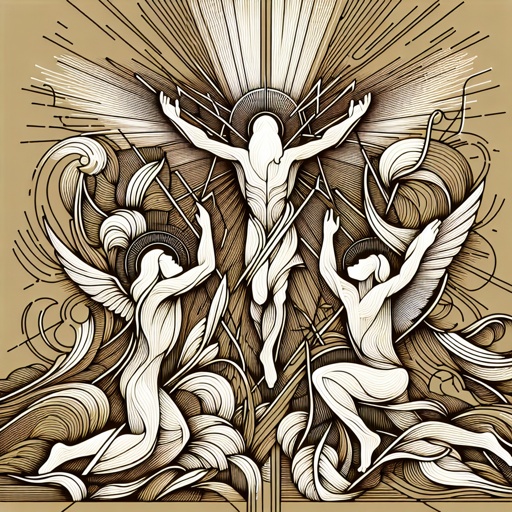
2 Corinthians 12:9-10

2 Corinthians 12:9-10 - "But he said to me, 'My grace is sufficient for you, for my power is made perfect in weakness.' Therefore I will boast all the more gladly about my weaknesses, so that Christ’s power may rest on me. That is why, for Christ’s sake, I delight in weaknesses, in insults, in hardships, in persecutions, in difficulties. For when I am weak, then I am strong."

"But he said to me, 'My grace is sufficient for you, for my power is made perfect in weakness.' Therefore I will boast all the more gladly about my weaknesses, so that Christ’s power may rest on me. That is why, for Christ’s sake, I delight in weaknesses, in insults, in hardships, in persecutions, in difficulties. For when I am weak, then I am strong." - 2 Corinthians 12:9-10

2 Corinthians 12:9

2 Corinthians 12:9

2 Corinthians 12:9

2 Corinthians 10:9 - "That I may not seem as if I would terrify you by letters."
2 Corinthians 9:12 - "For the administration of this service not only supplieth the want of the saints, but is abundant also by many thanksgivings unto God;"

"And he said unto me, My grace is sufficient for thee: for my strength is made perfect in weakness. Most gladly therefore will I rather glory in my infirmities, that the power of Christ may rest upon me." - 2 Corinthians 12:9

2 Corinthians 10:12 - "For we dare not make ourselves of the number, or compare ourselves with some that commend themselves: but they measuring themselves by themselves, and comparing themselves among themselves, are not wise."

2 Corinthians 12:10 - "Therefore I take pleasure in infirmities, in reproaches, in necessities, in persecutions, in distresses for Christ's sake: for when I am weak, then am I strong."

2 Corinthians 9:10 - "Now he that ministereth seed to the sower both minister bread for your food, and multiply your seed sown, and increase the fruits of your righteousness;)"

2 Corinthians 12:9 - "And he said unto me, My grace is sufficient for thee: for my strength is made perfect in weakness. Most gladly therefore will I rather glory in my infirmities, that the power of Christ may rest upon me."

2 Corinthians 9:9

1 corinthians 2:12

1 corinthians 2:12

2 Corinthians 12:7

2 Corinthians 12:7

"That I may not seem as if I would terrify you by letters." - 2 Corinthians 10:9

1 corinthians 2:12

1 corinthians 2:12

2 corinthians 10:3-5

2 corinthians 10:3-5

2 corinthians 10:3-5

2 corinthians 10:3-5

2 corinthians 10:3-5

2 corinthians 10:3-5

2 corinthians 10:3-5

2 corinthians 10:3-5

2 corinthians 10:3-5