What does 2 Corinthians 12:9 mean?
"And he said unto me, My grace is sufficient for thee: for my strength is made perfect in weakness. Most gladly therefore will I rather glory in my infirmities, that the power of Christ may rest upon me." - 2 Corinthians 12:9

“2 Corinthians 12:9” in the King James Version reads, “And he said unto me, My grace is sufficient for thee: for my strength is made perfect in weakness. Most gladly therefore will I rather glory in my infirmities, that the power of Christ may rest upon me.”
The verse stands in the middle of Paul’s personal testimony about an ongoing affliction he calls “a thorn in the flesh,” something that humbled him and pressed him to prayer. In the surrounding context, Paul has spoken of extraordinary spiritual privilege—being “caught up” and hearing “unspeakable words”—yet he immediately turns to the danger of being “exalted above measure.” The “thorn” becomes, in that setting, a counterweight to spiritual pride, and Paul says he “besought the Lord thrice” that it might depart. The answer he receives is not an explanation of the thorn’s exact nature, but a divine sentence that interprets the meaning of his suffering and redefines what victory looks like: not the removal of weakness, but the presence of Christ in weakness.
“My grace is sufficient for thee” places the emphasis on grace as an active, sustaining provision rather than merely a pardon for sin. In KJV language, “sufficient” is not minimal or barely adequate; it means enough, fully adequate for the situation Paul is facing. The Lord does not deny Paul help; He gives a different kind of help than Paul requested. The refusal to remove the thorn is paired with a promise that grace will hold Paul up in the thorn’s continuing pressure. This shifts the believer’s expectation from a life defined by uninterrupted ease to a life defined by divine supply. Grace becomes the environment in which endurance, faithfulness, and fruitfulness are possible even when circumstances do not change.
“For my strength is made perfect in weakness” introduces one of the great paradoxes of the New Testament: divine strength reaches its intended end, its full expression, when human strength is brought low. “Made perfect” in KJV carries the idea of being brought to completion, reaching its proper goal. The verse is not saying weakness is good in itself, or that God delights in pain; it is saying that when a person cannot rely on self-sufficiency, the strength that comes from God is no longer competing with the illusion of human control. Weakness becomes the stage upon which the power of Christ is seen as power, not as an accessory to human competence. The symbolism is that of an earthen vessel that shows more clearly the treasure within because the vessel is plainly fragile; the cracks do not create the treasure, but they make it undeniable that the glory belongs to God.
Paul’s response, “Most gladly therefore will I rather glory in my infirmities,” is the transformed posture of a man who has received a new interpretation of his suffering. To “glory” here is not to boast in pain as pain, but to boast in what the pain proves: that Christ is sufficient. “Infirmities” includes frailty, limitations, and the very things that a culture of honor and power would hide. Paul’s willingness to speak openly about weakness also fits the broader argument of 2 Corinthians, where he defends his apostleship not by displaying worldly triumph but by pointing to suffering, endurance, and the marks of Christ’s life in him. In the letter, Paul is confronting notions of spiritual authority that prize impressiveness; he insists that authentic ministry often bears the pattern of the cross.
“That the power of Christ may rest upon me” completes the thought with imagery that is almost tabernacle-like. “Rest upon” suggests an abiding, covering presence rather than a momentary visitation. The phrase evokes the idea of a dwelling, as though Christ’s power spreads its shelter over Paul precisely where Paul is exposed. The weakness does not chase Christ’s power away; it becomes the very place where that power settles. In the larger Christian symbolism, this aligns with the pattern that life comes through death and exaltation comes through humiliation, a pattern seen supremely in Christ Himself. Paul’s infirmity becomes a kind of fellowship with Christ’s sufferings, not because Christ is weak in Himself, but because God’s redemptive way in the world is to conquer through apparent lowliness and to reveal glory through what looks unimpressive.
The significance of 2 Corinthians 12:9, then, is that it teaches the believer to interpret persistent weakness through the lens of grace rather than failure. It anchors the soul in a promise: grace is enough, and God’s strength does not merely accompany weakness but reaches its full display in it. The verse also guards against pride born from spiritual experience by insisting that the most authentic evidence of Christ’s power is not always the absence of struggle, but the presence of sustaining grace that keeps a person faithful, humble, and dependent. In Paul’s prose, the thorn remains, but it is no longer meaningless; it becomes the place where the sufficiency of Christ is proved, and where weakness, instead of being only a source of shame, becomes a testimony that “the power of Christ” truly does rest upon those who cannot rest upon themselves.
Have questions about 2 Corinthians 12:9?
Dive deeper into this scripture with Bible Chat — an AI-powered tool for exploring God's Word through conversation. Ask questions, get context, and grow in your understanding of the Bible.
Get Our Apps


2 Corinthians 12:9 Artwork

2 Corinthians 12:9

2 Corinthians 12:9

2 Corinthians 12:9
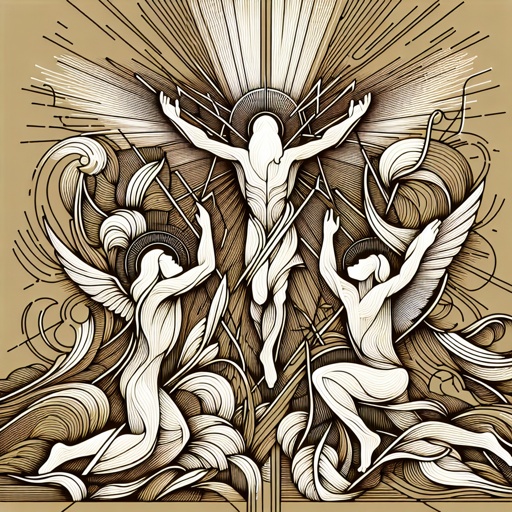
2 Corinthians 12:9-10

"And he said unto me, My grace is sufficient for thee: for my strength is made perfect in weakness. Most gladly therefore will I rather glory in my infirmities, that the power of Christ may rest upon me." - 2 Corinthians 12:9

2 Corinthians 12:9 - "And he said unto me, My grace is sufficient for thee: for my strength is made perfect in weakness. Most gladly therefore will I rather glory in my infirmities, that the power of Christ may rest upon me."

2 Corinthians 12:9-10 - "But he said to me, 'My grace is sufficient for you, for my power is made perfect in weakness.' Therefore I will boast all the more gladly about my weaknesses, so that Christ’s power may rest on me. That is why, for Christ’s sake, I delight in weaknesses, in insults, in hardships, in persecutions, in difficulties. For when I am weak, then I am strong."

"And he said unto me, My grace is sufficient for thee: for my strength is made perfect in weakness. Most gladly therefore will I rather glory in my infirmities, that the power of Christ may rest upon me." - 2 Corinthians 12:9

"And he said unto me, My grace is sufficient for thee: for my strength is made perfect in weakness. Most gladly therefore will I rather glory in my infirmities, that the power of Christ may rest upon me." - 2 Corinthians 12:9

"But he said to me, 'My grace is sufficient for you, for my power is made perfect in weakness.' Therefore I will boast all the more gladly about my weaknesses, so that Christ’s power may rest on me. That is why, for Christ’s sake, I delight in weaknesses, in insults, in hardships, in persecutions, in difficulties. For when I am weak, then I am strong." - 2 Corinthians 12:9-10
2 Corinthians 9:12 - "For the administration of this service not only supplieth the want of the saints, but is abundant also by many thanksgivings unto God;"

2 Corinthians 9:9

1 corinthians 2:12

1 corinthians 2:12

2 Corinthians 12:7

2 Corinthians 12:7

1 corinthians 2:12

1 corinthians 2:12

2 Corinthians 12:2-4 – Paul’s vision of the third heaven.

2 Corinthians 12:7

2 Corinthians 12:7

1 Corinthians 12:9 - "To another faith by the same Spirit; to another the gifts of healing by the same Spirit;"

"For the administration of this service not only supplieth the want of the saints, but is abundant also by many thanksgivings unto God;" - 2 Corinthians 9:12

2 Corinthians 13:12 - "Greet one another with an holy kiss."

2 Corinthians 4:9 - "Persecuted, but not forsaken; cast down, but not destroyed;"

2 Corinthians 4:12 - "So then death worketh in us, but life in you."

2 Corinthians 9:15 - "Thanks be unto God for his unspeakable gift."

2 Corinthians 12:12 - "Truly the signs of an apostle were wrought among you in all patience, in signs, and wonders, and mighty deeds."

2 Corinthians 9:1 - "For as touching the ministering to the saints, it is superfluous for me to write to you:"

2 Corinthians 9:9 - "(As it is written, He hath dispersed abroad; he hath given to the poor: his righteousness remaineth for ever."