What does 2 Chronicles 6:10 mean?
"The LORD therefore hath performed his word that he hath spoken: for I am risen up in the room of David my father, and am set on the throne of Israel, as the LORD promised, and have built the house for the name of the LORD God of Israel." - 2 Chronicles 6:10
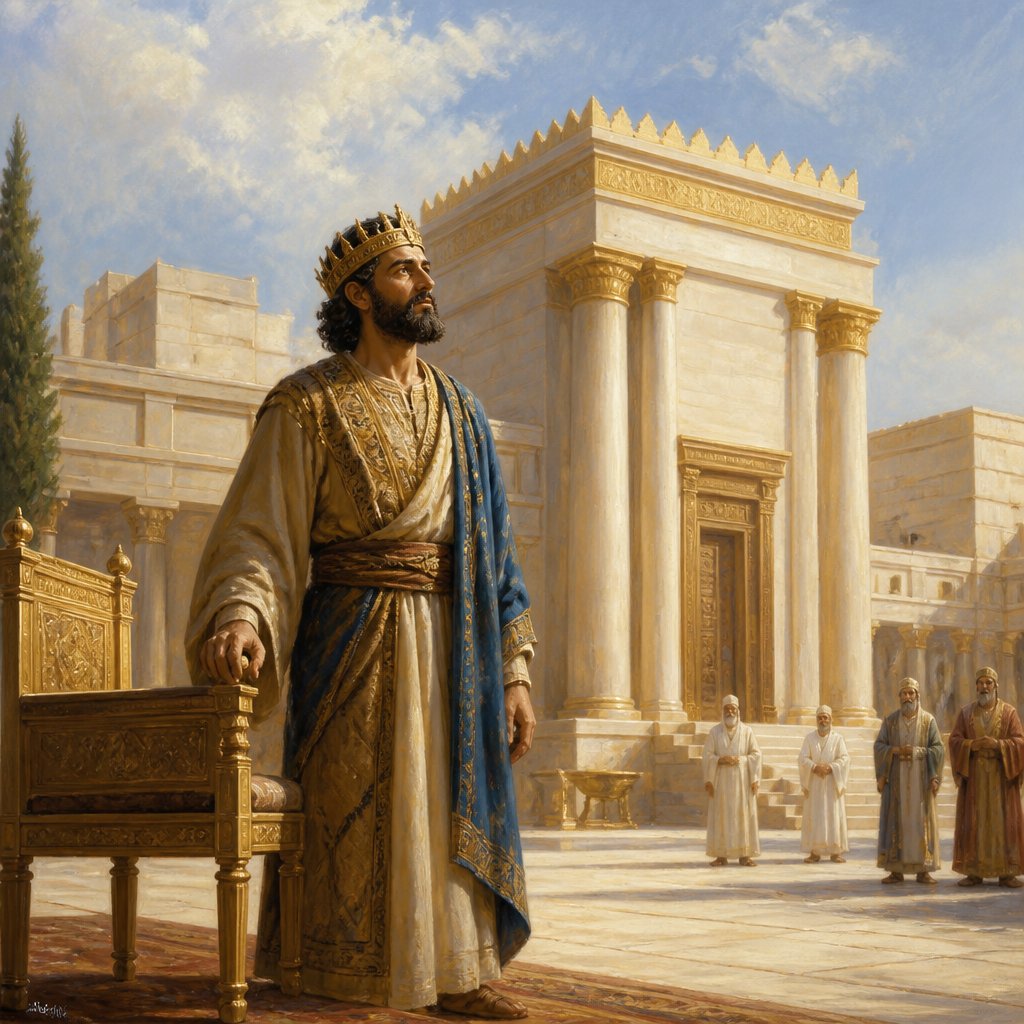
The verse 2 Chronicles 6:10, from the King James Version of the Bible, reads: "The Lord therefore hath performed his word that he hath spoken: for I am risen up in the room of David my father, and am set on the throne of Israel, as the Lord promised, and have built the house for the name of the Lord God of Israel."
This verse is part of King Solomon's prayer of dedication for the newly constructed temple in Jerusalem. In this prayer, Solomon acknowledges that the Lord had fulfilled his promises by allowing him to take the throne of Israel and build a house to honor the Lord's name. This verse captures the theme of divine fulfillment of promises and the importance of recognizing God's faithfulness.
The historical context of this verse is crucial for understanding its significance. King Solomon, the son of David, succeeded his father as the ruler of Israel. Upon ascending to the throne, Solomon was charged with the task of constructing a temple for the Lord. The temple was to replace the portable tabernacle that had been used as a place of worship and symbol of God's presence during the time of the Israelites' wilderness wanderings. The construction of the temple was a monumental event in the history of Israel, signifying the establishment of a permanent dwelling place for God among his people.
In his prayer of dedication, Solomon expresses gratitude for the completion of the temple and acknowledges the fulfillment of God's promise to establish his throne and build a house for his name. This declaration highlights the divine covenant between God and the Israelites, which originated with the promises made to King David. The temple symbolized the tangible presence of God in the midst of His people, and its completion represented the fulfillment of God's promise to dwell among them.
The verse also reveals the theme of succession and continuity in the line of David. Solomon acknowledges that he has risen up in the place of his father, David, and has inherited the responsibility of reigning over Israel. This acknowledgment underscores the significance of the Davidic line in the history of Israel and the fulfillment of God's promise to establish an eternal kingdom through David's descendants. The construction of the temple by Solomon marked the continuation of this royal lineage and the fulfillment of God's covenant with David.
Symbolically, the verse carries profound implications for the relationship between God and His people. The temple, as a physical structure, served as a representation of the spiritual bond between God and Israel. Its construction signified the fulfillment of God's promise to provide a place for His name to dwell among His chosen people. The completion of the temple symbolized the faithfulness of God in fulfilling His promises and underscored the importance of honoring His name.
Additionally, the verse emphasizes the role of Solomon as the chosen successor to David and the fulfillment of God's plan for the establishment of the Davidic dynasty. This highlights the theme of divine providence and the continuity of God's purposes throughout the history of Israel. The verse serves as a reminder of the faithfulness of God in fulfilling His promises and the importance of acknowledging His sovereignty in the accomplishments of His people.
In conclusion, 2 Chronicles 6:10 captures the essence of divine fulfillment, succession, and the symbolism of the temple as a representation of God's presence among His people. The verse holds profound significance in the historical and spiritual context of Israel and serves as a testament to the faithfulness of God in fulfilling His promises. It also underscores the importance of acknowledging God's sovereignty and recognizing His role in the establishment of His kingdom on earth.
Have questions about 2 Chronicles 6:10?
Dive deeper into this scripture with Bible Chat — an AI-powered tool for exploring God's Word through conversation. Ask questions, get context, and grow in your understanding of the Bible.
Get Our Apps


2 Chronicles 6:10 Artwork

2 Chronicles 6:10 - "The LORD therefore hath performed his word that he hath spoken: for I am risen up in the room of David my father, and am set on the throne of Israel, as the LORD promised, and have built the house for the name of the LORD God of Israel."
"The LORD therefore hath performed his word that he hath spoken: for I am risen up in the room of David my father, and am set on the throne of Israel, as the LORD promised, and have built the house for the name of the LORD God of Israel." - 2 Chronicles 6:10

2 Chronicles 10:6 - "¶ And king Rehoboam took counsel with the old men that had stood before Solomon his father while he yet lived, saying, What counsel give ye me to return answer to this people?"

2 Chronicles 23:10

2 Chronicles 23:10

2 Chronicles 30:10

2 Chronicles 35:10

1 Chronicles 6:10 - "And Johanan begat Azariah, (he it is that executed the priest's office in the temple that Solomon built in Jerusalem:)"

2 Chronicles 6:13

1 Chronicles 10:6 - "So Saul died, and his three sons, and all his house died together."

2 Chronicles 6:2 - "But I have built an house of habitation for thee, and a place for thy dwelling for ever."

1 Chronicles 6:2 - "And the sons of Kohath; Amram, Izhar, and Hebron, and Uzziel."

2 Chronicles 10:19 - "And Israel rebelled against the house of David unto this day."

2 Chronicles 33:10 - "And the LORD spake to Manasseh, and to his people: but they would not hearken."

2 Chronicles 6:6 - "But I have chosen Jerusalem, that my name might be there; and have chosen David to be over my people Israel."

2 Chronicles 11:6 - "He built even Beth-lehem, and Etam, and Tekoa,"

2 Chronicles 11:10 - "And Zorah, and Aijalon, and Hebron, which are in Judah and in Benjamin fenced cities."

2 Chronicles 6:35 - "Then hear thou from the heavens their prayer and their supplication, and maintain their cause."

1 Chronicles 2:10 - "And Ram begat Amminadab; and Amminadab begat Nahshon, prince of the children of Judah;"

2 Chronicles 10:17 - "But as for the children of Israel that dwelt in the cities of Judah, Rehoboam reigned over them."

2 Chronicles 3:6 - "And he garnished the house with precious stones for beauty: and the gold was gold of Parvaim."

2 Chronicles 12:6 - "Whereupon the princes of Israel and the king humbled themselves; and they said, The LORD is righteous."

2 Chronicles 4:10 - "And he set the sea on the right side of the east end, over against the south."

2 Chronicles 10:13 - "And the king answered them roughly; and king Rehoboam forsook the counsel of the old men,"

1 Chronicles 2:6 - "And the sons of Zerah; Zimri, and Ethan, and Heman, and Calcol, and Dara: five of them in all."

2 Chronicles 18:6 - "But Jehoshaphat said, Is there not here a prophet of the LORD besides, that we might enquire of him?"

2 Chronicles 6:1 - "Then said Solomon, The LORD hath said that he would dwell in the thick darkness."

2 Chronicles 35:10 - "So the service was prepared, and the priests stood in their place, and the Levites in their courses, according to the king's commandment."

2 Chronicles 10:1 - "And Rehoboam went to Shechem: for to Shechem were all Israel come to make him king."

2 Chronicles 10:3 - "And they sent and called him. So Jeroboam and all Israel came and spake to Rehoboam, saying,"