What does 2 Chronicles 6:1 mean?
"Then said Solomon, The LORD hath said that he would dwell in the thick darkness." - 2 Chronicles 6:1
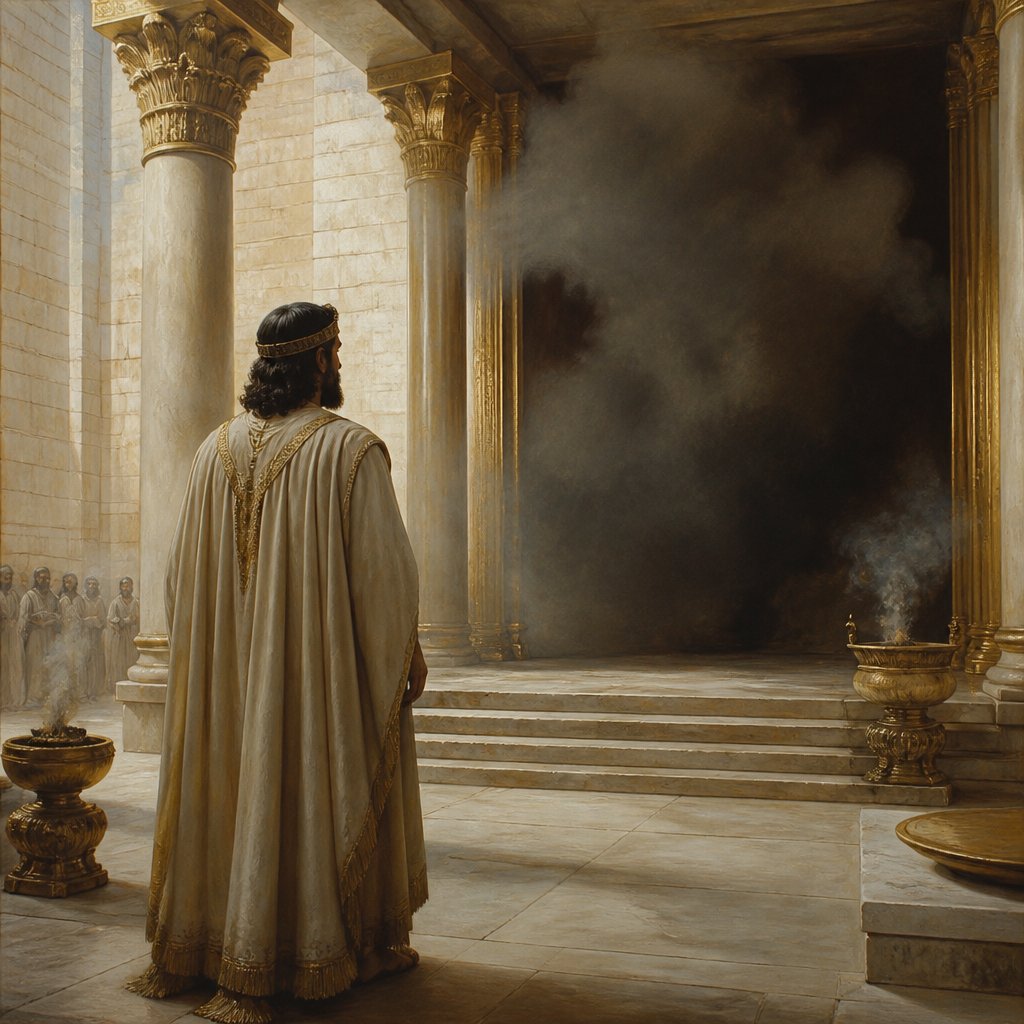
2 Chronicles 6:1 (KJV) states, "Then said Solomon, The Lord hath said that he would dwell in the thick darkness." This verse is taken from the Old Testament of the Bible and is part of a passage that describes the dedication of the temple that King Solomon built for the Lord in Jerusalem.
To fully understand the significance and meaning of this verse, it is important to examine the context in which it is found. King Solomon was the son of King David and had been chosen by God to succeed his father as the ruler of Israel. One of Solomon's most significant achievements was the construction of the temple in Jerusalem, which played a central role in the religious and spiritual life of the Israelites.
In 2 Chronicles 6, Solomon addresses the assembly of Israel and offers a prayer of dedication for the temple. The verse in question is part of Solomon's proclamation that the Lord has promised to dwell in the thick darkness. This statement has several layers of meaning and symbolism that provide insight into the nature of God and the significance of the temple as a place of worship.
The phrase "the Lord hath said that he would dwell in the thick darkness" is a reference to the presence of God within the temple. Throughout the Bible, there are numerous references to God's dwelling place being associated with light and darkness. In this context, the "thick darkness" represents the mysterious and incomprehensible nature of God's presence. It suggests that God's dwelling place is beyond human understanding and transcends the physical and material world. The darkness signifies the mystery and awe-inspiring nature of the divine presence.
This theme of darkness and light is echoed in other passages of the Bible, such as Psalm 18:11, which states, "He made darkness his secret place; his pavilion round about him were dark waters and thick clouds of the skies." This verse, like 2 Chronicles 6:1, conveys the idea that God's presence is veiled in darkness and cannot be fully comprehended by human beings.
Furthermore, the concept of God dwelling in darkness also carries symbolic significance. It suggests that God is present in the midst of difficult and challenging circumstances. The darkness represents the trials and struggles of life, and yet God is still present and active even in the midst of these hardships. This concept is echoed in Psalm 139:11-12, which states, "If I say, Surely the darkness shall cover me; even the night shall be light about me. Yea, the darkness hideth not from thee; but the night shineth as the day: the darkness and the light are both alike to thee."
In the context of the dedication of the temple, Solomon's proclamation that the Lord would dwell in the thick darkness serves as a reassurance to the people of Israel that God's presence will be with them at all times, even in the midst of uncertainty and difficulty. It emphasizes the significance of the temple as a place where the Israelites could seek God's guidance and presence, especially during times of darkness and challenge.
In summary, 2 Chronicles 6:1 is a profound and meaningful verse that conveys the mysterious and awe-inspiring nature of God's presence. It emphasizes the transcendent and incomprehensible nature of God and reinforces the significance of the temple as a place where the Israelites could seek God's presence and guidance, even in the midst of darkness and challenge. This verse serves as a reminder of God's constant presence and providence, and it encourages believers to seek God's presence in all circumstances, trusting in His faithfulness and sovereignty.
Have questions about 2 Chronicles 6:1?
Dive deeper into this scripture with Bible Chat — an AI-powered tool for exploring God's Word through conversation. Ask questions, get context, and grow in your understanding of the Bible.
Get Our Apps


2 Chronicles 6:1 Artwork

2 Chronicles 6:1 - "Then said Solomon, The LORD hath said that he would dwell in the thick darkness."

"Then said Solomon, The LORD hath said that he would dwell in the thick darkness." - 2 Chronicles 6:1

1 Chronicles 6:2 - "And the sons of Kohath; Amram, Izhar, and Hebron, and Uzziel."

1 Chronicles 2:6 - "And the sons of Zerah; Zimri, and Ethan, and Heman, and Calcol, and Dara: five of them in all."

1 Chronicles 6:1 - "The sons of Levi; Gershon, Kohath, and Merari."

"The sons of Levi; Gershon, Kohath, and Merari." - 1 Chronicles 6:1

2 Chronicles 1:6 - "And Solomon went up thither to the brasen altar before the LORD, which was at the tabernacle of the congregation, and offered a thousand burnt offerings upon it."

"And the sons of Kohath; Amram, Izhar, and Hebron, and Uzziel." - 1 Chronicles 6:2

1 Chronicles 6:6 - "And Uzzi begat Zerahiah, and Zerahiah begat Meraioth,"

2 Chronicles 6:13

1 Chronicles 1:6 - "And the sons of Gomer; Ashchenaz, and Riphath, and Togarmah."

1 Chronicles 14:6 - "And Nogah, and Nepheg, and Japhia,"

2 Chronicles 6:2 - "But I have built an house of habitation for thee, and a place for thy dwelling for ever."

1 Chronicles 3:6 - "Ibhar also, and Elishama, and Eliphelet,"

1 Chronicles 6:25 - "And the sons of Elkanah; Amasai, and Ahimoth."

1 Chronicles 6:16 - "¶ The sons of Levi; Gershom, Kohath, and Merari."

1 Chronicles 6:17 - "And these be the names of the sons of Gershom; Libni, and Shimei."

2 Chronicles 6:6 - "But I have chosen Jerusalem, that my name might be there; and have chosen David to be over my people Israel."

1 Chronicles 6:28 - "And the sons of Samuel; the firstborn Vashni, and Abiah."

2 Chronicles 11:6 - "He built even Beth-lehem, and Etam, and Tekoa,"

"And the sons of Zerah; Zimri, and Ethan, and Heman, and Calcol, and Dara: five of them in all." - 1 Chronicles 2:6

2 Chronicles 6:35 - "Then hear thou from the heavens their prayer and their supplication, and maintain their cause."

1 Chronicles 6:14 - "And Azariah begat Seraiah, and Seraiah begat Jehozadak,"

1 Chronicles 6:58 - "And Hilen with her suburbs, Debir with her suburbs,"

1 Chronicles 6:12 - "And Ahitub begat Zadok, and Zadok begat Shallum,"

1 Chronicles 7:6 - "¶ The sons of Benjamin; Bela, and Becher, and Jediael, three."

1 Chronicles 6:53 - "Zadok his son, Ahimaaz his son."

1 Chronicles 6:11 - "And Azariah begat Amariah, and Amariah begat Ahitub,"

1 Chronicles 6:5 - "And Abishua begat Bukki, and Bukki begat Uzzi,"

1 Chronicles 6:45 - "The son of Hashabiah, the son of Amaziah, the son of Hilkiah,"