What does 2 Chronicles 28:6 mean?
"¶ For Pekah the son of Remaliah slew in Judah an hundred and twenty thousand in one day, which were all valiant men; because they had forsaken the LORD God of their fathers." - 2 Chronicles 28:6
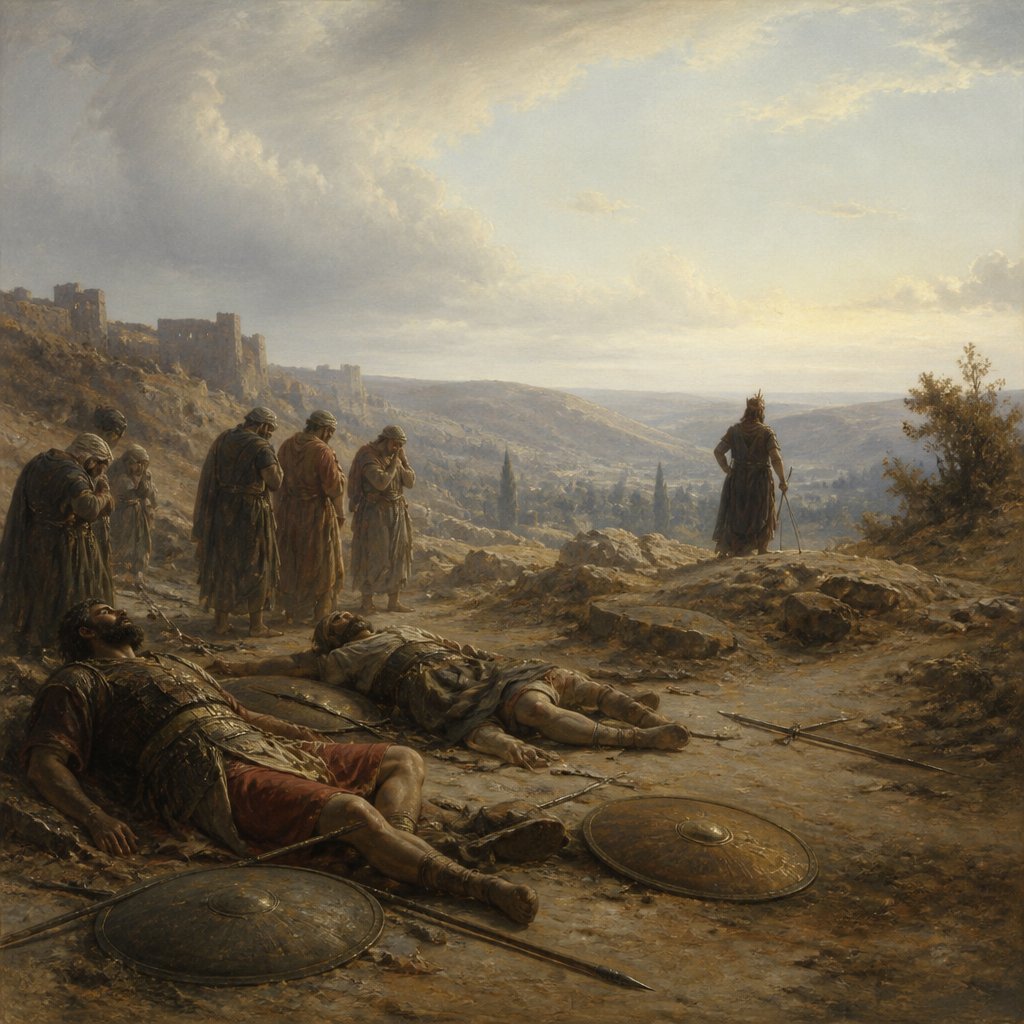
The Bible verse 2 Chronicles 28:6 from the King James Version (KJV) states, “For Pekah the son of Remaliah slew in Judah an hundred and twenty thousand in one day, which were all valiant men; because they had forsaken the Lord God of their fathers.” This verse is found in the Old Testament and is part of the historical books, providing a record of the reign of King Ahaz of Judah.
To fully understand the significance of this verse, it is important to provide some context. King Ahaz was the twelfth king of Judah, and during his reign, he abandoned the worship of God and turned to idolatry. His sinful actions led to devastating consequences for the people of Judah. Pekah, the son of Remaliah, was the king of Israel at the time, and he led an attack against Judah, resulting in the massacre of 120,000 valiant men of Judah. This event serves as a sobering reminder of the consequences of forsaking the Lord and turning to idolatry.
One of the key themes present in this verse is the importance of remaining faithful to God. The tragic outcome of the battle between Judah and Israel serves as a warning against the consequences of abandoning God and turning to false idols. The loss of 120,000 valiant men was a direct result of the people's disregard for their covenant with God and their decision to forsake Him. This serves as a powerful reminder that turning away from God leads to destruction and loss.
The verse also highlights the concept of divine justice and judgment. The defeat of Judah at the hands of Israel was not simply a result of military conquest, but rather a manifestation of God's judgment upon the people for their disobedience. The Old Testament frequently depicts God's hand in the affairs of nations, rewarding obedience and punishing disobedience. In this case, the massacre of Judah's valiant men serves as a stark illustration of the consequences of straying from God's commandments.
Furthermore, the verse also portrays the contrasting leadership styles of King Ahaz and Pekah. While Ahaz led his people astray with his idolatrous practices, Pekah, despite being a pagan king, was able to rally the forces of Israel and achieve a significant victory. This serves as a reminder that righteous leadership is essential for the well-being of a nation, and that the actions of a leader can have far-reaching consequences for their people.
The symbolism in this verse is also worth noting. The slaughter of 120,000 valiant men is a symbolic representation of the devastating impact of sin and disobedience. It serves as a grim reminder of the consequences of turning away from God and the high cost of abandoning one's faith. Additionally, the number 120,000 may also symbolize the magnitude of the loss suffered by Judah, emphasizing the severity of the judgment brought upon them.
In conclusion, 2 Chronicles 28:6 from the King James Version of the Bible serves as a poignant reminder of the consequences of forsaking God and turning to idolatry. It highlights the themes of faithfulness, divine judgment, and the impact of leadership, while also employing powerful symbolism to convey its message. This verse serves as a sobering warning to remain steadfast in one's faith and to heed the consequences of straying from God's commandments.
Have questions about 2 Chronicles 28:6?
Dive deeper into this scripture with Bible Chat — an AI-powered tool for exploring God's Word through conversation. Ask questions, get context, and grow in your understanding of the Bible.
Get Our Apps


2 Chronicles 28:6 Artwork

2 Chronicles 28:6 - "¶ For Pekah the son of Remaliah slew in Judah an hundred and twenty thousand in one day, which were all valiant men; because they had forsaken the LORD God of their fathers."
"¶ For Pekah the son of Remaliah slew in Judah an hundred and twenty thousand in one day, which were all valiant men; because they had forsaken the LORD God of their fathers." - 2 Chronicles 28:6

2 Chronicles 6:28 - "¶ If there be dearth in the land, if there be pestilence, if there be blasting, or mildew, locusts, or caterpillers; if their enemies besiege them in the cities of their land; whatsoever sore or whatsoever sickness there be:"

1 Chronicles 6:28 - "And the sons of Samuel; the firstborn Vashni, and Abiah."

2 Chronicles 28:3

2 Chronicles 20:28

2 Chronicles 28:2 - "For he walked in the ways of the kings of Israel, and made also molten images for Baalim."

"And the sons of Samuel; the firstborn Vashni, and Abiah." - 1 Chronicles 6:28

2 Chronicles 20:28 - "And they came to Jerusalem with psalteries and harps and trumpets unto the house of the LORD."

2 Chronicles 9:28 - "And they brought unto Solomon horses out of Egypt, and out of all lands."

1 Chronicles 2:28 - "And the sons of Onam were, Shammai, and Jada. And the sons of Shammai; Nadab, and Abishur."

2 Chronicles 28:17 - "For again the Edomites had come and smitten Judah, and carried away captives."

2 Chronicles 28:14 - "So the armed men left the captives and the spoil before the princes and all the congregation."

2 Chronicles 18:28 - "So the king of Israel and Jehoshaphat the king of Judah went up to Ramoth-gilead."

2 Chronicles 28:16 - "¶ At that time did king Ahaz send unto the kings of Assyria to help him."

2 Chronicles 25:28 - "And they brought him upon horses, and buried him with his fathers in the city of Judah."

2 Chronicles 28:20 - "And Tilgath-pilneser king of Assyria came unto him, and distressed him, but strengthened him not."

2 Chronicles 6:13

2 Chronicles 28:22 - "¶ And in the time of his distress did he trespass yet more against the LORD: this is that king Ahaz."

2 Chronicles 28:4 - "He sacrificed also and burnt incense in the high places, and on the hills, and under every green tree."

2 Kings 23:28 - "Now the rest of the acts of Josiah, and all that he did, are they not written in the book of the chronicles of the kings of Judah?"

2 Chronicles 32:28 - "Storehouses also for the increase of corn, and wine, and oil; and stalls for all manner of beasts, and cotes for flocks."
"¶ If there be dearth in the land, if there be pestilence, if there be blasting, or mildew, locusts, or caterpillers; if their enemies besiege them in the cities of their land; whatsoever sore or whatsoever sickness there be:" - 2 Chronicles 6:28

2 Chronicles 29:28 - "And all the congregation worshipped, and the singers sang, and the trumpeters sounded: and all this continued until the burnt offering was finished."

2 Chronicles 28:7 - "And Zichri, a mighty man of Ephraim, slew Maaseiah the king's son, and Azrikam the governor of the house, and Elkanah that was next to the king."

2 Chronicles 6:2 - "But I have built an house of habitation for thee, and a place for thy dwelling for ever."

1 Chronicles 6:2 - "And the sons of Kohath; Amram, Izhar, and Hebron, and Uzziel."

2 Chronicles 28:26 - "¶ Now the rest of his acts and of all his ways, first and last, behold, they are written in the book of the kings of Judah and Israel."

1 Chronicles 28:6 - "And he said unto me, Solomon thy son, he shall build my house and my courts: for I have chosen him to be my son, and I will be his father."

2 Chronicles 6:6 - "But I have chosen Jerusalem, that my name might be there; and have chosen David to be over my people Israel."