What does 2 Chronicles 1:8 mean?
"And Solomon said unto God, Thou hast shewed great mercy unto David my father, and hast made me to reign in his stead." - 2 Chronicles 1:8
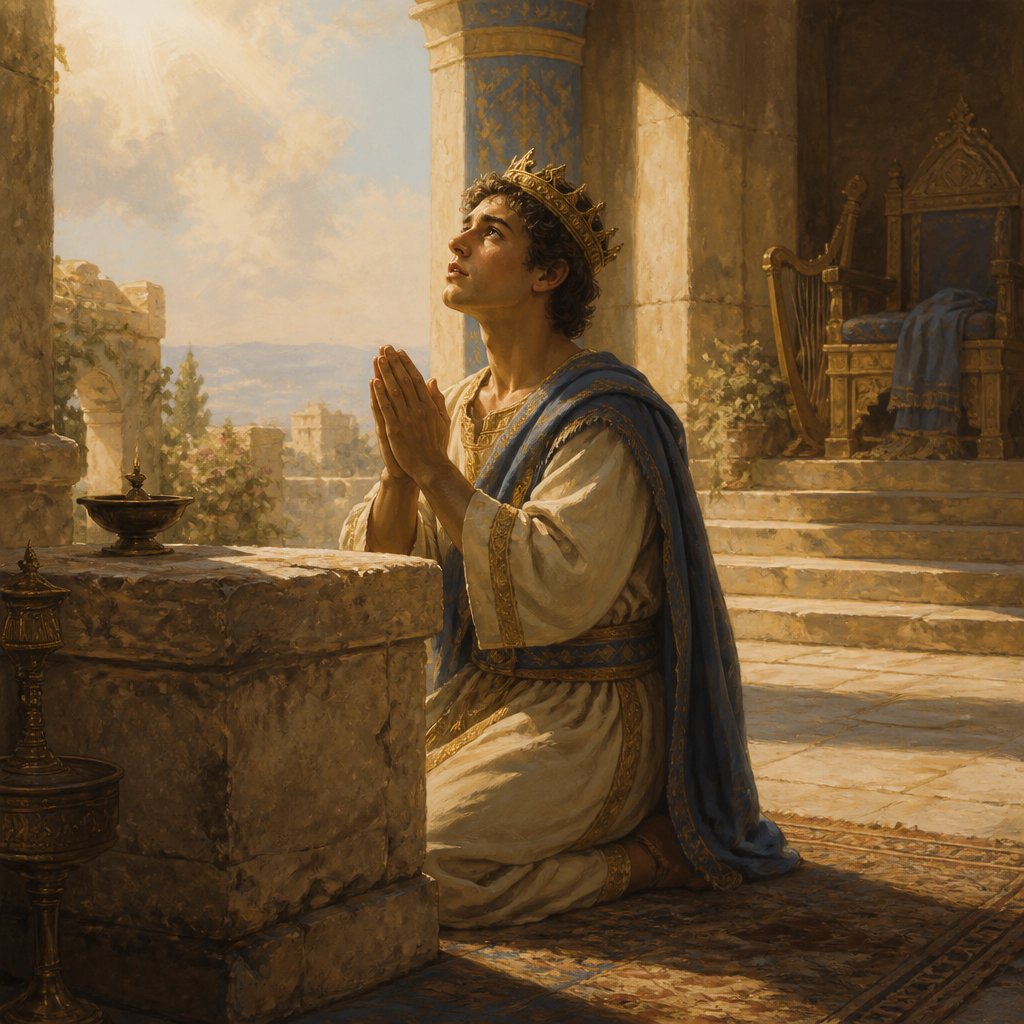
The Bible verse 2 Chronicles 1:8 from the King James Version (KJV) states: "And Solomon said unto God, Thou hast shewed great mercy unto David my father, and hast made me to reign in his stead."
This verse is part of the Old Testament book of 2 Chronicles, which chronicles the history of the Israelite kings. In this particular verse, Solomon, the son of David, has just become the new king of Israel, and he is acknowledging and recognizing the great mercy and favor that God had shown to his father, David, by allowing Solomon to reign in his father's place.
This verse exemplifies several key themes and concepts found throughout the Bible, including the importance of recognizing and acknowledging God's mercy and favor, the passing down of leadership and responsibility from one generation to the next, and the idea of divine succession and inheritance.
One of the central themes of this verse is the concept of mercy and favor from God. Solomon acknowledges that God had shown great mercy to his father, David, by allowing him to rule and reign as king. This demonstrates the gratitude and humility of Solomon, as he recognizes that his position as king is a result of God's favor and not solely a result of his own efforts or abilities. This idea of divine favor and mercy is a recurring theme throughout the Bible, highlighting the belief that God's blessings and gifts are given freely and undeservedly to those who seek Him.
Another important theme in this verse is the passing down of leadership and responsibility from one generation to the next. Solomon acknowledges that he has been made to reign in his father's place, indicating a sense of familial and divine succession in leadership. This idea of passing down authority and responsibility is significant in the context of Ancient Near Eastern cultures, where kingship and leadership were often seen as hereditary and passed down from father to son. This verse highlights the continuity of God's plan and promises through successive generations and the importance of honoring and recognizing the contributions and legacies of those who came before.
Furthermore, this verse also symbolizes the concept of divine succession and inheritance. The fact that Solomon has been made to reign in his father's place emphasizes the idea of divine appointment and inheritance, where God's chosen leaders are designated to continue the work and legacy of those who came before. This reinforces the belief in God's providence and sovereignty in appointing and guiding leaders, as well as the idea of stewardship and responsibility in carrying out God's purposes and plans.
In conclusion, 2 Chronicles 1:8 from the King James Version of the Bible is a profound and significant verse that encompasses several key themes and concepts, including recognizing and acknowledging God's mercy and favor, the passing down of leadership and responsibility from one generation to the next, and the idea of divine succession and inheritance. This verse serves as a reminder of the importance of humility, gratitude, and stewardship in recognizing and honoring God's blessings and the legacies of those who came before.
Have questions about 2 Chronicles 1:8?
Dive deeper into this scripture with Bible Chat — an AI-powered tool for exploring God's Word through conversation. Ask questions, get context, and grow in your understanding of the Bible.
Get Our Apps


2 Chronicles 1:8 Artwork

2 Chronicles 1:8 - "And Solomon said unto God, Thou hast shewed great mercy unto David my father, and hast made me to reign in his stead."
"And Solomon said unto God, Thou hast shewed great mercy unto David my father, and hast made me to reign in his stead." - 2 Chronicles 1:8

1 Chronicles 2:8 - "And the sons of Ethan; Azariah."

1 Chronicles 8:2 - "Nohah the fourth, and Rapha the fifth."

"And the sons of Ethan; Azariah." - 1 Chronicles 2:8

1 Chronicles 1:8 - "¶ The sons of Ham; Cush, and Mizraim, Put, and Canaan."

"Nohah the fourth, and Rapha the fifth." - 1 Chronicles 8:2

2 Chronicles 8:1 - "And it came to pass at the end of twenty years, wherein Solomon had built the house of the LORD, and his own house,"

"¶ The sons of Ham; Cush, and Mizraim, Put, and Canaan." - 1 Chronicles 1:8

2 Chronicles 11:8 - "And Gath, and Mareshah, and Ziph,"

1 chronicles 12:8

1 Chronicles 8:31 - "And Gedor, and Ahio, and Zacher."

1 Chronicles 8:20 - "And Elienai, and Zilthai, and Eliel,"

1 Chronicles 8:19 - "And Jakim, and Zichri, and Zabdi,"

1 Chronicles 8:24 - "And Hananiah, and Elam, and Antothijah,"

1 Chronicles 8:26 - "And Shamsherai, and Shehariah, and Athaliah,"

1 Chronicles 8:5 - "And Gera, and Shephuphan, and Huram."

1 Chronicles 8:22 - "And Ishpan, and Heber, and Eliel,"

1 Chronicles 8:14 - "And Ahio, Shashak, and Jeremoth,"

1 Chronicles 8:23 - "And Abdon, and Zichri, and Hanan,"

1 Chronicles 8:4 - "And Abishua, and Naaman, and Ahoah,"

1 Chronicles 8:15 - "And Zebadiah, and Arad, and Ader,"

1 Chronicles 3:8 - "And Elishama, and Eliada, and Eliphelet, nine."

2 Chronicles 8:3 - "And Solomon went to Hamath-zobah, and prevailed against it."

1 Chronicles 8:17 - "And Zebadiah, and Meshullam, and Hezeki, and Heber,"

1 Chronicles 8:25 - "And Iphedeiah, and Penuel, the sons of Shashak;"

1 Chronicles 24:8 - "The third to Harim, the fourth to Seorim,"

1 Chronicles 8:21 - "And Adaiah, and Beraiah, and Shimrath, the sons of Shimhi;"

1 Chronicles 8:11 - "And of Hushim he begat Abitub, and Elpaal."

1 Chronicles 8:16 - "And Michael, and Ispah, and Joha, the sons of Beriah;"