What does 2 Chronicles 13:15 mean?
"Then the men of Judah gave a shout: and as the men of Judah shouted, it came to pass, that God smote Jeroboam and all Israel before Abijah and Judah." - 2 Chronicles 13:15
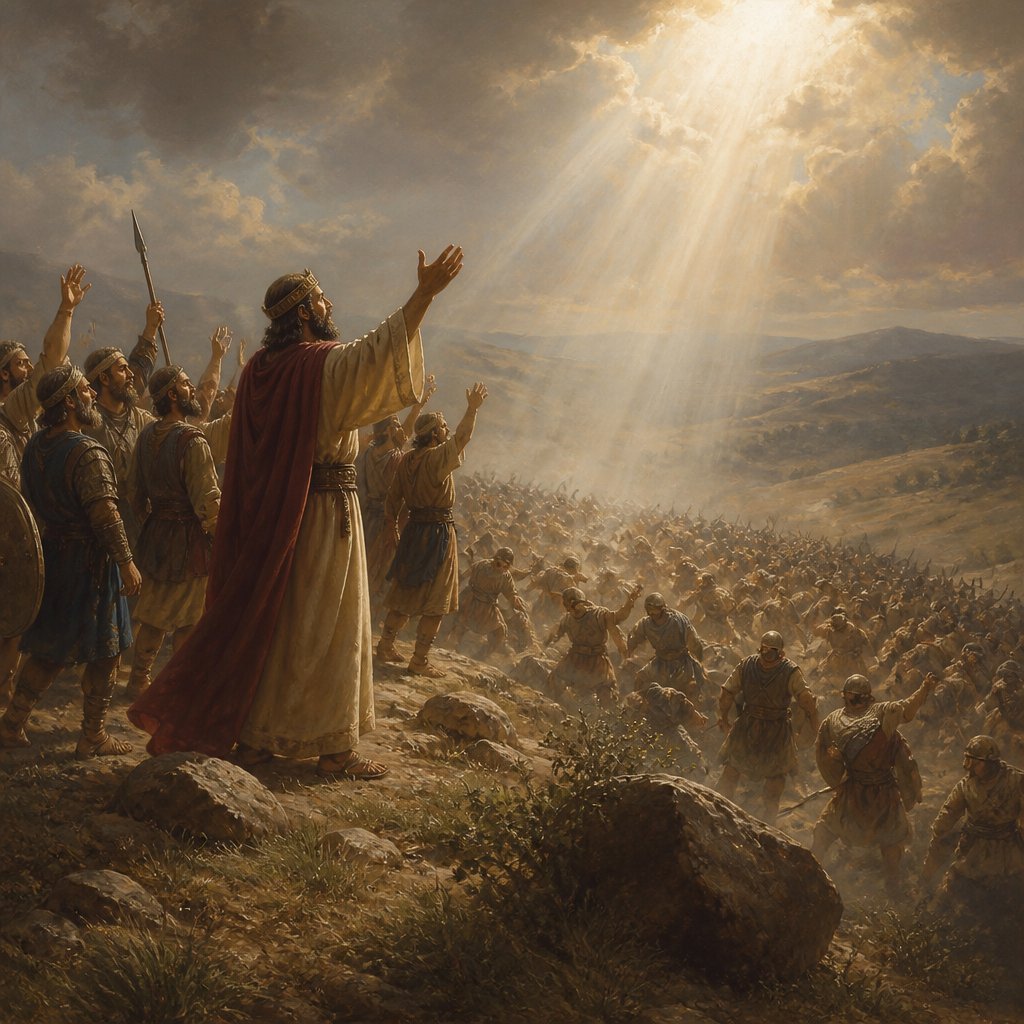
The verse 2 Chronicles 13:15 in the King James Version of the Bible states: "Then the men of Judah gave a shout: and as the men of Judah shouted, it came to pass, that God smote Jeroboam and all Israel before Abijah and Judah."
This verse is part of the account of the war between the kingdoms of Judah and Israel. To fully understand the meaning and symbolism of this verse, it is important to consider the historical and cultural context in which it was written.
The book of 2 Chronicles is a historical account of the kings of Judah, the southern kingdom of Israel, and their reigns. The verse in question occurs during a time of conflict between the two kingdoms. Jeroboam, the king of Israel, had rebelled against the house of David and established a separate kingdom in the northern part of the land. Abijah, the king of Judah, was determined to reunify the kingdom under his rule.
In this verse, we see the men of Judah giving a shout before going into battle. This shout is a demonstration of their faith and trust in God. In ancient Israelite warfare, a battle cry or shout was often believed to invoke the presence and favor of God. The act of shouting before battle was an expression of confidence in God's help and a way of acknowledging His power and sovereignty. This symbolic act reflects the theme of faith and reliance on God's intervention in times of conflict and struggle.
The verse goes on to say that as the men of Judah shouted, God smote Jeroboam and all Israel before them. This indicates that the victory in battle was attributed to the intervention of God on behalf of the men of Judah. The smiting of Jeroboam and all Israel can be seen as a demonstration of God's power and justice in supporting the rightful king and his people. It also serves as a reminder of the consequences of rebellion and the importance of remaining faithful to God and His appointed leaders.
The symbolism in this verse can be understood in the broader context of the biblical narrative. The conflict between Judah and Israel reflects the ongoing struggle between good and evil, righteousness and unfaithfulness, throughout the history of God's people. The victory of Judah over Israel demonstrates God's faithfulness to His covenant and His commitment to uphold the line of David as the rightful rulers of Israel.
The verse also speaks to the theme of divine intervention in human affairs. The outcome of the battle was not solely determined by the strength or tactics of the men of Judah, but by the hand of God working on their behalf. This serves as a powerful reminder that God is ultimately in control of the course of history and that His will cannot be thwarted by human efforts.
In conclusion, 2 Chronicles 13:15 is a verse rich in symbolism and meaning. It reflects the themes of faith, divine intervention, justice, and the ongoing struggle between good and evil. The victory of Judah over Israel serves as a reminder of God's faithfulness to His people and His commitment to uphold His covenant. It also encourages believers to place their trust in God and to rely on His intervention in times of conflict and struggle.
Have questions about 2 Chronicles 13:15?
Dive deeper into this scripture with Bible Chat — an AI-powered tool for exploring God's Word through conversation. Ask questions, get context, and grow in your understanding of the Bible.
Get Our Apps


2 Chronicles 13:15 Artwork

2 Chronicles 13:15 - "Then the men of Judah gave a shout: and as the men of Judah shouted, it came to pass, that God smote Jeroboam and all Israel before Abijah and Judah."

"Then the men of Judah gave a shout: and as the men of Judah shouted, it came to pass, that God smote Jeroboam and all Israel before Abijah and Judah." - 2 Chronicles 13:15

2 Chronicles 15:13 - "That whosoever would not seek the LORD God of Israel should be put to death, whether small or great, whether man or woman."

2 chronicles 13:12

2 Chronicles 6:13

1 Chronicles 2:15 - "Ozem the sixth, David the seventh:"

2 Chronicles 4:15 - "One sea, and twelve oxen under it."

2 Kings 15:15 - "And the rest of the acts of Shallum, and his conspiracy which he made, behold, they are written in the book of the chronicles of the kings of Israel."

2 Chronicles 2:13 - "And now I have sent a cunning man, endued with understanding, of Huram my father's,"

2 Chronicles 15:1 - "And the Spirit of God came upon Azariah the son of Oded:"

2 Chronicles 13:13 - "¶ But Jeroboam caused an ambushment to come about behind them: so they were before Judah, and the ambushment was behind them."

"That whosoever would not seek the LORD God of Israel should be put to death, whether small or great, whether man or woman." - 2 Chronicles 15:13

2 Chronicles 15:19 - "And there was no more war unto the five and thirtieth year of the reign of Asa."

2 Chronicles 15:14 - "And they sware unto the LORD with a loud voice, and with shouting, and with trumpets, and with cornets."

1 Chronicles 15:13 - "For because ye did it not at the first, the LORD our God made a breach upon us, for that we sought him not after the due order."

2 Chronicles 17:15 - "And next to him was Jehohanan the captain, and with him two hundred and fourscore thousand."

2 Chronicles 29:13 - "And of the sons of Elizaphan; Shimri, and Jeiel: and of the sons of Asaph; Zechariah, and Mattaniah:"

2 Chronicles 13:1 - "Now in the eighteenth year of king Jeroboam began Abijah to reign over Judah."

2 Kings 15:11 - "And the rest of the acts of Zachariah, behold, they are written in the book of the chronicles of the kings of Israel."

2 Chronicles 20:13 - "And all Judah stood before the LORD, with their little ones, their wives, and their children."

2 Chronicles 13:16 - "And the children of Israel fled before Judah: and God delivered them into their hand."

1 Chronicles 2:13 - "¶ And Jesse begat his firstborn Eliab, and Abinadab the second, and Shimma the third,"

2 Chronicles 15:12 - "And they entered into a covenant to seek the LORD God of their fathers with all their heart and with all their soul;"
2 Kings 15:6 - "And the rest of the acts of Azariah, and all that he did, are they not written in the book of the chronicles of the kings of Judah?"

2 Chronicles 15:10 - "So they gathered themselves together at Jerusalem in the third month, in the fifteenth year of the reign of Asa."

2 Chronicles 11:13 - "¶ And the priests and the Levites that were in all Israel resorted to him out of all their coasts."

2 Chronicles 10:13 - "And the king answered them roughly; and king Rehoboam forsook the counsel of the old men,"

2 Chronicles 16:13 - "¶ And Asa slept with his fathers, and died in the one and fortieth year of his reign."

2 Chronicles 2:15 - "Now therefore the wheat, and the barley, the oil, and the wine, which my lord hath spoken of, let him send unto his servants:"

2 Chronicles 15:6 - "And nation was destroyed of nation, and city of city: for God did vex them with all adversity."