What does 2 Chronicles 11:7 mean?
"And Beth-zur, and Shoco, and Adullam," - 2 Chronicles 11:7
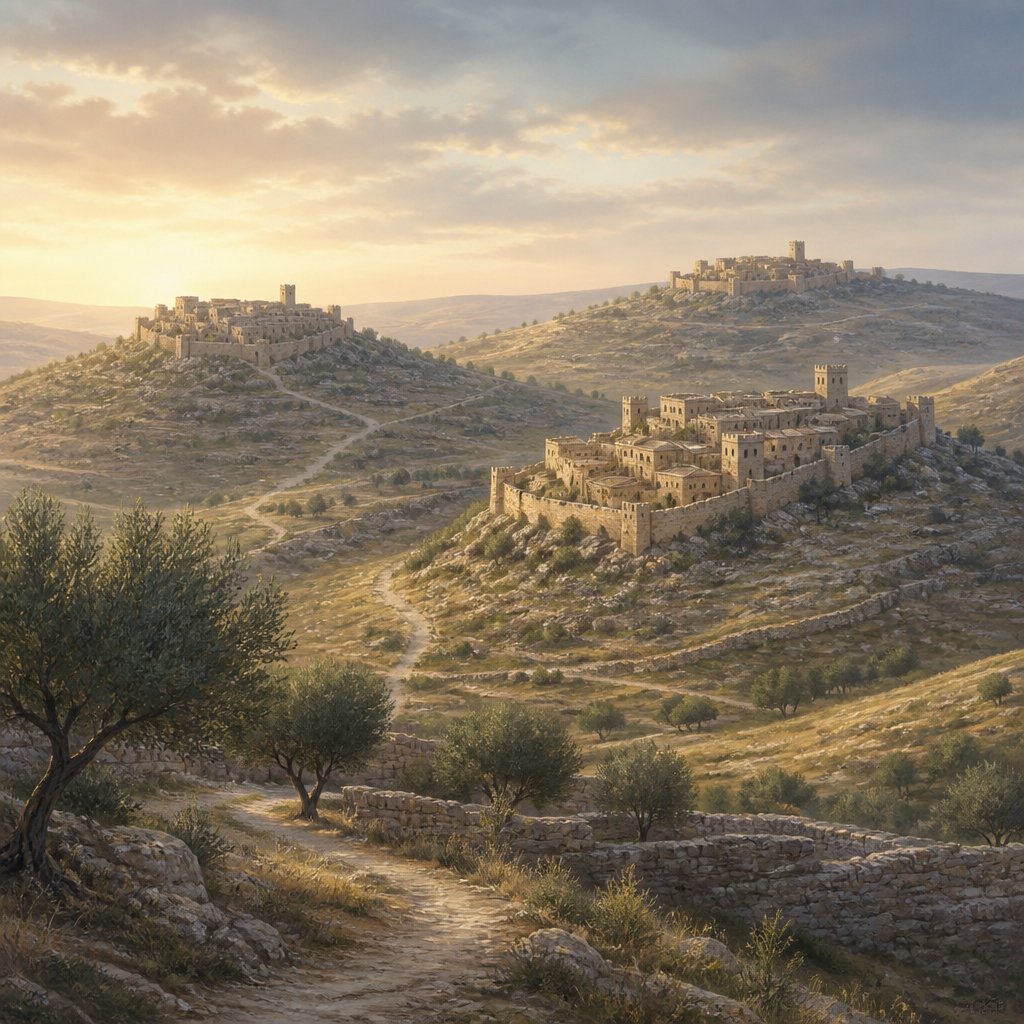
The Bible verse 2 Chronicles 11:7 in the King James Version reads, "Even to build the city for defence, and to fortify it, and to cast out the inhabitants of the land, and take possession of it, and to build it for defence in Jerusalem, and in Judah." This verse is part of a larger passage that describes the actions of Rehoboam, the son of Solomon, after he became king of the southern kingdom of Judah.
In order to fully understand the meaning and significance of this verse, it is important to provide some context. After Solomon's death, the kingdom of Israel was divided into two separate entities: the northern kingdom of Israel and the southern kingdom of Judah. Rehoboam became the king of Judah, while Jeroboam, a former servant of Solomon, became the king of Israel. Jeroboam led a rebellion against Solomon's successor, claiming that the heavy burden of taxes and labor imposed by Solomon on the people was unjust.
In response to this rebellion, Rehoboam sought to strengthen his position as king and solidify his rule over the kingdom of Judah. The verse 2 Chronicles 11:7 describes Rehoboam's efforts to fortify the city of Jerusalem and to expel the inhabitants of the land in order to secure his territory. This passage underscores the importance of defensive measures and strategic planning in maintaining control and asserting authority.
The themes present in this verse include the exercise of power and authority, the protection of one's kingdom, and the implementation of security measures. Rehoboam's actions reflect the desire to establish a stable and secure environment for himself and his people, as well as to demonstrate strength and resilience in the face of internal and external threats.
Furthermore, the verse highlights the use of force and displacement in order to achieve political and territorial objectives. Rehoboam's decision to "cast out the inhabitants of the land" demonstrates the brutal means employed by rulers to consolidate their domains and eliminate potential sources of opposition.
Symbolically, the fortification of the city and the expulsion of its inhabitants can be interpreted as a metaphor for the defense of one's beliefs and values, as well as the removal of negative influences. This verse serves as a reminder of the necessity for vigilance and precaution in safeguarding what is important and meaningful.
In a broader sense, this passage can also be viewed as a reflection of the complexities and challenges inherent in governance and leadership. The actions taken by Rehoboam illustrate the inherent tensions between the exercise of power and the maintenance of stability, as well as the moral and ethical implications of such decisions.
In conclusion, 2 Chronicles 11:7 conveys not only the historical account of Rehoboam's efforts to fortify his kingdom, but also the broader themes of power, security, and leadership. The verse serves as a poignant reminder of the timeless struggles and dilemmas faced by those in positions of authority, and the enduring significance of fortifying one's beliefs and values.
Have questions about 2 Chronicles 11:7?
Dive deeper into this scripture with Bible Chat — an AI-powered tool for exploring God's Word through conversation. Ask questions, get context, and grow in your understanding of the Bible.
Get Our Apps


2 Chronicles 11:7 Artwork

2 Chronicles 11:7 - "And Beth-zur, and Shoco, and Adullam,"

"And Beth-zur, and Shoco, and Adullam," - 2 Chronicles 11:7
2 Chronicles 7:11 - "Thus Solomon finished the house of the LORD, and the king's house: and all that came into Solomon's heart to make in the house of the LORD, and in his own house, he prosperously effected."

2 Chronicles 11:20

1 Chronicles 11:7 - "And David dwelt in the castle; therefore they called it the city of David."

2 Chronicles 35:11

2 Chronicles 11:2 - "But the word of the LORD came to Shemaiah the man of God, saying,"

2 Chronicles 11:9 - "And Adoraim, and Lachish, and Azekah,"

2 Chronicles 11:8 - "And Gath, and Mareshah, and Ziph,"

2 chronicles 7:14

2 chronicles 7:14

2 Chronicles 11:11 - "And he fortified the strong holds, and put captains in them, and store of victual, and of oil and wine."

1 Chronicles 2:11 - "And Nahshon begat Salma, and Salma begat Boaz,"

2 Chronicles 11:19 - "Which bare him children; Jeush, and Shamariah, and Zaham."

2 Chronicles 11:5 - "¶ And Rehoboam dwelt in Jerusalem, and built cities for defence in Judah."

2 Chronicles 11:6 - "He built even Beth-lehem, and Etam, and Tekoa,"

2 Chronicles 31:11 - "¶ Then Hezekiah commanded to prepare chambers in the house of the LORD; and they prepared them,"

2 Chronicles 11:10 - "And Zorah, and Aijalon, and Hebron, which are in Judah and in Benjamin fenced cities."

2 Chronicles 7:4 - "¶ Then the king and all the people offered sacrifices before the LORD."

2 Chronicles 7:2 - "And the priests could not enter into the house of the LORD, because the glory of the LORD had filled the LORD'S house."

2 Chronicles 30:11 - "Nevertheless divers of Asher and Manasseh and of Zebulun humbled themselves, and came to Jerusalem."

2 Kings 15:11 - "And the rest of the acts of Zachariah, behold, they are written in the book of the chronicles of the kings of Israel."

"And Adoraim, and Lachish, and Azekah," - 2 Chronicles 11:9

"And Gath, and Mareshah, and Ziph," - 2 Chronicles 11:8

Humble ourselves and pray 2 Chronicles 7:14

2 Chronicles 11:13 - "¶ And the priests and the Levites that were in all Israel resorted to him out of all their coasts."

1 Chronicles 2:7 - "And the sons of Carmi; Achar, the troubler of Israel, who transgressed in the thing accursed."

"And David dwelt in the castle; therefore they called it the city of David." - 1 Chronicles 11:7

2 Chronicles 16:11 - "¶ And, behold, the acts of Asa, first and last, lo, they are written in the book of the kings of Judah and Israel."

2 Chronicles 6:11 - "And in it have I put the ark, wherein is the covenant of the LORD, that he made with the children of Israel."