What does 2 Chronicles 10:13 mean?
"And the king answered them roughly; and king Rehoboam forsook the counsel of the old men," - 2 Chronicles 10:13
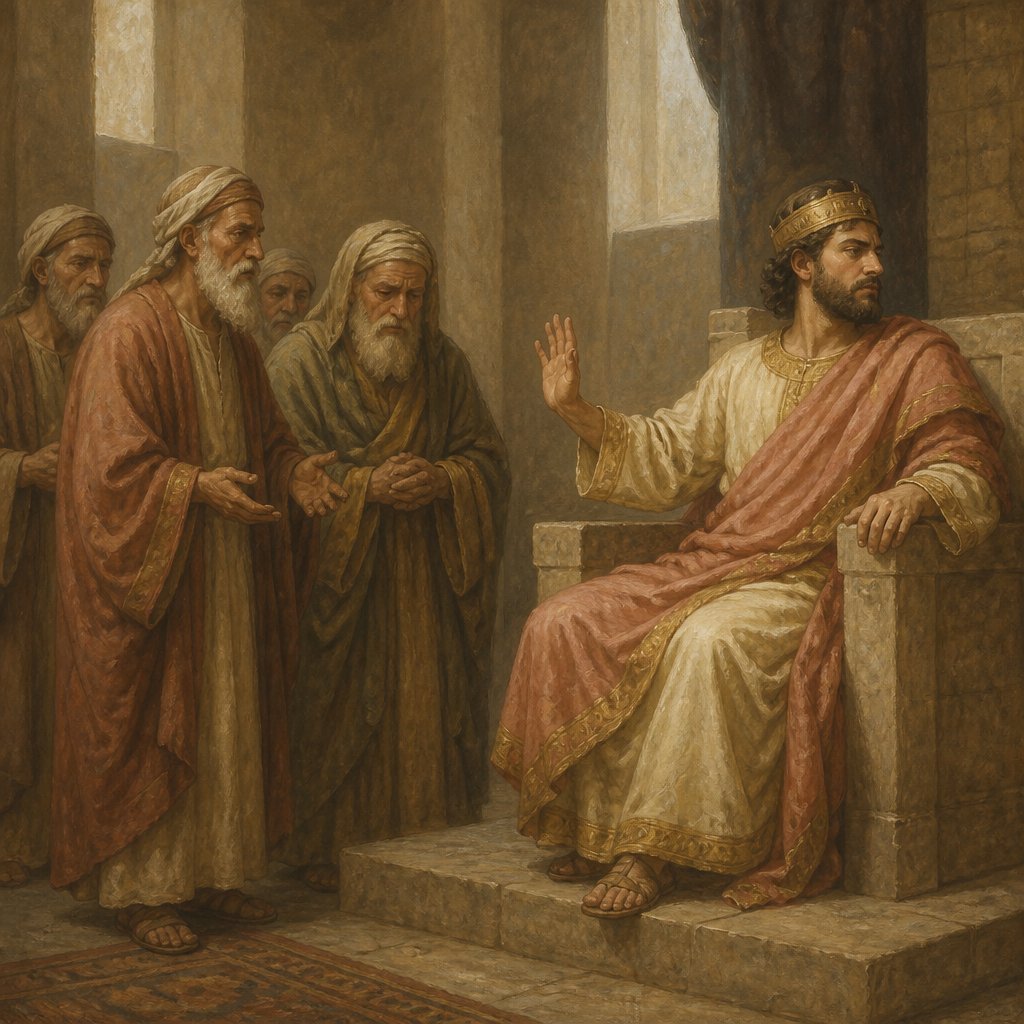
The verse "And the king answered them roughly; and king Rehoboam forsook the counsel of the old men," from 2 Chronicles 10:13 in the King James Version of the Bible, is part of the story about the division of the kingdom of Israel. This verse is just one piece of a much larger narrative, but it holds significant meaning and depth within the context of the entire story.
The book of 2 Chronicles is a historical account of the kings of Israel, starting with the reign of Solomon and the construction of the temple, and then detailing the reigns of the subsequent kings. This particular verse comes from the chapter that describes the reign of Rehoboam, the son of Solomon, and how he interacts with the people of Israel after the death of his father.
To understand the significance of this verse, it is important to provide a brief overview of the events leading up to this point. After the death of Solomon, the people of Israel came to Rehoboam and asked him to lighten the burden that his father had placed upon them. They were feeling the weight of heavy taxes and labor imposed by Solomon and sought relief. Rehoboam asked for time to consider their request and consulted with both the elders who had served his father and his peers who had grown up with him. The elders advised Rehoboam to listen to the people and agree to their request, as they believed it would secure their loyalty. However, his peers suggested that he should respond with even greater severity to display his power. Rehoboam ultimately rejected the advice of the elders and chose to follow the counsel of his peers, which resulted in the division of the kingdom of Israel.
In 2 Chronicles 10:13, the verse brings attention to Rehoboam's harsh response to the people. The use of the word "roughly" in this verse signifies the brusque and callous manner in which he addressed the people. This decision marked a critical turning point in the history of Israel, leading to the separation of the kingdom into a northern part (Israel) and a southern part (Judah).
The themes present in this verse and the surrounding narrative are the consequences of pride and the importance of wise counsel. Rehoboam's arrogance and refusal to heed the advice of the elders led to disastrous outcomes. His decision to forgo the wisdom of the older, more experienced counselors and instead relying on the counsel of his younger peers, who were likely driven by their own self-interest or lack of understanding, created division and discord among the people. This serves as a cautionary tale about the dangers of pride and the necessity of seeking and heeding wise counsel.
Symbolically, this verse can be interpreted as a representation of the broader theme of the consequences of pride and the importance of humility and wisdom. The rejection of the elders' counsel by Rehoboam can be seen as a metaphor for the refusal to acknowledge and learn from those who are wiser and more experienced. This can lead to division and discord, just as it did in the story of Rehoboam.
In conclusion, 2 Chronicles 10:13 has significant religious, moral, and historical implications within the context of the story of the division of the kingdom of Israel. The verse serves as a cautionary tale about the consequences of pride and the importance of seeking and heeding wise counsel. It also illustrates the importance of humility and the potential for division when one fails to recognize and respect the wisdom of others. This verse and its surrounding narrative provide valuable lessons about leadership, decision-making, and the importance of humility and wisdom.
Have questions about 2 Chronicles 10:13?
Dive deeper into this scripture with Bible Chat — an AI-powered tool for exploring God's Word through conversation. Ask questions, get context, and grow in your understanding of the Bible.
Get Our Apps


2 Chronicles 10:13 Artwork

2 Chronicles 10:13 - "And the king answered them roughly; and king Rehoboam forsook the counsel of the old men,"
"And the king answered them roughly; and king Rehoboam forsook the counsel of the old men," - 2 Chronicles 10:13
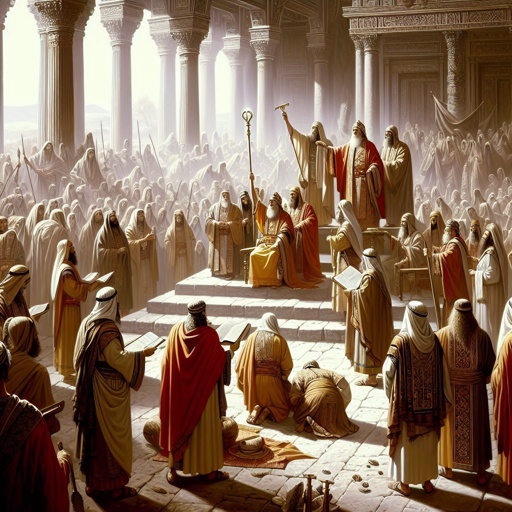
2 Chronicles 13:10 - "But as for us, the LORD is our God, and we have not forsaken him; and the priests, which minister unto the LORD, are the sons of Aaron, and the Levites wait upon their business:"

2 Chronicles 6:13

2 chronicles 13:12

2 Chronicles 23:10

2 Chronicles 23:10

2 Chronicles 30:10

2 Chronicles 35:10

1 Chronicles 10:13 - "¶ So Saul died for his transgression which he committed against the LORD, even against the word of the LORD, which he kept not, and also for asking counsel of one that had a familiar spirit, to enquire of it;"

2 Chronicles 10:19 - "And Israel rebelled against the house of David unto this day."

2 Chronicles 2:13 - "And now I have sent a cunning man, endued with understanding, of Huram my father's,"

2 Chronicles 13:13 - "¶ But Jeroboam caused an ambushment to come about behind them: so they were before Judah, and the ambushment was behind them."

2 Chronicles 29:13 - "And of the sons of Elizaphan; Shimri, and Jeiel: and of the sons of Asaph; Zechariah, and Mattaniah:"

2 Chronicles 33:10 - "And the LORD spake to Manasseh, and to his people: but they would not hearken."

2 Chronicles 20:13 - "And all Judah stood before the LORD, with their little ones, their wives, and their children."

2 Chronicles 13:16 - "And the children of Israel fled before Judah: and God delivered them into their hand."

1 Chronicles 2:13 - "¶ And Jesse begat his firstborn Eliab, and Abinadab the second, and Shimma the third,"

2 Chronicles 11:10 - "And Zorah, and Aijalon, and Hebron, which are in Judah and in Benjamin fenced cities."

2 Chronicles 10:1 - "And Rehoboam went to Shechem: for to Shechem were all Israel come to make him king."

2 Chronicles 10:5 - "And he said unto them, Come again unto me after three days. And the people departed."

1 Chronicles 2:10 - "And Ram begat Amminadab; and Amminadab begat Nahshon, prince of the children of Judah;"

2 Chronicles 11:13 - "¶ And the priests and the Levites that were in all Israel resorted to him out of all their coasts."

2 Chronicles 13:1 - "Now in the eighteenth year of king Jeroboam began Abijah to reign over Judah."

2 Chronicles 16:13 - "¶ And Asa slept with his fathers, and died in the one and fortieth year of his reign."

2 Chronicles 10:17 - "But as for the children of Israel that dwelt in the cities of Judah, Rehoboam reigned over them."

1 Chronicles 13:10 - "And the anger of the LORD was kindled against Uzza, and he smote him, because he put his hand to the ark: and there he died before God."

2 Chronicles 10:3 - "And they sent and called him. So Jeroboam and all Israel came and spake to Rehoboam, saying,"

2 Chronicles 4:10 - "And he set the sea on the right side of the east end, over against the south."

2 Chronicles 18:13 - "And Micaiah said, As the LORD liveth, even what my God saith, that will I speak."