What does 1 Thessalonians 5:17 mean?
"Pray without ceasing." - 1 Thessalonians 5:17
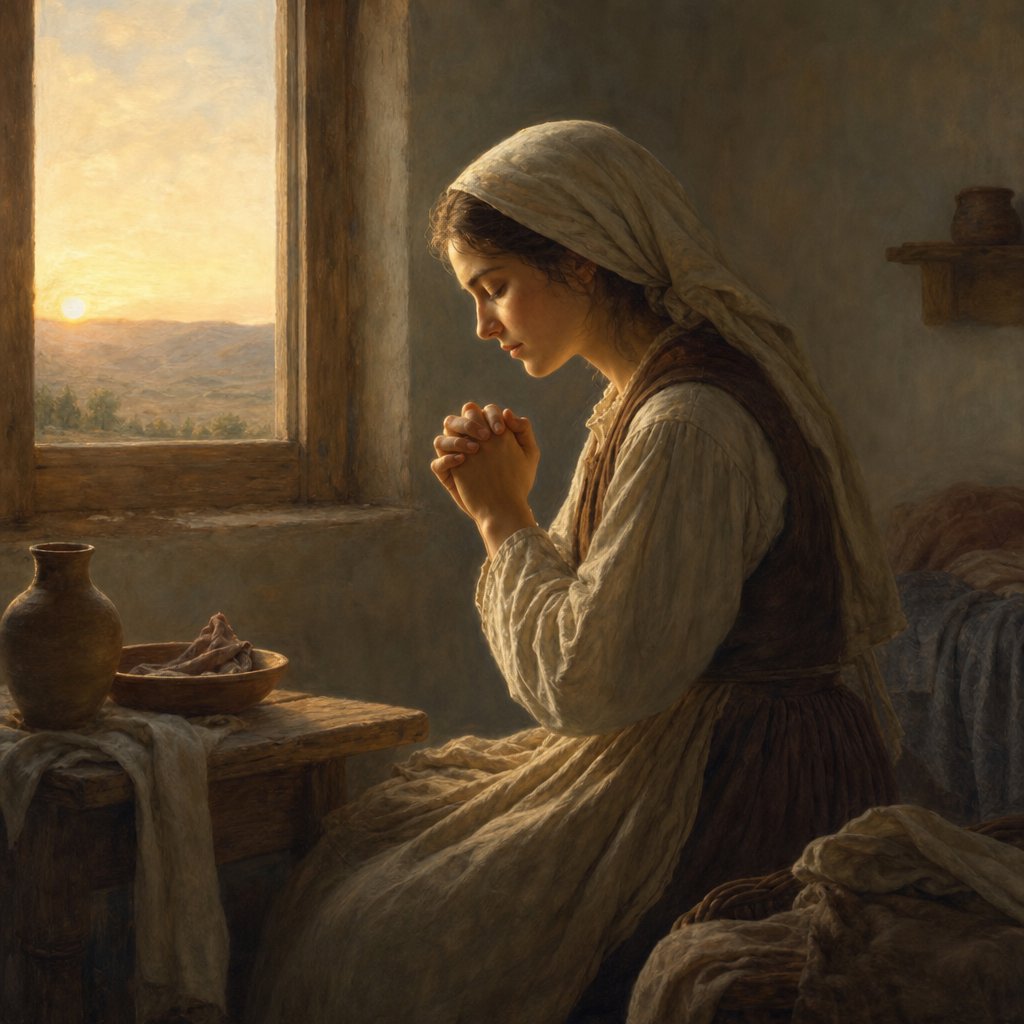
“Pray without ceasing.” That is the whole of 1 Thessalonians 5:17 in the King James Version, and its brevity is part of its force. Set where it stands, near the close of Paul’s first epistle to the Thessalonians, the command is not an isolated slogan but a thread woven through a series of short exhortations that describe what a watchful, holy, and steady Christian life looks like while waiting for “the day of the Lord” and seeking to “be preserved blameless” (language found in the same closing section). In that setting, “Pray without ceasing” functions like a spiritual posture rather than a demand for uninterrupted speech, calling believers to a continual dependence upon God in the ordinary flow of life.
The immediate context of the chapter is alertness and readiness. Earlier in 1 Thessalonians 5, Paul contrasts light and darkness, waking and sleeping, sobriety and drunkenness, urging believers to live as those who belong to the day. The verse “Pray without ceasing” sits naturally inside that imagery. To be spiritually awake is to live with an open line to God, not drifting into the dullness that comes from self-sufficiency. Prayer, in this sense, is part of the Christian’s “watching,” a steady turning of the heart Godward as one walks through work, relationships, suffering, temptation, and service. The symbolism of wakefulness and daylight suggests not merely moral caution but continual attentiveness; prayer is the language of that attentiveness.
The broader context of the epistle also matters. Thessalonica was a place of affliction for the church, and Paul repeatedly acknowledges their trials and encourages steadfastness. “Pray without ceasing” therefore carries the theme of perseverance. It implies that prayer is not meant only for moments when life collapses or when worship gathers, but as the ongoing breath of faith in a pressured environment. The believer does not merely start with prayer and then attempt to endure by sheer will; rather, endurance itself is sustained by repeated approach to God. This continuous prayer is also tied to sanctification, because in the same closing portion Paul speaks of God sanctifying wholly and preserving spirit, soul, and body. Unceasing prayer is one of the means by which believers cling to God’s preserving grace, confess sin, seek strength, and receive comfort.
The verse’s significance is sharpened by its placement among neighboring exhortations in the same passage. Without departing from the KJV phrasing, Paul’s commands around it include rejoicing and giving thanks, and the sequence suggests a unified spiritual rhythm: joy, prayer, and gratitude are not separate compartments but mutually reinforcing expressions of a life lived before God. In other words, “Pray without ceasing” is not a call to grim, anxious repetition; it is closely aligned with rejoicing and thanksgiving, implying that continual prayer includes continual praise, continual petition, continual confession, continual intercession, and continual remembrance of God’s goodness. Prayer becomes the steady undercurrent beneath the believer’s emotions and choices, shaping how one rejoices, how one suffers, and how one interprets daily providences.
There is also a communal dimension. Paul writes to a church, not merely to isolated individuals, and his closing instructions concern life together: honoring spiritual labor, living peaceably, warning the unruly, comforting the feebleminded, supporting the weak. “Pray without ceasing” therefore reaches beyond private devotion into the church’s shared life. It calls for a praying community whose members habitually bring one another before God, not sporadically but as a continual practice of love. Such prayer resists bitterness, impatience, and retaliation, because it trains the heart to seek God’s help instead of taking matters into its own hands.
Symbolically, the phrase “without ceasing” evokes the idea of an unbroken offering. Just as a lamp kept burning speaks of ongoing readiness, and watchmen keep their vigil through the night, so continual prayer suggests a life kept near the presence of God. It does not require that the mouth always be forming words, but that the heart remain oriented toward God, returning again and again in short cries, remembered promises, inward worship, and constant dependence. The significance lies in this: prayer is not treated as an occasional religious activity but as the atmosphere of faithful living. The verse presses the believer to make communion with God as regular as breath, so that faith does not become episodic, but steady, awake, and responsive in every season.
In the end, the meaning of 1 Thessalonians 5:17 in the KJV is a call to continual fellowship with God, sustained vigilance in a world that dulls spiritual sensitivity, perseverance under trial, and a life of joy and gratitude that is continually expressed by returning to God. “Pray without ceasing” stands as a concise summary of how the Christian life remains anchored: not by self-reliance, but by uninterrupted reliance upon the Lord.
Have questions about 1 Thessalonians 5:17?
Dive deeper into this scripture with Bible Chat — an AI-powered tool for exploring God's Word through conversation. Ask questions, get context, and grow in your understanding of the Bible.
Get Our Apps


1 Thessalonians 5:17 Artwork

1 Thessalonians 5:17 - "Pray without ceasing."

1 Thessalonians 5:17-18 - "Pray continually, give thanks in all circumstances; for this is God’s will for you in Christ Jesus."

"Pray without ceasing." - 1 Thessalonians 5:17

"Pray without ceasing." - 1 Thessalonians 5:17

"Pray continually, give thanks in all circumstances; for this is God’s will for you in Christ Jesus." - 1 Thessalonians 5:17-18

1 Thessalonians 4:17

4:16–17 in 1 Thessalonians

4:16–17 in 1 Thessalonians

4:16–17 in 1 Thessalonians

4:16–17 in 1 Thessalonians

1 Thessalonians 5:19 - "Quench not the Spirit."

1 Thessalonians 5:16 - "Rejoice evermore."

1 Thessalonians 5:20 - "Despise not prophesyings."

1 Thessalonians 5:25 - "Brethren, pray for us."

"Rejoice evermore." - 1 Thessalonians 5:16

"Despise not prophesyings." - 1 Thessalonians 5:20

1 Thessalonians 5:22 - "Abstain from all appearance of evil."

1 Thessalonians 5:5 - "Ye are all the children of light, and the children of the day: we are not of the night, nor of darkness."

1 Thessalonians 4:16-17 – "The Lord himself will come down from heaven, with a loud command."

1 Thessalonians 4:16-17 – "The Lord himself will come down from heaven, with a loud command."

1 Thessalonians 5:26 - "Greet all the brethren with an holy kiss."

4:16–17 in 1 Thessalonians THE SHOUT OF AN ARCHANGEL!!!!

"Brethren, pray for us." - 1 Thessalonians 5:25

1 Thessalonians 5:7 - "For they that sleep sleep in the night; and they that be drunken are drunken in the night."

"Quench not the Spirit." - 1 Thessalonians 5:19

1 Thessalonians 4:5 - "Not in the lust of concupiscence, even as the Gentiles which know not God:"

1 Thessalonians 5:28 - "The grace of our Lord Jesus Christ be with you. Amen."

1 Thessalonians 5:1 - "But of the times and the seasons, brethren, ye have no need that I write unto you."

1 Thessalonians 5:21 - "Prove all things; hold fast that which is good."

1 Thessalonians 5:24 - "Faithful is he that calleth you, who also will do it."