What does 1 Samuel 7:5-9 mean?
"Then Samuel said, Assemble all Israel to Mizpeh, and I will pray for you unto the Lord. And they gathered together to Mizpeh, and drew water, and poured it out before the Lord, and fasted on that day, and said there, We have sinned against the Lord. And Samuel judged the children of Israel in Mizpeh. And when the Philistines heard that the children of Israel were gathered together to Mizpeh, the lords of the Philistines went up against Israel. And when the children of Israel heard it, they were afraid of the Philistines. And the children of Israel said to Samuel, Cease not to cry unto the Lord our God for us, that he will save us out of the hand of the Philistines. And Samuel took a sucking lamb, and offered it for a burnt offering wholly unto the Lord: and Samuel cried unto the Lord for Israel; and the Lord heard him." - 1 Samuel 7:5-9

In 1 Samuel 7:5-9 of the King James Version (KJV) of the Bible, we read:
“And Samuel said, Gather all Israel to Mizpeh, and I will pray for you unto the Lord. And they gathered together to Mizpeh, and drew water, and poured it out before the Lord, and fasted on that day, and said there, We have sinned against the Lord. And Samuel judged the children of Israel in Mizpeh. And when the Philistines heard that the children of Israel were gathered together to Mizpeh, the lords of the Philistines went up against Israel. And when the children of Israel heard it, they were afraid of the Philistines. And the children of Israel said to Samuel, Cease not to cry unto the Lord our God for us, that he will save us out of the hand of the Philistines.”
This passage comes from the Old Testament, specifically from the book of 1 Samuel, which gives an account of the Israelites’ transition from the period of the judges to being a unified kingdom. The verses describe the actions and leadership of Samuel, the last of Israel's judges, who was also a prophet and a priest.
In this passage, we can see several themes and important aspects to consider:
Prayer and intercession: Samuel’s immediate response to the people’s fear of the Philistines was to instruct them to gather at Mizpeh, where he would pray for them unto the Lord. This act of intercession on behalf of the people shows the significance of seeking God’s intervention in times of trouble.
Repentance and fasting: The people's response to Samuel's call to Mizpeh was to fast and confess their sins before the Lord. This symbolizes the importance of repentance and seeking forgiveness as a prelude to seeking God's help and intervention. It shows a recognition of their wrongs and a desire to make things right with God.
Leadership and judgment: Samuel's role as a judge of Israel is also highlighted in this passage. He not only interceded for the people but also judged them. This demonstrates his authority and leadership in guiding the people in matters of faith and behavior.
Fear and trust: The Israelites’ fear of the approaching Philistines is evident in their plea to Samuel to cry unto the Lord for their deliverance. This reflects the human tendency to react with fear in the face of danger. However, their turning to Samuel to cry unto the Lord also demonstrates their willingness to trust in God for their deliverance.
The historical context of this passage is important to understand its significance. The Philistines were longstanding adversaries of the Israelites, and their fear was not unfounded. Samuel's leadership and the people's faith and repentance were crucial in seeking God's intervention in this ongoing conflict.
Symbolism can also be observed in the actions described in these verses. The gathering at Mizpeh, the pouring of water before the Lord, and the fasting all symbolize the people's commitment to seeking God's favor and help. The pouring out of water can be seen as an act of humility and surrender before the Lord. The significance of fasting is seen in its symbolic representation of sacrifice and dedication to seeking God's will.
In conclusion, the passage 1 Samuel 7:5-9 from the King James Version of the Bible conveys important themes of prayer, repentance, leadership, and trust in God. Through the actions of Samuel and the Israelites, we are reminded of the importance of seeking God's intervention in times of trouble, as well as the necessity of repentance and trust in His providence. This passage offers valuable insights into the dynamics of faith, leadership, and the continual struggle between fear and trust in the face of adversity.
Have questions about 1 Samuel 7:5-9?
Dive deeper into this scripture with Bible Chat — an AI-powered tool for exploring God's Word through conversation. Ask questions, get context, and grow in your understanding of the Bible.
Get Our Apps


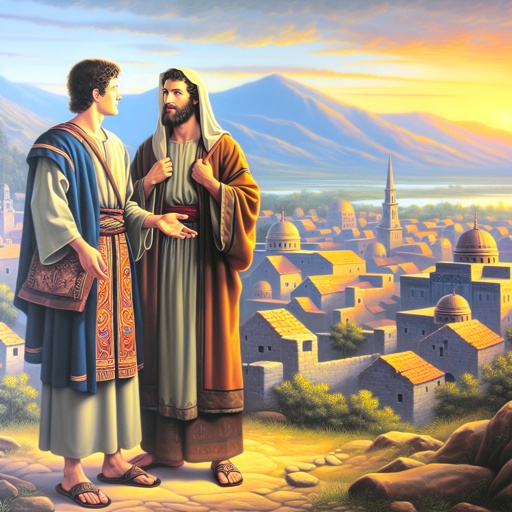
1 Samuel 7:5-9 Artwork

1 Samuel 7:5-9 - "Then Samuel said, "Assemble all Israel at Mizpah, and I will intercede with the LORD for you." When they had assembled at Mizpah, they drew water and poured it out before the LORD. On that day they fasted and there they confessed, "We have sinned against the LORD." Now Samuel was serving as leader of Israel at Mizpah. When the Philistines heard that Israel had assembled at Mizpah, the rulers of the Philistines came up to attack them. When the Israelites heard of it, they were afraid because of the Philistines. They said to Samuel, "Do not stop crying out to the LORD our God for us, that he may rescue us from the hand of the Philistines." Then Samuel took a suckling lamb and sacrificed it as a whole burnt offering to the LORD. He cried out to the LORD on Israel’s behalf, and the LORD answered him."

"Then Samuel said, "Assemble all Israel at Mizpah, and I will intercede with the LORD for you." When they had assembled at Mizpah, they drew water and poured it out before the LORD. On that day they fasted and there they confessed, "We have sinned against the LORD." Now Samuel was serving as leader of Israel at Mizpah. When the Philistines heard that Israel had assembled at Mizpah, the rulers of the Philistines came up to attack them. When the Israelites heard of it, they were afraid because of the Philistines. They said to Samuel, "Do not stop crying out to the LORD our God for us, that he may rescue us from the hand of the Philistines." Then Samuel took a suckling lamb and sacrificed it as a whole burnt offering to the LORD. He cried out to the LORD on Israel’s behalf, and the LORD answered him." - 1 Samuel 7:5-9

1 Samuel 7:5 - "And Samuel said, Gather all Israel to Mizpeh, and I will pray for you unto the LORD."

2 samuel 9:7 fhdhdhdhhd

"And Samuel said, Gather all Israel to Mizpeh, and I will pray for you unto the LORD." - 1 Samuel 7:5

1 Samuel 7:9 - "¶ And Samuel took a sucking lamb, and offered it for a burnt offering wholly unto the LORD: and Samuel cried unto the LORD for Israel; and the LORD heard him."

2 Samuel 7:5 - "Go and tell my servant David, Thus saith the LORD, Shalt thou build me an house for me to dwell in?"

1 Samuel 9:5 - "And when they were come to the land of Zuph, Saul said to his servant that was with him, Come, and let us return; lest my father leave caring for the asses, and take thought for us."

1 Samuel 9:7 - "Then said Saul to his servant, But, behold, if we go, what shall we bring the man? for the bread is spent in our vessels, and there is not a present to bring to the man of God: what have we?"

1 Samuel 5:7 - "And when the men of Ashdod saw that it was so, they said, The ark of the God of Israel shall not abide with us: for his hand is sore upon us, and upon Dagon our god."

1 Samuel 5:9 - "And it was so, that, after they had carried it about, the hand of the LORD was against the city with a very great destruction: and he smote the men of the city, both small and great, and they had emerods in their secret parts."

2 Samuel 5:7 - "Nevertheless David took the strong hold of Zion: the same is the city of David."

"¶ And Samuel took a sucking lamb, and offered it for a burnt offering wholly unto the LORD: and Samuel cried unto the LORD for Israel; and the LORD heard him." - 1 Samuel 7:9

1 Samuel 7:15 - "And Samuel judged Israel all the days of his life."
1 Samuel 9:1-2

1 Samuel 9:15 - "¶ Now the LORD had told Samuel in his ear a day before Saul came, saying,"

2 Samuel 7:1–29

1 Samuel 14:7

1 Samuel 28:7

1 Samuel 8:7

2 Samuel 9:5 - "¶ Then king David sent, and fetched him out of the house of Machir, the son of Ammiel, from Lo-debar."

1 Samuel 9:25 - "¶ And when they were come down from the high place into the city, Samuel communed with Saul upon the top of the house."

1 Samuel 9:18 - "Then Saul drew near to Samuel in the gate, and said, Tell me, I pray thee, where the seer's house is."

1 Samuel 18:9 - "And Saul eyed David from that day and forward."

2 Samuel 5:9 - "So David dwelt in the fort, and called it the city of David. And David built round about from Millo and inward."

1 Samuel 5: 3-4

1 Samuel 3:7 - "Now Samuel did not yet know the LORD, neither was the word of the LORD yet revealed unto him."

1 Samuel 15:5 - "And Saul came to a city of Amalek, and laid wait in the valley."

1 Samuel 5:1 - "And the Philistines took the ark of God, and brought it from Eben-ezer unto Ashdod."

1 Peter 5:7