What does 1 Samuel 6:13 mean?
"And they of Beth-shemesh were reaping their wheat harvest in the valley: and they lifted up their eyes, and saw the ark, and rejoiced to see it." - 1 Samuel 6:13
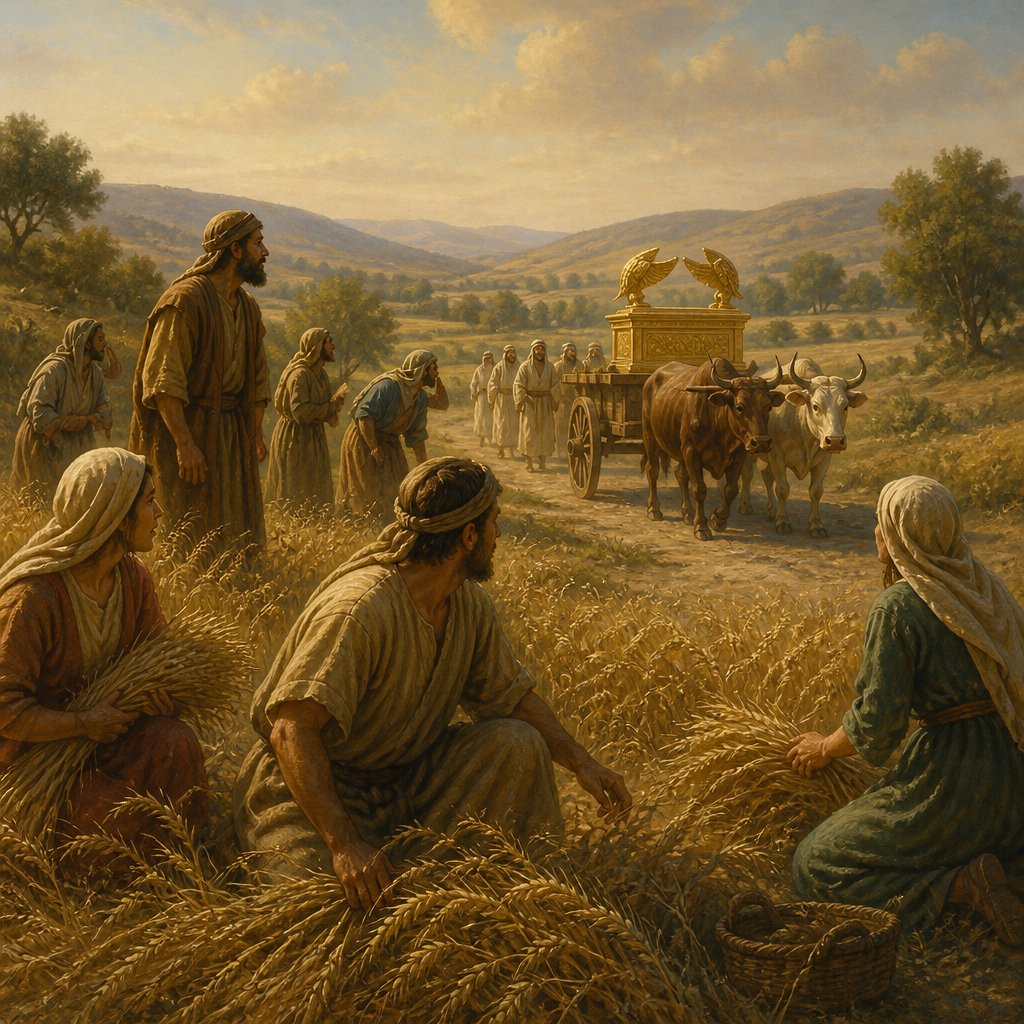
The Bible verse 1 Samuel 6:13 states, "And they of Bethshemesh were reaping their wheat harvest in the valley: and they lifted up their eyes, and saw the ark, and rejoiced to see it."
This verse comes from the Old Testament, specifically from the book of 1 Samuel. This passage takes place during a time when the Israelites had been defeated in battle by the Philistines, and the ark of the covenant, a sacred and powerful symbol of God's presence, had been taken captive by the Philistines. The story of the ark's return to the Israelites is a significant event in the history of Israel, as it represents the restoration of their faith and the presence of God among his people.
In this verse, the people of Bethshemesh, an Israelite town, are reaping their wheat harvest in the valley. This imagery of reaping the harvest is symbolic of the bountiful blessings that God provides to his people. The act of harvesting represents the fulfillment of God's promises and the abundance of provision that he offers to those who are faithful to him.
As the people of Bethshemesh are working in the fields, they lift up their eyes and see the ark of the covenant being brought back to them. The sight of the ark causes them to rejoice, as it represents the return of God's presence and favor to the Israelites. The ark is a sacred and holy object, and its return is a cause for celebration and gratitude among the people.
The context of this verse is important in understanding its significance. The Israelites had been living under the oppressive rule of the Philistines, and the loss of the ark had been a severe blow to their faith and morale. The return of the ark symbolizes the restoration of God's protection and guidance to his people, and the sight of it brings great joy and hope to the people of Bethshemesh.
The themes present in this verse include the faithfulness of God to his people, the significance of sacred objects in the worship and spiritual life of the Israelites, and the power of God's presence to bring joy and renewal to his followers. The sight of the ark represents the tangible manifestation of God's presence among his people, and it serves as a reminder of his faithfulness and provision.
Symbolism plays a significant role in this verse as well. The ark of the covenant is a powerful symbol of God's presence and holiness, and its return to the Israelites signifies the restoration of their relationship with God. The wheat harvest in the valley symbolizes the abundance and blessings that God bestows upon his people, and the act of reaping represents the fulfillment of God's promises.
In conclusion, 1 Samuel 6:13 is a significant verse that represents the restoration of God's presence and favor to his people. The sight of the ark of the covenant brings great joy and hope to the people of Bethshemesh, and it serves as a reminder of God's faithfulness and provision. This verse is a testament to the power of God's presence to bring renewal and joy to his followers, and it is a reminder of the significance of sacred objects in the worship and spiritual life of the Israelites.
Have questions about 1 Samuel 6:13?
Dive deeper into this scripture with Bible Chat — an AI-powered tool for exploring God's Word through conversation. Ask questions, get context, and grow in your understanding of the Bible.
Get Our Apps


1 Samuel 6:13 Artwork

1 Samuel 6:13 - "And they of Beth-shemesh were reaping their wheat harvest in the valley: and they lifted up their eyes, and saw the ark, and rejoiced to see it."
"And they of Beth-shemesh were reaping their wheat harvest in the valley: and they lifted up their eyes, and saw the ark, and rejoiced to see it." - 1 Samuel 6:13

1 Samuel 13:6 - "When the men of Israel saw that they were in a strait, (for the people were distressed,) then the people did hide themselves in caves, and in thickets, and in rocks, and in high places, and in pits."

2 Samuel 6:13 - "And it was so, that when they that bare the ark of the LORD had gone six paces, he sacrificed oxen and fatlings."

2 Samuel 6:13 - "And it was so, that when they that bare the ark of the LORD had gone six paces, he sacrificed oxen and fatlings."

2 Samuel 6:13 - "And it was so, that when they that bare the ark of the LORD had gone six paces, he sacrificed oxen and fatlings."

1 Samuel 16:1–13

1 Samuel 14:6

1 Samuel 12:13

1 Samuel 12:13

1 Samuel 8:6 - "¶ But the thing displeased Samuel, when they said, Give us a king to judge us. And Samuel prayed unto the LORD."

1 Samuel 6:1 - "And the ark of the LORD was in the country of the Philistines seven months."

2 Samuel 6:14

1 Samuel 22:11-13

1 Samuel 15:13 - "And Samuel came to Saul: and Saul said unto him, Blessed be thou of the LORD: I have performed the commandment of the LORD."

1 Samuel 13:8 - "¶ And he tarried seven days, according to the set time that Samuel had appointed: but Samuel came not to Gilgal; and the people were scattered from him."

1 Corinthians 13:4-6

1 Corinthians 13:4-6

1 Corinthians 13:4-6

1 Corinthians 13:4-6

1 Corinthians 13:4-6

1 Corinthians 13:4-6

1 Corinthians 13:4-6

1 Corinthians 13:4-6

1 Samuel 13:23 - "And the garrison of the Philistines went out to the passage of Michmash."

1 Samuel 13:1 - "Saul reigned one year; and when he had reigned two years over Israel,"

1 Samuel 13:13 - "And Samuel said to Saul, Thou hast done foolishly: thou hast not kept the commandment of the LORD thy God, which he commanded thee: for now would the LORD have established thy kingdom upon Israel for ever."

1 Samuel 13:12 Saul's disobedience

1 Samuel 7:13 - "¶ So the Philistines were subdued, and they came no more into the coast of Israel: and the hand of the LORD was against the Philistines all the days of Samuel."

1 Chronicles 6:28 - "And the sons of Samuel; the firstborn Vashni, and Abiah."