What does 1 Samuel 3:14 mean?
"And therefore I have sworn unto the house of Eli, that the iniquity of Eli's house shall not be purged with sacrifice nor offering for ever." - 1 Samuel 3:14
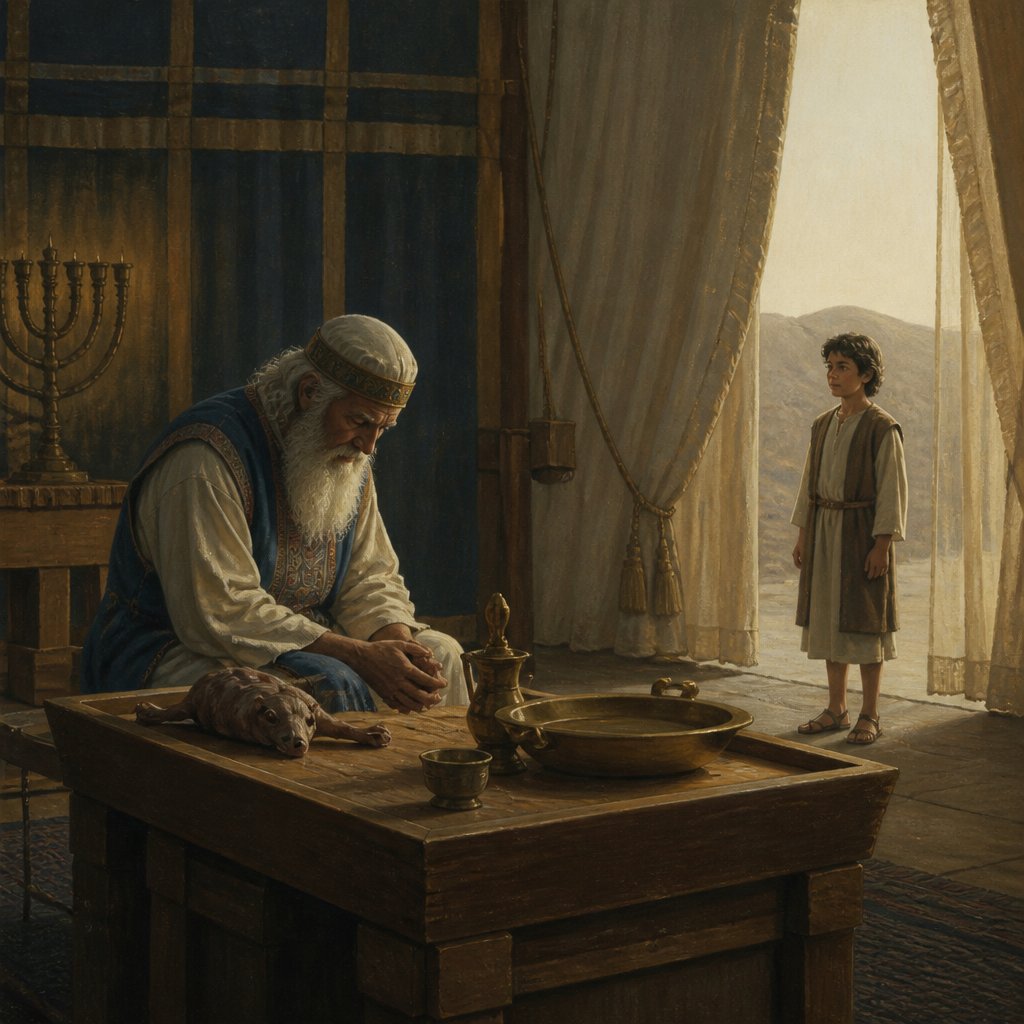
The Bible verse 1 Samuel 3:14, "And therefore I have sworn unto the house of Eli, that the iniquity of Eli's house shall not be purged with sacrifice nor offering for ever," holds significant meaning within the context of the overall narrative of the book of 1 Samuel, as well as serving as a powerful commentary on the themes of sin, consequences, and the justice of God.
To fully grasp the depth and significance of this verse, it is important to understand the broader context in which it is situated. The book of 1 Samuel recounts the story of the transition from the period of the judges to the establishment of the monarchy in Israel. The narrative begins with the birth of the prophet Samuel and continues with his journey to become a significant figure in the history of Israel. 1 Samuel also depicts the decline of the priesthood and the rise of King David.
In 1 Samuel 3, we find Samuel as a young boy serving in the house of God under the guidance of Eli, the high priest at that time. One night, as Samuel was lying down in the temple, he heard a voice calling his name. Thinking it was Eli, he went to him, only for Eli to tell him that he did not call him. This happened three times before Eli realized that it was God calling Samuel. He then instructed Samuel to respond to the Lord, and the message he received from God contained a prophecy of judgment against Eli's house.
The verse 1 Samuel 3:14 specifically details the grave consequence that Eli and his descendants will face as a result of their disobedience and the corruption that had infiltrated the priesthood. God declares that He has "sworn unto the house of Eli," indicating the certainty and severity of the judgment that will befall them. The phrase "the iniquity of Eli's house shall not be purged with sacrifice nor offering for ever," emphasizes the fact that no amount of sacrifices or offerings will be able to atone for the sins of Eli's house. This pronouncement of judgment serves as a somber reminder of the consequences of disobedience and the importance of upholding righteousness and faithfulness in serving God.
One of the central themes highlighted in this verse is the concept of sin and its consequences. The verse underscores the biblical principle that sin carries with it grave consequences and that God, being just and righteous, will hold individuals accountable for their actions. The iniquity of Eli's house represents the collective guilt and corruption that had taken root within the priesthood, and the severe judgment pronounced against them serves as a sobering reminder of the seriousness of sin in the eyes of God.
Furthermore, the verse also speaks to the unchanging and immutable nature of God's justice. The declaration that the iniquity of Eli's house will not be purged with sacrifice or offering for ever conveys the idea that God's judgment is final and irrevocable. This serves as a powerful commentary on the uncompromising nature of God's justice and His unwavering commitment to uphold righteousness and holiness.
In addition to its thematic significance, 1 Samuel 3:14 also holds symbolic and foreshadowing elements. The judgment pronounced against the house of Eli serves as a precursor to the broader narrative of the rise and fall of kings and leaders in Israel. The downfall of Eli's house paves the way for the emergence of a new era, one that will ultimately lead to the establishment of the monarchy under King Saul and later King David. This verse, therefore, foreshadows the transitional period in Israel's history and serves as a poignant reminder of the cyclical nature of human disobedience and God's unwavering justice.
In conclusion, 1 Samuel 3:14 holds significant meaning and serves as a powerful commentary on the themes of sin, consequences, and the justice of God. Through its somber pronouncement of judgment against the house of Eli, the verse underscores the gravity of sin and the unchanging nature of God's justice. It also serves as a poignant reminder of the importance of fidelity and righteousness in serving God. Moreover, the verse carries symbolic and foreshadowing elements, laying the groundwork for the broader narrative of Israel's history. Overall, 1 Samuel 3:14 stands as a solemn and sobering reminder of the consequences of disobedience and the unyielding nature of God's justice.
Have questions about 1 Samuel 3:14?
Dive deeper into this scripture with Bible Chat — an AI-powered tool for exploring God's Word through conversation. Ask questions, get context, and grow in your understanding of the Bible.
Get Our Apps


1 Samuel 3:14 Artwork

1 Samuel 3:14 - "And therefore I have sworn unto the house of Eli, that the iniquity of Eli's house shall not be purged with sacrifice nor offering for ever."
"And therefore I have sworn unto the house of Eli, that the iniquity of Eli's house shall not be purged with sacrifice nor offering for ever." - 1 Samuel 3:14

Soothing the Soul: The Gospel of Gentle Care 1 Kings 19:3-8; 1 Samuel 16:14-23

Soothing the Soul: The Gospel of Gentle Care 1 Kings 19:3-8; 1 Samuel 16:14-23

1 Samuel 14:3 - "And Ahiah, the son of Ahitub, I-chabod's brother, the son of Phinehas, the son of Eli, the LORD'S priest in Shiloh, wearing an ephod. And the people knew not that Jonathan was gone."

1 Samuel 14:6

1 Samuel 3:1-10

1 Samuel 14:27

2 Samuel 6:14

1 Samuel 14:7

1 Samuel 11:14 - "Then said Samuel to the people, Come, and let us go to Gilgal, and renew the kingdom there."

1 Samuel 3:3 - "And ere the lamp of God went out in the temple of the LORD, where the ark of God was, and Samuel was laid down to sleep;"

1 Samuel 3:10 - "And the LORD came, and stood, and called as at other times, Samuel, Samuel. Then Samuel answered, Speak; for thy servant heareth."

1 Samuel 3:16 - "Then Eli called Samuel, and said, Samuel, my son. And he answered, Here am I."

1 Samuel 3:4 - "That the LORD called Samuel: and he answered, Here am I."

1 Samuel 17:14 - "And David was the youngest: and the three eldest followed Saul."

2 Samuel 14:3 - "And come to the king, and speak on this manner unto him. So Joab put the words in her mouth."

1 Samuel 3:15 - "¶ And Samuel lay until the morning, and opened the doors of the house of the LORD. And Samuel feared to shew Eli the vision."

1 Samuel 3:1 - "And the child Samuel ministered unto the LORD before Eli. And the word of the LORD was precious in those days; there was no open vision."

1 Samuel 15:14 - "And Samuel said, What meaneth then this bleating of the sheep in mine ears, and the lowing of the oxen which I hear?"

2 Samuel 3:14 - "And David sent messengers to Ish-bosheth Saul's son, saying, Deliver me my wife Michal, which I espoused to me for an hundred foreskins of the Philistines."

1 samuel 17:3

1 Samuel 14:51 - "And Kish was the father of Saul; and Ner the father of Abner was the son of Abiel."

1 Samuel 3:19 - "¶ And Samuel grew, and the LORD was with him, and did let none of his words fall to the ground."

1 Samuel 3:21 - "And the LORD appeared again in Shiloh: for the LORD revealed himself to Samuel in Shiloh by the word of the LORD."

1 Samuel 14:25 - "And all they of the land came to a wood; and there was honey upon the ground."

1 Samuel 3:20 - "And all Israel from Dan even to Beer-sheba knew that Samuel was established to be a prophet of the LORD."

exodus 3:14

Joshua 3:14

Joshua 3:14