What does 1 Samuel 31:5 mean?
"And when his armourbearer saw that Saul was dead, he fell likewise upon his sword, and died with him." - 1 Samuel 31:5

1 Samuel 31:5 (KJV) states: "And when his armourbearer saw that Saul was dead, he fell likewise upon his sword, and died with him."
This verse is part of the account of the death of King Saul, the first king of Israel. In this part of the narrative, the Philistines were in battle against the Israelites, and the Philistine archers hit Saul with their arrows, gravely wounding him. Saul realized that he would not survive his injuries, and he asked his armor bearer to kill him so that the enemy would not have the satisfaction of doing so themselves. However, the armor-bearer, out of fear, refused to kill his king. So Saul took his own life by falling on his sword, and the armor-bearer, seeing his king dead, took his own life as well. This tragic end marks the conclusion of Saul's reign and the beginning of David's reign as the king of Israel.
The story of Saul's death is a poignant and sobering reminder of the consequences of disobedience and the tragic outcomes that can result from it. Throughout Saul's reign, he showed a pattern of disobedience to the commands of God, which ultimately led to his downfall. The death of Saul and his armor-bearer serves as a warning to all who read the passage about the destructive nature of living a life that goes against God's will.
This verse also highlights the theme of loyalty and honor. Despite Saul's failures as a king, his armor-bearer remained loyal to him to the end. He chose to die alongside his king rather than abandon him in his final moments. This act of loyalty and commitment, even in the face of defeat, is a testament to the profound bond between a leader and his followers. It serves as a reminder of the importance of loyalty and faithfulness, even in the most dire circumstances.
Symbolically, the death of Saul and his armor-bearer can be seen as a representation of the consequences of sin and the tragic end that awaits those who turn away from God. The sword, a powerful and often deadly weapon, is a symbol of violence and destruction, and falling upon it represents the ultimate act of self-destruction. Saul's choice to fall on his own sword reflects the despair and hopelessness that can result from a life lived in disobedience to God.
There is also a sense of tragedy and loss in this verse. The death of Saul, despite his flaws, is mourned by the people of Israel, as he was their first king. His death marks the end of an era and the beginning of a new chapter in the history of Israel. The armor-bearer's decision to take his own life out of grief and loyalty to his king further emphasizes the somber tone of the passage.
Overall, 1 Samuel 31:5 is a powerful and tragic reminder of the consequences of disobedience, the importance of loyalty, and the destructive nature of sin. The verse serves as a cautionary tale, urging readers to heed God's commands and remain faithful to Him, even in the face of adversity. It also prompts reflection on the consequences of our choices and the impact they can have on our lives and those around us.
Have questions about 1 Samuel 31:5?
Dive deeper into this scripture with Bible Chat — an AI-powered tool for exploring God's Word through conversation. Ask questions, get context, and grow in your understanding of the Bible.
Get Our Apps


1 Samuel 31:5 Artwork

1 Samuel 31:5 - "And when his armourbearer saw that Saul was dead, he fell likewise upon his sword, and died with him."

"And when his armourbearer saw that Saul was dead, he fell likewise upon his sword, and died with him." - 1 Samuel 31:5
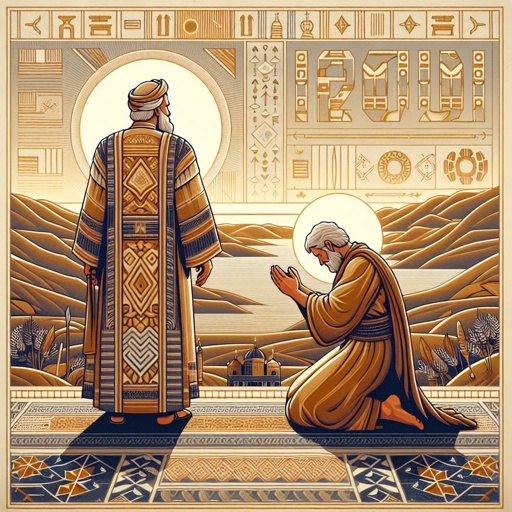
1 Samuel 15:31 - "So Samuel turned again after Saul; and Saul worshipped the LORD."

1 Samuel 31:11 - "¶ And when the inhabitants of Jabesh-gilead heard of that which the Philistines had done to Saul;"

1 Samuel 31:6 - "So Saul died, and his three sons, and his armourbearer, and all his men, that same day together."

1 Samuel 14:31 - "And they smote the Philistines that day from Michmash to Aijalon: and the people were very faint."

1 Samuel 31:13 - "And they took their bones, and buried them under a tree at Jabesh, and fasted seven days."

1 Samuel 31:3 - "And the battle went sore against Saul, and the archers hit him; and he was sore wounded of the archers."

1 Samuel 31:10 - "And they put his armour in the house of Ashtaroth: and they fastened his body to the wall of Beth-shan."

"So Samuel turned again after Saul; and Saul worshipped the LORD." - 1 Samuel 15:31

1 Samuel 31:1 - "Now the Philistines fought against Israel: and the men of Israel fled from before the Philistines, and fell down slain in mount Gilboa."

1 Samuel 17:31 - "And when the words were heard which David spake, they rehearsed them before Saul: and he sent for him."

1 Samuel 30:31 - "And to them which were in Hebron, and to all the places where David himself and his men were wont to haunt."

1 Samuel 31:8 - "And it came to pass on the morrow, when the Philistines came to strip the slain, that they found Saul and his three sons fallen in mount Gilboa."

1 Samuel 7:5 - "And Samuel said, Gather all Israel to Mizpeh, and I will pray for you unto the LORD."

1 Samuel 31:2 - "And the Philistines followed hard upon Saul and upon his sons; and the Philistines slew Jonathan, and Abinadab, and Malchi-shua, Saul's sons."

1 Samuel 3:1-10

1 Samuel 5: 3-4

1 Samuel 31:4 Saul took his own sword and fell on it. create the image in color

1 Samuel 15:5 - "And Saul came to a city of Amalek, and laid wait in the valley."

1 Samuel 2:31 - "Behold, the days come, that I will cut off thine arm, and the arm of thy father's house, that there shall not be an old man in thine house."

1 Samuel 5:1 - "And the Philistines took the ark of God, and brought it from Eben-ezer unto Ashdod."

1 Samuel 31:9 - "And they cut off his head, and stripped off his armour, and sent into the land of the Philistines round about, to publish it in the house of their idols, and among the people."

1 Samuel 5:5 - "Therefore neither the priests of Dagon, nor any that come into Dagon's house, tread on the threshold of Dagon in Ashdod unto this day."

1 Samuel 31:12 - "All the valiant men arose, and went all night, and took the body of Saul and the bodies of his sons from the wall of Beth-shan, and came to Jabesh, and burnt them there."

1 Sam 31: 12-13

"¶ And when the inhabitants of Jabesh-gilead heard of that which the Philistines had done to Saul;" - 1 Samuel 31:11

1 Samuel 28:5 - "And when Saul saw the host of the Philistines, he was afraid, and his heart greatly trembled."

1 Samuel 5:12 - "And the men that died not were smitten with the emerods: and the cry of the city went up to heaven."

1 Samuel 5:2 - "When the Philistines took the ark of God, they brought it into the house of Dagon, and set it by Dagon."