What does 1 Samuel 31:1 mean?
"Now the Philistines fought against Israel: and the men of Israel fled from before the Philistines, and fell down slain in mount Gilboa." - 1 Samuel 31:1
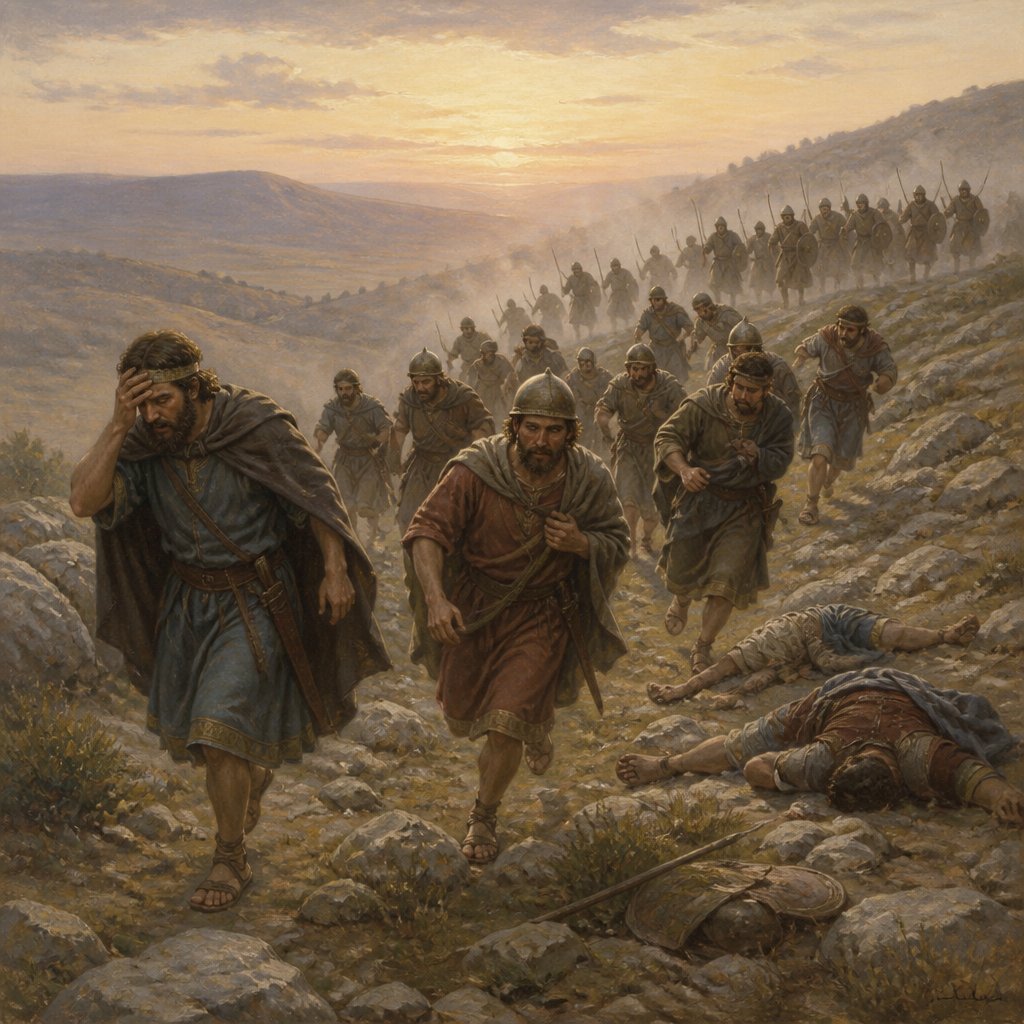
1 Now the Philistines fought against Israel: and the men of Israel fled from before the Philistines, and fell down slain in mount Gilboa.
The verse 1 Samuel 31:1 is a significant and pivotal moment in the Old Testament. It marks the turning point in the story of Israel as the nation faces a devastating defeat at the hands of the Philistines.
The verse begins by setting the stage for the impending battle between Israel and the Philistines. The Philistines, a powerful and longstanding enemy of the Israelites, have launched an attack on Israel. As a result, the men of Israel found themselves in a precarious situation, as they were forced to flee before the advancing Philistine army.
The phrase "fell down slain in mount Gilboa" is a grim depiction of the outcome of the battle. It conveys the image of the men of Israel being cut down in the heat of the conflict, their bodies littering the mountainside as casualties of war. This in itself is a brutally poignant reminder of the harsh realities and consequences of warfare.
The context of this verse is crucial to understanding its significance. Throughout the book of 1 Samuel, the Israelites have been engaged in a series of conflicts with the Philistines, culminating in this decisive and crushing defeat. The defeat at Mount Gilboa is not just a military setback, but a spiritual and moral one as well. It represents a failure on the part of Israel to live up to their covenant with God and the consequences that come with disobedience and turning away from God.
One of the key themes in this verse is the concept of divine judgment. The defeat of the Israelites at the hands of the Philistines is often interpreted as a punishment from God. Throughout the Bible, the Israelites' success in battle is frequently attributed to divine intervention, and their failures are seen as a sign of God's disfavor. In this context, the defeat at Mount Gilboa serves as a sobering reminder of the importance of faithfulness and obedience to God's will.
Additionally, this verse serves as a powerful symbol of the human experience of defeat and despair. The image of the Israelites fleeing and falling before their enemies is a universal representation of the struggles and hardships that we all face in life. It conveys the profound sense of loss and hopelessness that can come with defeat, and the overwhelming sense of being overpowered by external forces.
Another notable aspect of this verse is the geographical significance of Mount Gilboa. In the Bible, mountains are often symbolic of spiritual highs and lows. Mount Gilboa is the site of this crushing defeat, and the mention of it serves as a reminder of the location's historical and symbolic importance. The mountain becomes a physical representation of the emotional and spiritual depths to which the Israelites have fallen.
In conclusion, 1 Samuel 31:1 is a verse that holds great symbolic and thematic significance within the larger context of the Bible. It captures the despair and devastation of defeat, while also serving as a reminder of the consequences of disobedience and the importance of remaining faithful to God. It is a poignant and powerful verse that continues to resonate with readers today.
Have questions about 1 Samuel 31:1?
Dive deeper into this scripture with Bible Chat — an AI-powered tool for exploring God's Word through conversation. Ask questions, get context, and grow in your understanding of the Bible.
Get Our Apps


1 Samuel 31:1 Artwork

1 Samuel 31:1 - "Now the Philistines fought against Israel: and the men of Israel fled from before the Philistines, and fell down slain in mount Gilboa."
"Now the Philistines fought against Israel: and the men of Israel fled from before the Philistines, and fell down slain in mount Gilboa." - 1 Samuel 31:1
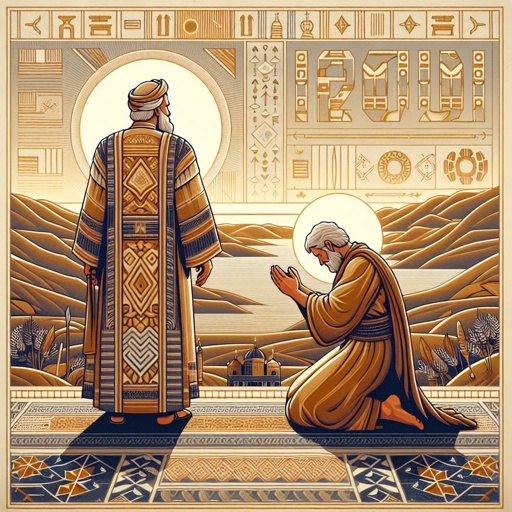
1 Samuel 15:31 - "So Samuel turned again after Saul; and Saul worshipped the LORD."

1 Samuel 31:11 - "¶ And when the inhabitants of Jabesh-gilead heard of that which the Philistines had done to Saul;"

1 Samuel 14:31 - "And they smote the Philistines that day from Michmash to Aijalon: and the people were very faint."

1 Samuel 31:13 - "And they took their bones, and buried them under a tree at Jabesh, and fasted seven days."

1 Samuel 31:3 - "And the battle went sore against Saul, and the archers hit him; and he was sore wounded of the archers."

1 Samuel 31:10 - "And they put his armour in the house of Ashtaroth: and they fastened his body to the wall of Beth-shan."

1 Samuel 31:6 - "So Saul died, and his three sons, and his armourbearer, and all his men, that same day together."

"So Samuel turned again after Saul; and Saul worshipped the LORD." - 1 Samuel 15:31

1 Samuel 31:5 - "And when his armourbearer saw that Saul was dead, he fell likewise upon his sword, and died with him."

1 Samuel 17:31 - "And when the words were heard which David spake, they rehearsed them before Saul: and he sent for him."

1 Samuel 30:31 - "And to them which were in Hebron, and to all the places where David himself and his men were wont to haunt."

1 Samuel 31:8 - "And it came to pass on the morrow, when the Philistines came to strip the slain, that they found Saul and his three sons fallen in mount Gilboa."

1 Samuel 31:2 - "And the Philistines followed hard upon Saul and upon his sons; and the Philistines slew Jonathan, and Abinadab, and Malchi-shua, Saul's sons."

1 Samuel 31:4 Saul took his own sword and fell on it. create the image in color

1 Samuel 2:31 - "Behold, the days come, that I will cut off thine arm, and the arm of thy father's house, that there shall not be an old man in thine house."

1 Sam 31: 12-13

1 Samuel 31:9 - "And they cut off his head, and stripped off his armour, and sent into the land of the Philistines round about, to publish it in the house of their idols, and among the people."

1 Samuel 31:12 - "All the valiant men arose, and went all night, and took the body of Saul and the bodies of his sons from the wall of Beth-shan, and came to Jabesh, and burnt them there."

"¶ And when the inhabitants of Jabesh-gilead heard of that which the Philistines had done to Saul;" - 1 Samuel 31:11
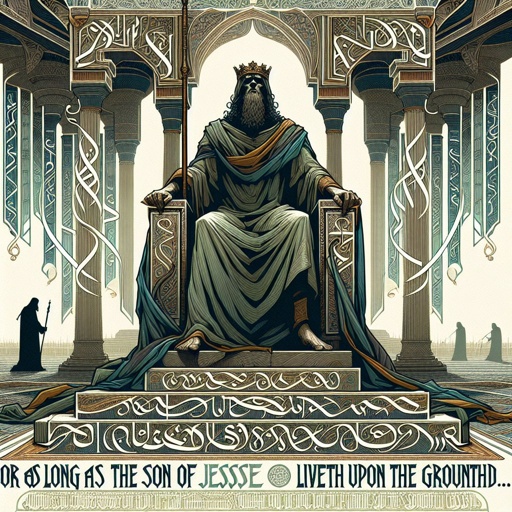
1 Samuel 20:31 - "For as long as the son of Jesse liveth upon the ground, thou shalt not be established, nor thy kingdom. Wherefore now send and fetch him unto me, for he shall surely die."
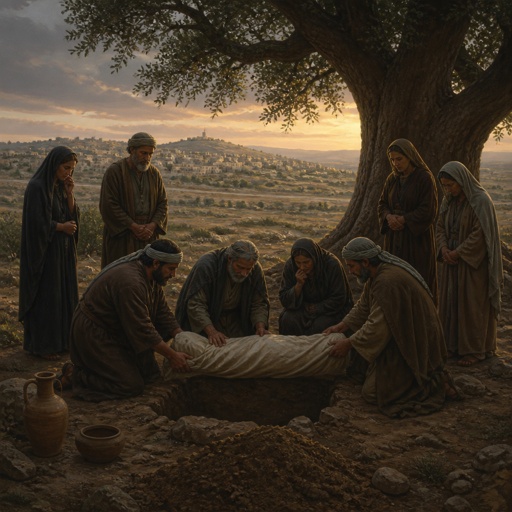
"And they took their bones, and buried them under a tree at Jabesh, and fasted seven days." - 1 Samuel 31:13
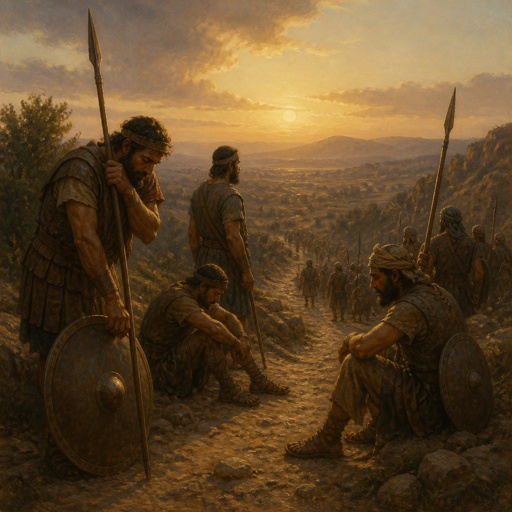
"And they smote the Philistines that day from Michmash to Aijalon: and the people were very faint." - 1 Samuel 14:31

1 Samuel 10:1 Samuel anoniting Saul

1 Samuel 31:7 - "¶ And when the men of Israel that were on the other side of the valley, and they that were on the other side Jordan, saw that the men of Israel fled, and that Saul and his sons were dead, they forsook the cities, and fled; and the Philistines came and dwelt in them."

Luke 1:31

"And they put his armour in the house of Ashtaroth: and they fastened his body to the wall of Beth-shan." - 1 Samuel 31:10
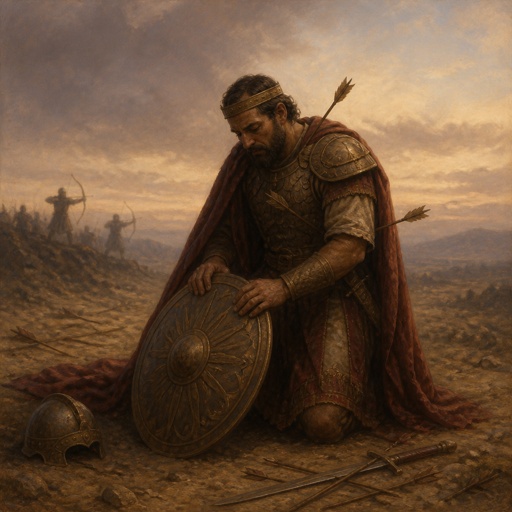
"And the battle went sore against Saul, and the archers hit him; and he was sore wounded of the archers." - 1 Samuel 31:3

1 Chronicles 1:31 - "Jetur, Naphish, and Kedemah. These are the sons of Ishmael."