What does 1 Samuel 30:7 mean?
"And David said to Abiathar the priest, Ahimelech's son, I pray thee, bring me hither the ephod. And Abiathar brought thither the ephod to David." - 1 Samuel 30:7
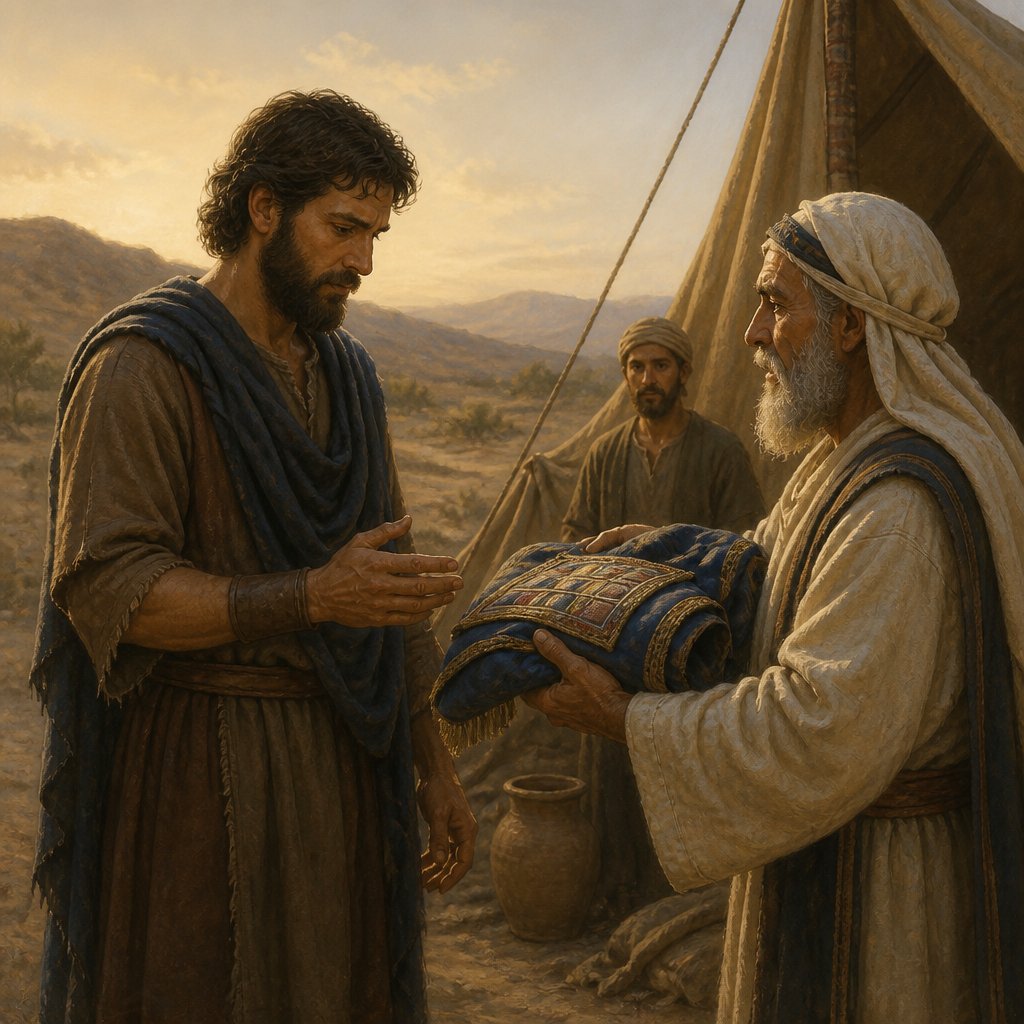
The verse 1 Samuel 30:7 in the King James Version of the Bible reads: "And David said to Abiathar the priest, Ahimelech's son, I pray thee, bring me hither the ephod. And Abiathar brought thither the ephod to David."
This verse comes from a passage in the Old Testament that depicts a significant moment in the life of David, who would later become the king of Israel. At this point in the narrative, David and his men had just returned to their home base of Ziklag, only to find that it had been raided and burned by the Amalekites. Furthermore, their wives and children had been taken captive by the enemy. Understandably, David and his men were devastated and distressed by this situation. In their anguish, David's own men began to speak of stoning him.
In the midst of this crisis, David turned to Abiathar the priest and instructed him to bring the ephod. The ephod was a sacred garment worn by the high priest of Israel, and it was used for seeking guidance and direction from God. By asking for the ephod, David was seeking divine counsel and guidance in this dire situation.
This verse is significant for a number of reasons. Firstly, it demonstrates David's faith and reliance on God in the face of adversity. Despite the overwhelming circumstances he found himself in, David did not despair or lose hope. Instead, he turned to God for guidance and direction. This is a powerful example of faith and trust in the midst of difficulty.
Additionally, this verse highlights the role of the priesthood in ancient Israel. The fact that David turned to the priest for spiritual guidance underscores the significance of the priestly office in mediating between God and the people. It also points to the importance of seeking God's direction and wisdom in times of trouble.
Moreover, this verse serves as a reminder of the broader themes of the sovereignty and faithfulness of God. In turning to the ephod, David was acknowledging that God alone had the power to rescue him and his men from their desperate situation. It is a reaffirmation of the belief that God is in control of all things, and that He is the source of wisdom, guidance, and deliverance.
Symbolically, the ephod represents a direct line of communication with God. It was used by the high priest to seek divine guidance and direction, often through the casting of lots or through the Urim and Thummim, which were kept in the ephod. By asking for the ephod, David was seeking God's will in a very direct and tangible way.
In the broader context of the book of 1 Samuel, this verse is part of David's journey towards kingship. Throughout the book, David faces numerous trials and challenges as he is pursued by King Saul, yet he remains faithful to God and is eventually established as the king of Israel. This verse serves as a pivotal moment in David's story, highlighting his unwavering faith and his reliance on God's guidance.
In conclusion, 1 Samuel 30:7 is a verse that carries deep spiritual and theological significance. It showcases David's faith and dependence on God in the face of adversity, and it also highlights the importance of seeking divine guidance in times of trouble. It is a powerful reminder of God's sovereignty and faithfulness, and it serves as a symbol of the direct line of communication between humanity and the divine.
Have questions about 1 Samuel 30:7?
Dive deeper into this scripture with Bible Chat — an AI-powered tool for exploring God's Word through conversation. Ask questions, get context, and grow in your understanding of the Bible.
Get Our Apps


1 Samuel 30:7 Artwork

1 Samuel 30:7 - "And David said to Abiathar the priest, Ahimelech's son, I pray thee, bring me hither the ephod. And Abiathar brought thither the ephod to David."
"And David said to Abiathar the priest, Ahimelech's son, I pray thee, bring me hither the ephod. And Abiathar brought thither the ephod to David." - 1 Samuel 30:7

1.samuel 15:30

1 Samuel 30:18

1.samuel 15:30

1 Samuel 30:30 - "And to them which were in Hormah, and to them which were in Chorashan, and to them which were in Athach,"
1 Samuel 20:27-30

1 Samuel 7:15 - "And Samuel judged Israel all the days of his life."

1 Samuel 30:25 - "And it was so from that day forward, that he made it a statute and an ordinance for Israel unto this day."

1 Samuel 30:28 - "And to them which were in Aroer, and to them which were in Siphmoth, and to them which were in Eshtemoa,"

1 Samuel 30:18 - "And David recovered all that the Amalekites had carried away: and David rescued his two wives."

1 Samuel 30:5 - "And David's two wives were taken captives, Ahinoam the Jezreelitess, and Abigail the wife of Nabal the Carmelite."

2 Samuel 7:1–29

1 Samuel 30:4 - "Then David and the people that were with him lifted up their voice and wept, until they had no more power to weep."

1 Samuel 14:7

1 Samuel 28:7

1 Samuel 8:7

1 Chronicles 7:30 - "The sons of Asher; Imnah, and Isuah, and Ishuai, and Beriah, and Serah their sister."

1 Samuel 7:5 - "And Samuel said, Gather all Israel to Mizpeh, and I will pray for you unto the LORD."

1 Samuel 30:29 - "And to them which were in Rachal, and to them which were in the cities of the Jerahmeelites, and to them which were in the cities of the Kenites,"

1 Samuel 30:31 - "And to them which were in Hebron, and to all the places where David himself and his men were wont to haunt."

2 samuel 9:7 fhdhdhdhhd

1 Samuel 30:27 - "To them which were in Beth-el, and to them which were in south Ramoth, and to them which were in Jattir,"

1 Samuel 30:20 - "And David took all the flocks and the herds, which they drave before those other cattle, and said, This is David's spoil."

1 Corinthians 7:30 - "And they that weep, as though they wept not; and they that rejoice, as though they rejoiced not; and they that buy, as though they possessed not;"

1 Samuel 30:1 - "And it came to pass, when David and his men were come to Ziklag on the third day, that the Amalekites had invaded the south, and Ziklag, and smitten Ziklag, and burned it with fire;"

1 Samuel 30:3 - "¶ So David and his men came to the city, and, behold, it was burned with fire; and their wives, and their sons, and their daughters, were taken captives."

1 Samuel 7:9 - "¶ And Samuel took a sucking lamb, and offered it for a burnt offering wholly unto the LORD: and Samuel cried unto the LORD for Israel; and the LORD heard him."

1 Samuel 3:7 - "Now Samuel did not yet know the LORD, neither was the word of the LORD yet revealed unto him."

1 Samuel 17:30 - "¶ And he turned from him toward another, and spake after the same manner: and the people answered him again after the former manner."