What does 1 Samuel 2:8 mean?
"He raiseth up the poor out of the dust, and lifteth up the beggar from the dunghill, to set them among princes, and to make them inherit the throne of glory: for the pillars of the earth are the LORD'S, and he hath set the world upon them." - 1 Samuel 2:8
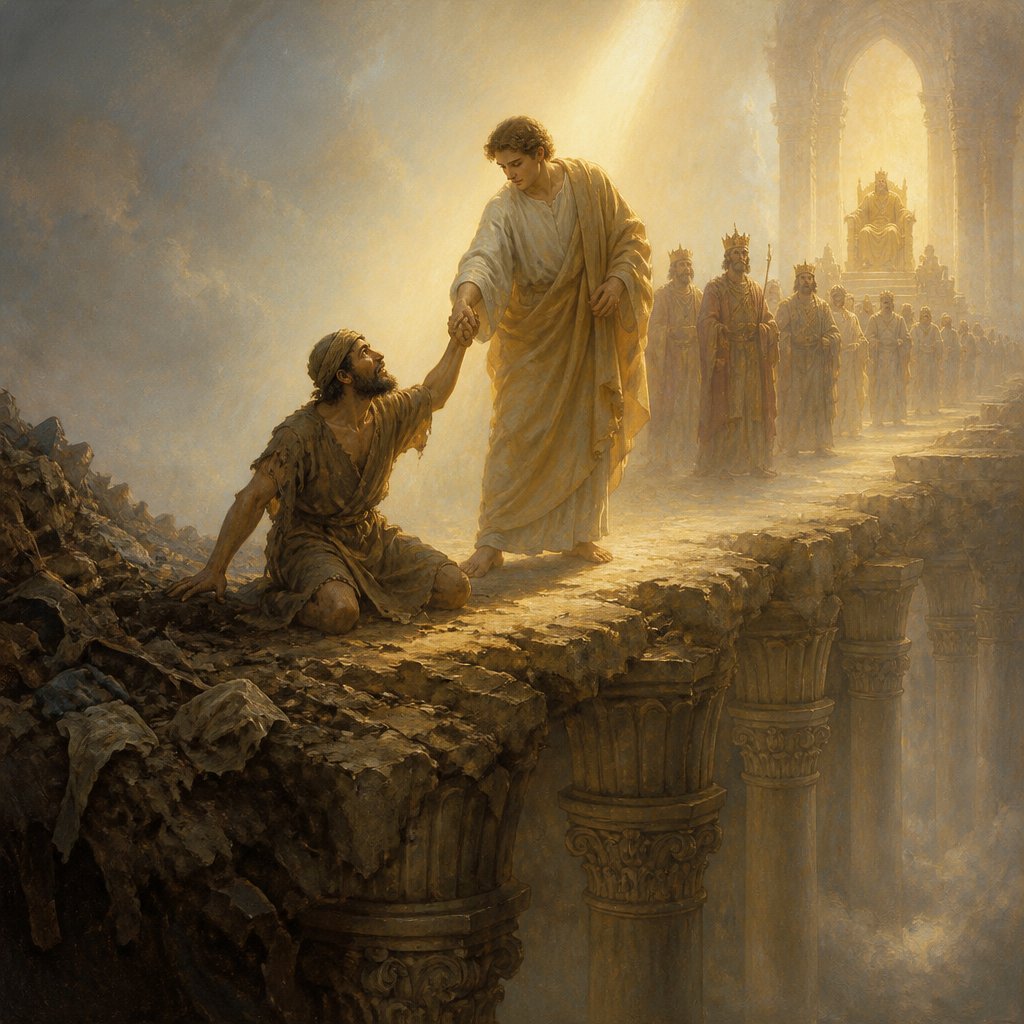
The Bible verse 1 Samuel 2:8 from the King James Version (KJV) reads, "He raiseth up the poor out of the dust, and lifteth up the beggar from the dunghill, to set them among princes, and to make them inherit the throne of glory: for the pillars of the earth are the Lord's, and he hath set the world upon them."
This verse is part of a song of praise and thanksgiving known as Hannah's prayer, which is found in 1 Samuel 2. Hannah, the mother of the prophet Samuel, composed this prayer after the Lord answered her prayer for a child. The prayer highlights the sovereignty and power of God, as well as His care and provision for the humble and marginalized.
The verse begins with a depiction of God's power to lift up the poor and destitute. The imagery of raising the poor out of the dust and lifting the beggar from the dunghill emphasizes God's ability to transform the lives of the lowly and downtrodden. This theme of God's concern for the poor and oppressed is repeated throughout the Bible, particularly in the teachings of Jesus in the New Testament. It reflects God's concern for justice and the value He places on each individual, regardless of their social status or earthly wealth.
The verse goes on to describe the exaltation of the poor and beggar, who are set among princes and made to inherit the throne of glory. This imagery of reversal is a common theme in the Bible, where the lowly are exalted and the proud are humbled. It speaks to the concept of God's kingdom, where the values of the world are turned upside down, and the last shall be first.
Symbolically, this verse represents the divine intervention and providence of God in the lives of the marginalized. It illustrates God's ability to transform the lives of those who are oppressed and overlooked, raising them up to positions of honor and authority. This theme is echoed in the New Testament, where Jesus frequently ministers to the poor and outcast, demonstrating God's heart for the marginalized.
The latter part of the verse declares that the pillars of the earth are the Lord's, and He has set the world upon them. This statement emphasizes God's sovereignty and control over the earth. The imagery of pillars suggests stability and support, and it reinforces the idea that God is the ultimate authority and sustainer of the world. This echoes other passages in the Bible that proclaim God's power over creation and His role as the foundation of all existence.
Overall, 1 Samuel 2:8 is a powerful declaration of God's care for the poor and oppressed, as well as His sovereignty over the world. It offers hope and encouragement to those who are struggling, reminding them that God is able to lift them up and provide for their needs. It also serves as a reminder of God's ultimate authority and control, offering reassurance and confidence in His ability to sustain and uphold the world. This verse continues to inspire and comfort believers, pointing them to the character and power of God.
Have questions about 1 Samuel 2:8?
Dive deeper into this scripture with Bible Chat — an AI-powered tool for exploring God's Word through conversation. Ask questions, get context, and grow in your understanding of the Bible.
Get Our Apps


1 Samuel 2:8 Artwork
1 Samuel 2:8 He raises up the poor out of the dust and lifts up the needy from the ash heap, to make them sit with nobles and inherit the throne of glory. For the pillars of the earth are the Lord's, and He has set the world upon them.

1 Samuel 2:8 - "He raiseth up the poor out of the dust, and lifteth up the beggar from the dunghill, to set them among princes, and to make them inherit the throne of glory: for the pillars of the earth are the LORD'S, and he hath set the world upon them."
"He raiseth up the poor out of the dust, and lifteth up the beggar from the dunghill, to set them among princes, and to make them inherit the throne of glory: for the pillars of the earth are the LORD'S, and he hath set the world upon them." - 1 Samuel 2:8

1 Samuel 8:2 - "Now the name of his firstborn was Joel; and the name of his second, Abiah: they were judges in Beer-sheba."

2 Samuel 1:8 - "And he said unto me, Who art thou? And I answered him, I am an Amalekite."

2 Samuel 8:1 - "And after this it came to pass, that David smote the Philistines, and subdued them: and David took Metheg-ammah out of the hand of the Philistines."

1 Samuel 8:1 - "And it came to pass, when Samuel was old, that he made his sons judges over Israel."

1 Samuel 2:12

2 Samuel 19:8

2 Samuel 19:8

2 Samuel 19:8

2 Samuel 19:8

2 Samuel 2:8 - "¶ But Abner the son of Ner, captain of Saul's host, took Ish-bosheth the son of Saul, and brought him over to Mahanaim;"

1 Samuel 8:6 - "¶ But the thing displeased Samuel, when they said, Give us a king to judge us. And Samuel prayed unto the LORD."

1 Samuel 8:21 - "And Samuel heard all the words of the people, and he rehearsed them in the ears of the LORD."

1 Samuel 8:10 - "¶ And Samuel told all the words of the LORD unto the people that asked of him a king."

1 Samuel 8:7

2 samuel 23:8-21

1 Samuel 8:4 - "Then all the elders of Israel gathered themselves together, and came to Samuel unto Ramah,"

2 Samuel 8:8 - "And from Betah, and from Berothai, cities of Hadadezer, king David took exceeding much brass."

1 Samuel 13:8 - "¶ And he tarried seven days, according to the set time that Samuel had appointed: but Samuel came not to Gilgal; and the people were scattered from him."

1 Samuel 8:19 - "¶ Nevertheless the people refused to obey the voice of Samuel; and they said, Nay; but we will have a king over us;"

1 Samuel 16:8 - "Then Jesse called Abinadab, and made him pass before Samuel. And he said, Neither hath the LORD chosen this."

1 Samuel 8:22 - "And the LORD said to Samuel, Hearken unto their voice, and make them a king. And Samuel said unto the men of Israel, Go ye every man unto his city."

1 Samuel 8:13 - "And he will take your daughters to be confectionaries, and to be cooks, and to be bakers."

2 Samuel 8:16 - "And Joab the son of Zeruiah was over the host; and Jehoshaphat the son of Ahilud was recorder;"

2 Samuel 22:8 - "Then the earth shook and trembled; the foundations of heaven moved and shook, because he was wroth."

1 Samuel 7:8 - "And the children of Israel said to Samuel, Cease not to cry unto the LORD our God for us, that he will save us out of the hand of the Philistines."

2 Samuel 8:17 - "And Zadok the son of Ahitub, and Ahimelech the son of Abiathar, were the priests; and Seraiah was the scribe;"

2 Samuel 8:7 - "And David took the shields of gold that were on the servants of Hadadezer, and brought them to Jerusalem."