What does 1 Samuel 2:29 mean?
"Wherefore kick ye at my sacrifice and at mine offering, which I have commanded in my habitation; and honourest thy sons above me, to make yourselves fat with the chiefest of all the offerings of Israel my people?" - 1 Samuel 2:29
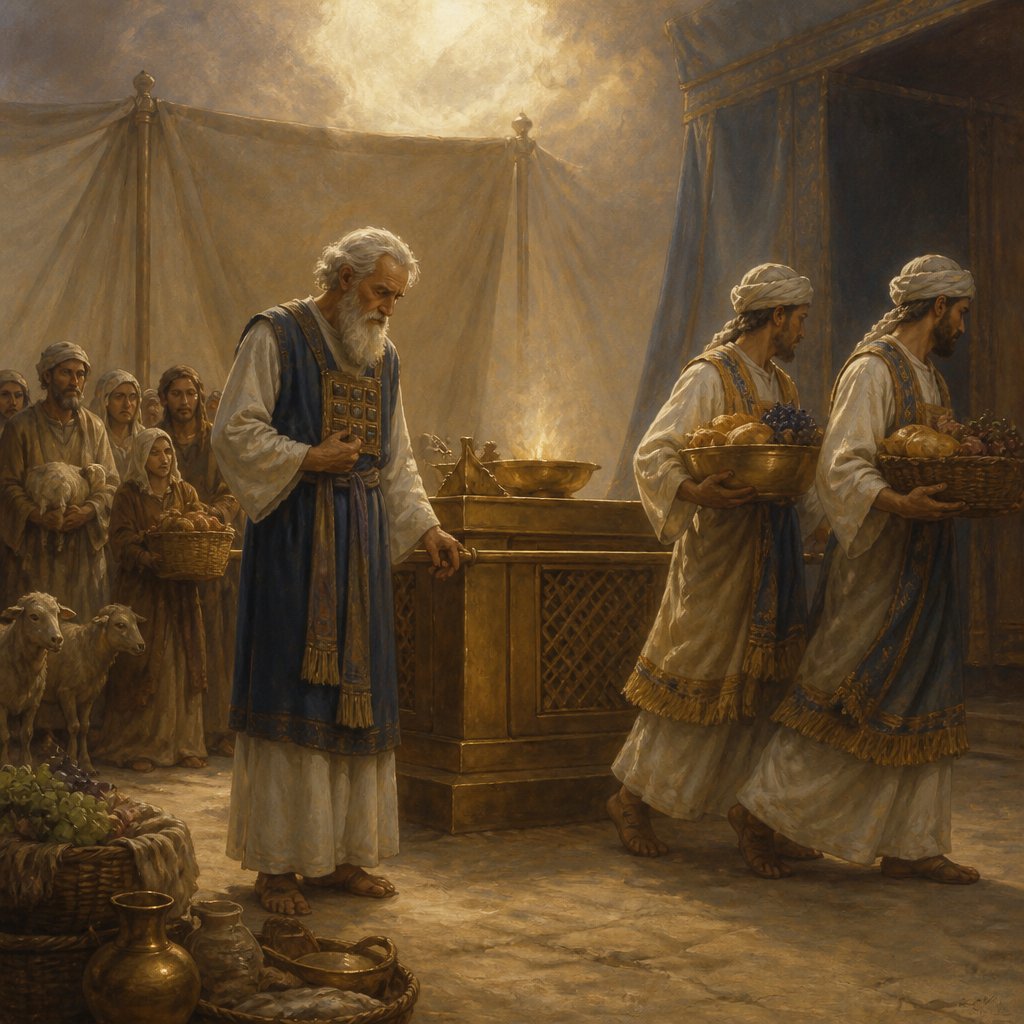
The Bible verse 1 Samuel 2:29 from the King James Version (KJV) states:
"Wherefore kick ye at my sacrifice and at mine offering, which I have commanded in my habitation; and honourest thy sons above me, to make yourselves fat with the chiefest of all the offerings of Israel my people?"
This particular verse is part of a larger passage in the Book of 1 Samuel that deals with the corruption of the priesthood under Eli. The verse is spoken by the prophet Samuel to Eli, the High Priest, and his sons, Hophni and Phinehas. This verse reflects the dissatisfaction of God with the behavior and actions of the priests and their blatant disrespect for God's commandments.
The context of this verse is set in the time of the judges, a period of moral and spiritual decline in the history of Israel. The priesthood, which was supposed to be the mediator between God and the people, had become corrupt. Eli's sons, Hophni and Phinehas, were notorious for their greed, immorality, and desecration of the sacrifices and offerings brought to God. They not only exploited their positions as priests for personal gain but also dishonored the Lord through their actions and behaviors.
In 1 Samuel 2:29, the prophet Samuel confronts Eli and his sons, rebuking them for dishonoring God by their actions. The verse begins with the question, "Wherefore kick ye at my sacrifice and at mine offering?" This phrase "kick ye" implies a rebellious and disrespectful attitude towards the sacrifices and offerings made to God. The priests were treating the sacrifices with disdain and disrespect, showing contempt for the very ordinances that God had commanded for His worship.
The verse further accuses the priests of honoring their sons above God, indicating that their loyalty and devotion were misplaced. Instead of upholding the reverence and sanctity of God's commands, the priests placed their own interests and the interests of their sons above God. They were more concerned with filling their own bellies, "to make yourselves fat with the chiefest of all the offerings of Israel my people," than with honoring and obeying God.
From this verse, we see a recurring theme in the Bible of the consequences of disobedience and the importance of honoring and obeying God's commandments. The verse serves as a warning against the dangers of placing personal gain and ambition above the will and honor of God. It emphasizes the importance of maintaining reverence and respect for God's ordinances and commands, especially within the context of religious leadership.
The symbolism in this verse lies in the sacrificial system of the Old Testament. Sacrifices and offerings were central to the worship of God, and they symbolized the atonement for sins and the dedication of the worshipper to God. By disrespecting and desecrating the sacrifices, the priests were symbolically rejecting the atonement and the covenant relationship with God. The verse also symbolizes the corruption and moral decay within the religious leadership of Israel at that time, highlighting the need for repentance and renewal.
In conclusion, 1 Samuel 2:29 from the King James Version of the Bible serves as a stark reminder of the consequences of disobeying and dishonoring God's commands. It reflects the theme of obedience and reverence for God's ordinances and the symbolism of the sacrificial system. The verse also highlights the moral and spiritual decay within the priesthood and the need for repentance and renewal. It serves as a timeless lesson for all believers to prioritize God's honor above personal ambitions and to uphold reverence and obedience to His commands.
Have questions about 1 Samuel 2:29?
Dive deeper into this scripture with Bible Chat — an AI-powered tool for exploring God's Word through conversation. Ask questions, get context, and grow in your understanding of the Bible.
Get Our Apps


1 Samuel 2:29 Artwork

1 Samuel 2:29 - "Wherefore kick ye at my sacrifice and at mine offering, which I have commanded in my habitation; and honourest thy sons above me, to make yourselves fat with the chiefest of all the offerings of Israel my people?"
"Wherefore kick ye at my sacrifice and at mine offering, which I have commanded in my habitation; and honourest thy sons above me, to make yourselves fat with the chiefest of all the offerings of Israel my people?" - 1 Samuel 2:29

2 Samuel 7:1–29

1 Samuel 2:9 - "He will keep the feet of his saints, and the wicked shall be silent in darkness; for by strength shall no man prevail."

1 Samuel 29:2 - "And the lords of the Philistines passed on by hundreds, and by thousands: but David and his men passed on in the rereward with Achish."

1 Samuel 20:27-29

2 Samuel 15:29 - "Zadok therefore and Abiathar carried the ark of God again to Jerusalem: and they tarried there."
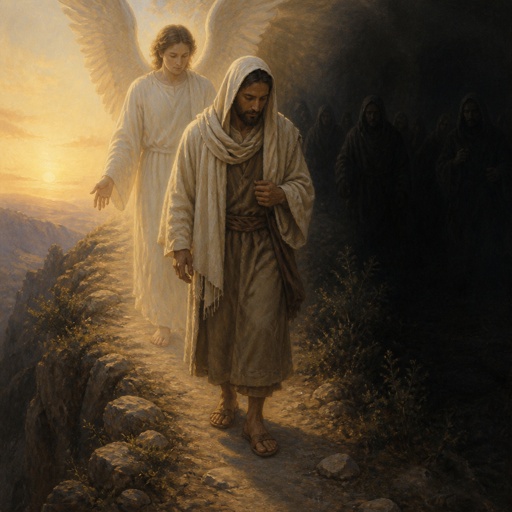
"He will keep the feet of his saints, and the wicked shall be silent in darkness; for by strength shall no man prevail." - 1 Samuel 2:9

1 Chronicles 29:29 - "Now the acts of David the king, first and last, behold, they are written in the book of Samuel the seer, and in the book of Nathan the prophet, and in the book of Gad the seer,"

1 Samuel 17:29 - "And David said, What have I now done? Is there not a cause?"

1 Samuel 29:1 - "Now the Philistines gathered together all their armies to Aphek: and the Israelites pitched by a fountain which is in Jezreel."

2 Samuel 22:29 - "For thou art my lamp, O LORD: and the LORD will lighten my darkness."

2 Samuel 12:29 - "And David gathered all the people together, and went to Rabbah, and fought against it, and took it."

1 Samuel 18:29 - "And Saul was yet the more afraid of David; and Saul became David's enemy continually."

1 Samuel 29:7 - "Wherefore now return, and go in peace, that thou displease not the lords of the Philistines."

"And the lords of the Philistines passed on by hundreds, and by thousands: but David and his men passed on in the rereward with Achish." - 1 Samuel 29:2

2 Samuel 23:29 - "Heleb the son of Baanah, a Netophathite, Ittai the son of Ribai out of Gibeah of the children of Benjamin,"

1 Samuel 2:12

1 Samuel 23:29 - "And David went up from thence, and dwelt in strong holds at En-gedi."

2 Samuel 2:29 - "And Abner and his men walked all that night through the plain, and passed over Jordan, and went through all Bithron, and they came to Mahanaim."

1 Samuel 15:29 - "And also the Strength of Israel will not lie nor repent: for he is not a man, that he should repent."

1 Samuel 29:5 - "Is not this David, of whom they sang one to another in dances, saying, Saul slew his thousands, and David his ten thousands?"

1 Samuel 30:29 - "And to them which were in Rachal, and to them which were in the cities of the Jerahmeelites, and to them which were in the cities of the Kenites,"

2 Samuel 2:9 - "And made him king over Gilead, and over the Ashurites, and over Jezreel, and over Ephraim, and over Benjamin, and over all Israel."

2 Samuel 17:29 - "And honey, and butter, and sheep, and cheese of kine, for David, and for the people that were with him, to eat: for they said, The people is hungry, and weary, and thirsty, in the wilderness."

1 Samuel 29:11 - "So David and his men rose up early to depart in the morning, to return into the land of the Philistines. And the Philistines went up to Jezreel."

2 Samuel 19:29 - "And the king said unto him, Why speakest thou any more of thy matters? I have said, Thou and Ziba divide the land."

2 Samuel 3:29 (KJVA) 29 Let it rest on the head of Joab, and on all his father's house; and let there not fail from the house of Joab one that hath an issue, or that is a leper, or that leaneth on a staff, or that falleth on the sword, or that lacketh bread.

1 Samuel 2:26 - "And the child Samuel grew on, and was in favour both with the LORD, and also with men."
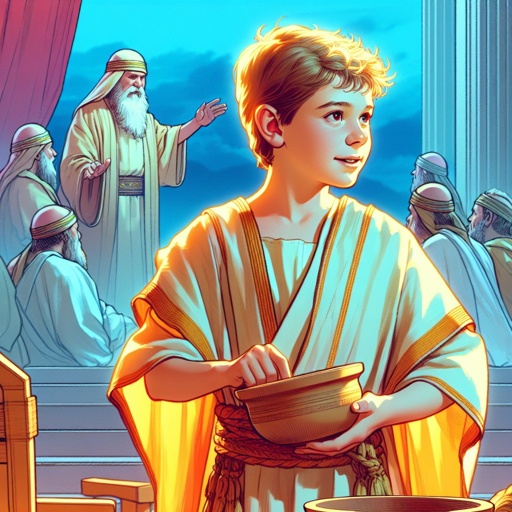
1 Samuel 2:18 - "¶ But Samuel ministered before the LORD, being a child, girded with a linen ephod."