What does 1 Samuel 26:17 mean?
"And Saul knew David's voice, and said, Is this thy voice, my son David? And David said, It is my voice, my lord, O king." - 1 Samuel 26:17
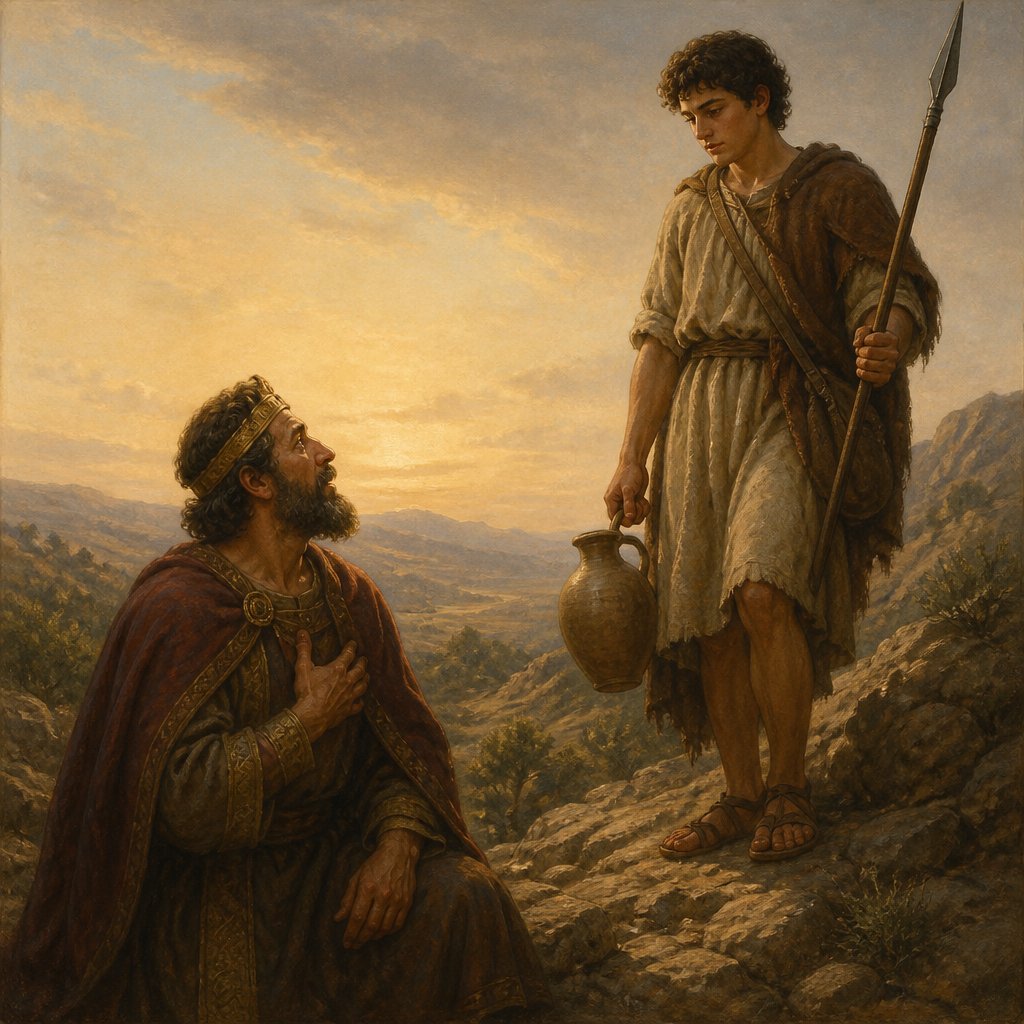
1 Samuel 26:17 (KJV) says, "And Saul knew David's voice, and said, Is this thy voice, my son David? And David said, It is my voice, my lord, O king."
This verse comes from the Old Testament and is part of the story of David and King Saul. It captures a pivotal moment in their relationship, displaying both the tension and complexity between the two characters. To truly grasp the full meaning of this verse, it is important to understand the context in which it is found and the themes and symbolism that are present.
The Book of 1 Samuel tells the story of the rise of King David, who is chosen by God to succeed King Saul. However, Saul becomes jealous of David's popularity and success and seeks to kill him. In this particular verse, David has the opportunity to kill Saul, but instead, he sneaks into his camp and takes his spear and water jug while he is sleeping. As he is leaving, he calls out to the camp to show Saul that he had the chance to kill him but chose not to. When Saul recognizes David's voice, he asks him if it is indeed him, to which David confirms. This moment is crucial as it demonstrates David's integrity and loyalty, even in the face of great danger and injustice.
The theme of loyalty and integrity is central to this verse. Despite being mistreated and pursued by Saul, David remains loyal to him as the king. He had the chance to seek vengeance or take matters into his own hands, but instead chooses to trust in God's timing and justice. This act of mercy and restraint on David's part speaks to his character and his unwavering faith in God's plan for him.
There is also a theme of forgiveness present in this verse. By not taking the opportunity to harm Saul, David extends forgiveness to the man who has been relentless in his pursuit to kill him. This act of forgiveness is a powerful reminder of the importance of showing mercy even to those who have wronged us. It reflects the teachings of Jesus in the New Testament, emphasizing the value of forgiveness and non-violence.
The symbolism in this verse is also significant. David taking Saul's spear and water jug could be seen as a symbolic gesture of his power and authority over Saul. In ancient Near Eastern culture, the possession of someone's weapons or personal belongings was a symbol of victory and dominance. By taking these items, David demonstrates his ability to defeat Saul if he chose to, but instead, he shows mercy and restraint.
Furthermore, the mention of Saul recognizing David's voice carries symbolic weight. It represents the recognition of David's true character and intentions. Despite Saul's paranoia and distrust towards David, he is able to discern the truth and acknowledge David's loyalty and mercy. This recognition serves as a moment of clarity for Saul, reminding him of David's inherent goodness and his own descent into jealousy and bitterness.
Overall, 1 Samuel 26:17 is a powerful and poignant verse that captures the complexity of human relationships and the themes of loyalty, forgiveness, and mercy. It is a reminder of the importance of maintaining integrity and showing compassion even in the face of great injustice. It also underscores the significance of forgiveness and the potential for redemption, even in the most difficult of circumstances. This verse serves as a profound example of David's character and a timeless lesson on the values of grace and humility.
Have questions about 1 Samuel 26:17?
Dive deeper into this scripture with Bible Chat — an AI-powered tool for exploring God's Word through conversation. Ask questions, get context, and grow in your understanding of the Bible.
Get Our Apps


1 Samuel 26:17 Artwork

1 Samuel 26:17 - "And Saul knew David's voice, and said, Is this thy voice, my son David? And David said, It is my voice, my lord, O king."
"And Saul knew David's voice, and said, Is this thy voice, my son David? And David said, It is my voice, my lord, O king." - 1 Samuel 26:17

2 Samuel 17:26 - "So Israel and Absalom pitched in the land of Gilead."
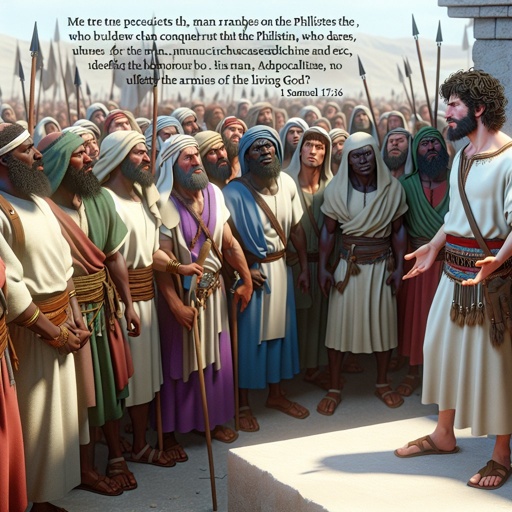
1 Samuel 17:26 - "And David spake to the men that stood by him, saying, What shall be done to the man that killeth this Philistine, and taketh away the reproach from Israel? for who is this uncircumcised Philistine, that he should defy the armies of the living God?"

1 Samuel 2:26 - "And the child Samuel grew on, and was in favour both with the LORD, and also with men."

"So Israel and Absalom pitched in the land of Gilead." - 2 Samuel 17:26

1 Samuel 10:17 - "¶ And Samuel called the people together unto the LORD to Mizpeh;"

1 Samuel 17:33

1 Samuel 1:15-17

1 Samuel 17:34-35

1 Samuel 17:49

1 Samuel 17:45

1 Samuel 17:49

1 Samuel 17:45

1 samuel 17:3

1 Samuel 17:49

1 Samuel 17:45
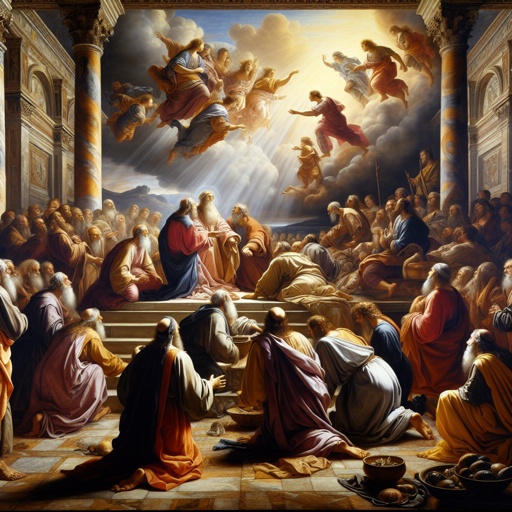
1 Samuel 17:49

2 Samuel 1. 17-27

1 Samuel 17:38-40

1 Samuel 17:14 - "And David was the youngest: and the three eldest followed Saul."

1 Samuel 17:45-49

1 Samuel 15:26 (KJVA) 26 And Samuel said unto Saul, I will not return with thee: for thou hast rejected the word of the LORD, and the LORD hath rejected thee from being king over Israel.

1 Samuel 26:4 - "David therefore sent out spies, and understood that Saul was come in very deed."

1 Samuel 26:1 - "And the Ziphites came unto Saul to Gibeah, saying, Doth not David hide himself in the hill of Hachilah, which is before Jeshimon?"

1 Samuel 15:26 - "And Samuel said unto Saul, I will not return with thee: for thou hast rejected the word of the LORD, and the LORD hath rejected thee from being king over Israel."

1 Samuel 9:26 - "And they arose early: and it came to pass about the spring of the day, that Samuel called Saul to the top of the house, saying, Up, that I may send thee away. And Saul arose, and they went out both of them, he and Samuel, abroad."

"And the child Samuel grew on, and was in favour both with the LORD, and also with men." - 1 Samuel 2:26

1 Samuel 17:56 - "And the king said, Enquire thou whose son the stripling is."

1 Samuel 9:17 - "And when Samuel saw Saul, the LORD said unto him, Behold the man whom I spake to thee of! this same shall reign over my people."