What does 1 Samuel 26:11 mean?
"The LORD forbid that I should stretch forth mine hand against the LORD'S anointed: but, I pray thee, take thou now the spear that is at his bolster, and the cruse of water, and let us go." - 1 Samuel 26:11
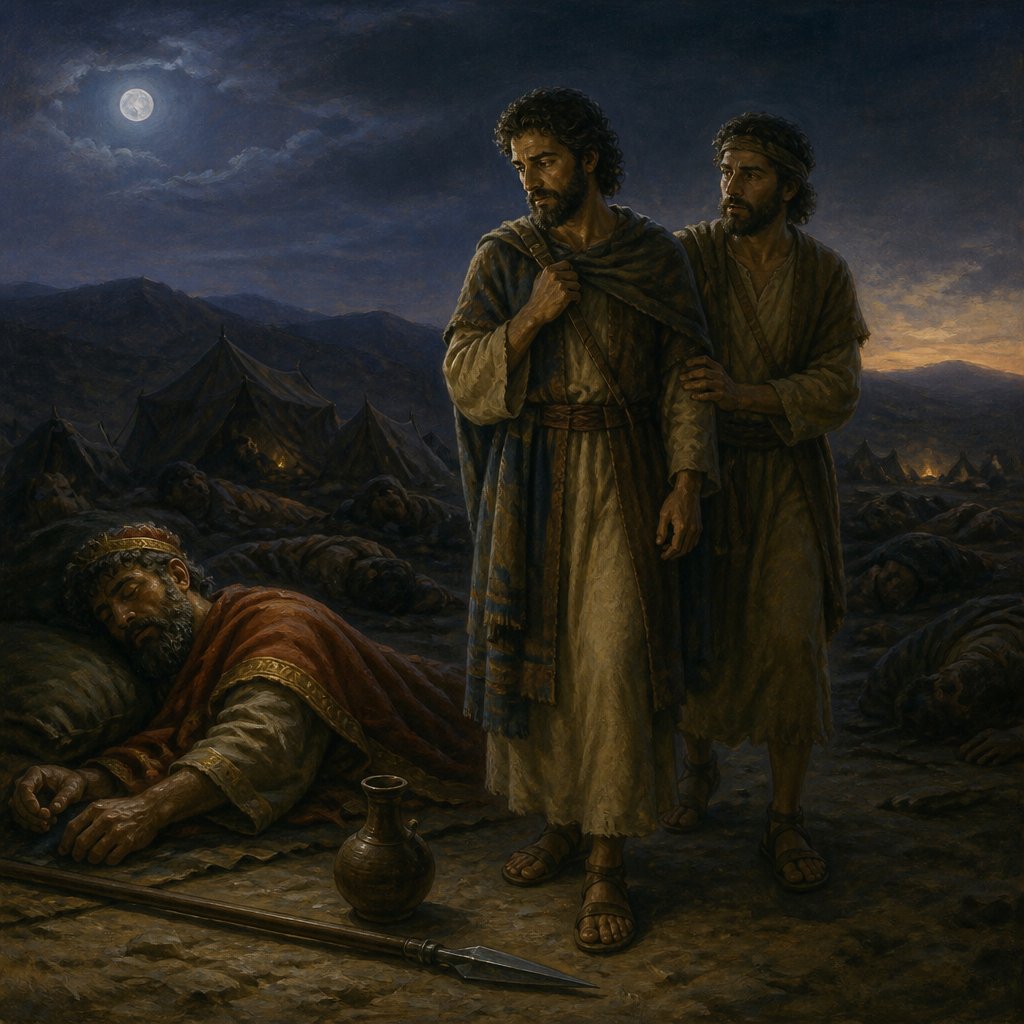
The verse 1 Samuel 26:11 in the King James Version of the Bible reads, "The Lord forbid that I should stretch forth mine hand against the Lord's anointed: but, I pray thee, take thou now the spear that is at his bolster, and the cruse of water, and let us go."
This verse comes from the story of David sparing King Saul's life. The context of the verse is that David and his servant, Abishai, have come upon King Saul and his army while they were sleeping. David's men urged him to kill Saul, believing it was an opportunity to take the throne, as Saul had been pursuing David to kill him. But David refused, saying that he could not lay a hand on the Lord's anointed. Instead, he took Saul's spear and water jug as evidence that he had spared his life and went on his way.
The verse holds several important themes and lessons. One of the main themes is the idea of respecting authority and obeying God's laws. In ancient Israel, the king was seen as God's anointed ruler, and it was believed that only God had the right to remove him. Despite the fact that Saul was actively seeking to kill him, David still respected his position as king and refused to harm him. This demonstrates David's faithfulness and trust in God's plan and his obedience to God's commandments.
Another theme presented in this verse is the importance of mercy and forgiveness. David could have easily taken advantage of the situation and rid himself of his persecutor once and for all, but he chose to show mercy. This act of mercy is reflective of God's own grace and forgiveness towards humanity. It teaches us the value of compassion and the power of forgiveness, even towards those who have wronged us.
The verse also serves as a reminder of the power of God to protect and deliver His people. Despite the relentless pursuit of Saul, David continued to trust in God's protection and refused to take matters into his own hands. This shows us that ultimately, our trust and reliance should be in God, and He will provide for us in His perfect timing.
Symbolism can also be found in this verse, particularly in the items that David took from Saul's camp. The spear is often seen as a symbol of warfare and power, and in this context, it represents the threat against David's life. By taking the spear, David was not only taking physical evidence of his mercy towards Saul but also symbolically disarming his enemy. The water jug, on the other hand, is a symbol of sustenance and life. By taking these two items, David was demonstrating his power over Saul, but also his willingness to show mercy and spare his life.
Furthermore, the verse can be seen as a foreshadowing of Jesus' teachings on forgiveness and mercy. Just as David spared Saul's life, Jesus taught his followers to love their enemies and to pray for those who persecute them. This verse serves as a powerful example of how to respond to those who seek to harm us, showing compassion and forgiveness rather than seeking revenge.
In conclusion, 1 Samuel 26:11 holds significant meaning in its themes of respecting authority, showing mercy and forgiveness, trusting in God's protection, and symbolically disarming the enemy. It serves as a powerful lesson for believers on how to respond to adversity and persecution with faith and obedience to God's commands.
Have questions about 1 Samuel 26:11?
Dive deeper into this scripture with Bible Chat — an AI-powered tool for exploring God's Word through conversation. Ask questions, get context, and grow in your understanding of the Bible.
Get Our Apps


1 Samuel 26:11 Artwork
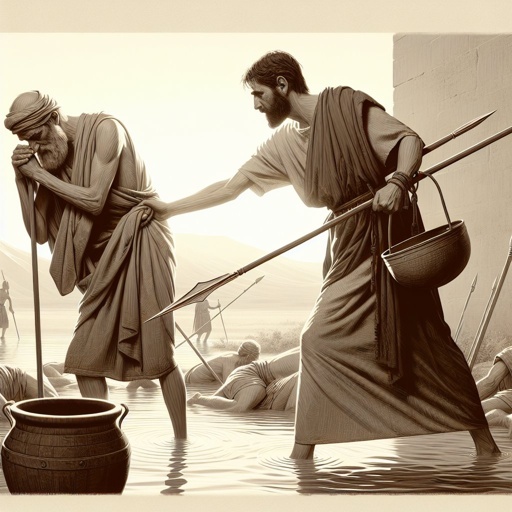
1 Samuel 26:11 - "The LORD forbid that I should stretch forth mine hand against the LORD'S anointed: but, I pray thee, take thou now the spear that is at his bolster, and the cruse of water, and let us go."
"The LORD forbid that I should stretch forth mine hand against the LORD'S anointed: but, I pray thee, take thou now the spear that is at his bolster, and the cruse of water, and let us go." - 1 Samuel 26:11

1 Samuel 2:26 - "And the child Samuel grew on, and was in favour both with the LORD, and also with men."

2 Samuel 11:26 - "¶ And when the wife of Uriah heard that Uriah her husband was dead, she mourned for her husband."

1 Samuel 15:26 (KJVA) 26 And Samuel said unto Saul, I will not return with thee: for thou hast rejected the word of the LORD, and the LORD hath rejected thee from being king over Israel.

1 Samuel 26:4 - "David therefore sent out spies, and understood that Saul was come in very deed."

1 Corinthians 11:26-29

1 Corinthians 11:26-29

1 Samuel 11:14 - "Then said Samuel to the people, Come, and let us go to Gilgal, and renew the kingdom there."

1 Samuel 26:1 - "And the Ziphites came unto Saul to Gibeah, saying, Doth not David hide himself in the hill of Hachilah, which is before Jeshimon?"

1 Samuel 15:26 - "And Samuel said unto Saul, I will not return with thee: for thou hast rejected the word of the LORD, and the LORD hath rejected thee from being king over Israel."

1 Samuel 9:26 - "And they arose early: and it came to pass about the spring of the day, that Samuel called Saul to the top of the house, saying, Up, that I may send thee away. And Saul arose, and they went out both of them, he and Samuel, abroad."

"And the child Samuel grew on, and was in favour both with the LORD, and also with men." - 1 Samuel 2:26

1 Samuel 22:11-13

1 Samuel 10:26 - "¶ And Saul also went home to Gibeah; and there went with him a band of men, whose hearts God had touched."

1 Samuel 28:11 - "Then said the woman, Whom shall I bring up unto thee? And he said, Bring me up Samuel."

1 Samuel 26:22 - "And David answered and said, Behold the king's spear! and let one of the young men come over and fetch it."

1 Samuel 3:11 - "¶ And the LORD said to Samuel, Behold, I will do a thing in Israel, at which both the ears of every one that heareth it shall tingle."

1 Samuel 1:26 - "And she said, Oh my lord, as thy soul liveth, my lord, I am the woman that stood by thee here, praying unto the LORD."

1 Samuel 12:11 - "And the LORD sent Jerubbaal, and Bedan, and Jephthah, and Samuel, and delivered you out of the hand of your enemies on every side, and ye dwelled safe."

1 Samuel 11:12 - "¶ And the people said unto Samuel, Who is he that said, Shall Saul reign over us? bring the men, that we may put them to death."

1 Samuel 18:26 - "And when his servants told David these words, it pleased David well to be the king's son in law: and the days were not expired."

1 Samuel 26:13 - "¶ Then David went over to the other side, and stood on the top of an hill afar off; a great space being between them:"

1 Samuel 26:9 - "And David said to Abishai, Destroy him not: for who can stretch forth his hand against the LORD'S anointed, and be guiltless?"

1 Samuel 31:11 - "¶ And when the inhabitants of Jabesh-gilead heard of that which the Philistines had done to Saul;"

1 Samuel 20:26 - "Nevertheless Saul spake not any thing that day: for he thought, Something hath befallen him, he is not clean; surely he is not clean."

1 Samuel 26:2 - "Then Saul arose, and went down to the wilderness of Ziph, having three thousand chosen men of Israel with him, to seek David in the wilderness of Ziph."

1 Samuel 26:3 - "And Saul pitched in the hill of Hachilah, which is before Jeshimon, by the way. But David abode in the wilderness, and he saw that Saul came after him into the wilderness."

1 Chronicles 26:11 - "Hilkiah the second, Tebaliah the third, Zechariah the fourth: all the sons and brethren of Hosah were thirteen."

1 Samuel 26:17 - "And Saul knew David's voice, and said, Is this thy voice, my son David? And David said, It is my voice, my lord, O king."