What does 1 Samuel 24:17 mean?
"And he said to David, Thou art more righteous than I: for thou hast rewarded me good, whereas I have rewarded thee evil." - 1 Samuel 24:17
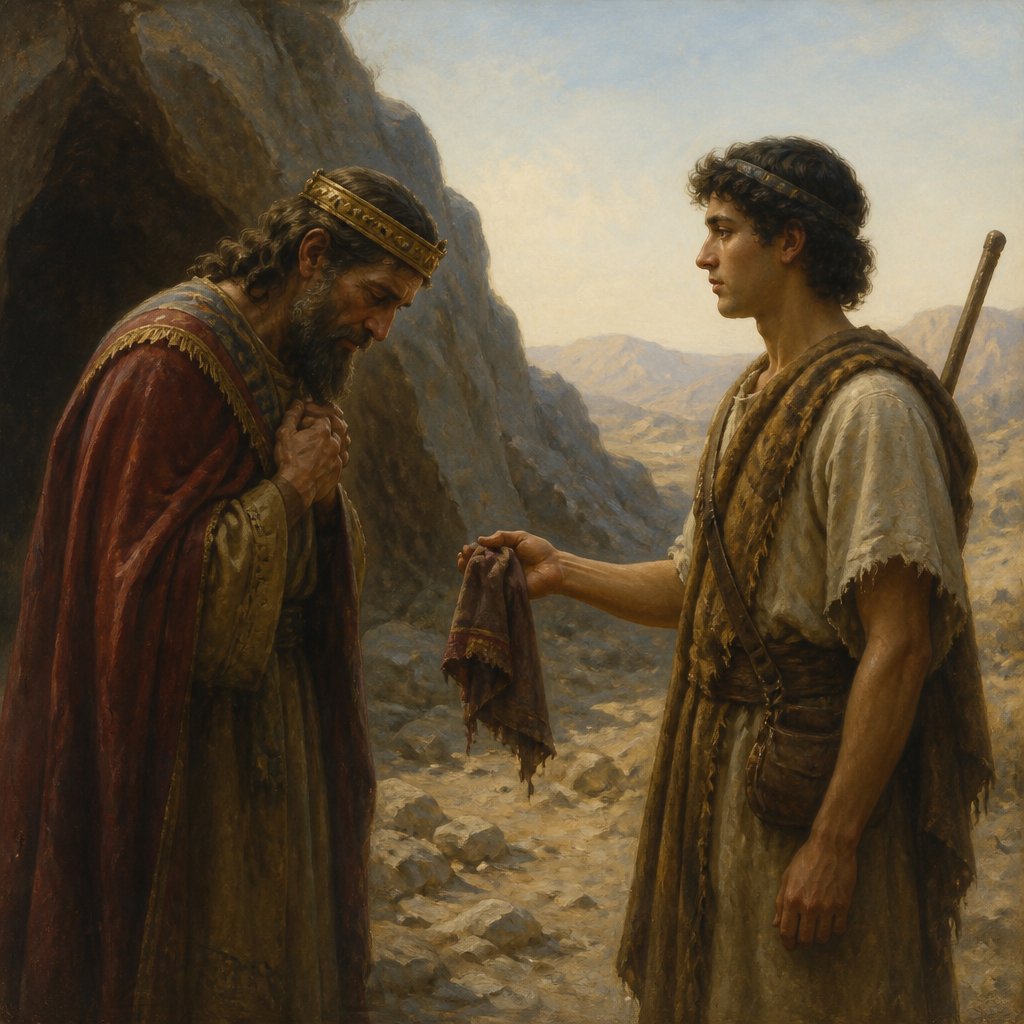
1 Samuel 24:17 (KJV) states: "And he said to David, Thou art more righteous than I: for thou hast rewarded me good, whereas I have rewarded thee evil."
This verse is part of a larger story in the book of 1 Samuel, and it holds deep meaning and significance within the context of that narrative. To fully understand the verse, it's important to delve into its themes, context, and symbolism.
The story of 1 Samuel 24 revolves around the conflict between David and King Saul. David, who had been anointed by Samuel to be the next king of Israel, was being pursued by King Saul. In this particular chapter, David has the opportunity to kill Saul when he enters a cave where Saul is unsuspectingly relieving himself. Instead of taking advantage of the situation, David chooses to spare Saul's life, cutting off a piece of his robe as evidence that he could have killed him, but chose not to.
The verse in question is part of Saul's reaction to this merciful act on David's part. Saul acknowledges that David is more righteous than he is because David has chosen to repay Saul's evil with good. This verse marks a significant moment in the narrative, as it showcases David's integrity and righteousness in the face of adversity, and it also highlights Saul's recognition of his own wrongdoing.
One of the central themes in this verse is the idea of righteousness and moral integrity. David's actions exemplify his commitment to righteousness and his willingness to demonstrate mercy and forgiveness. It is a powerful reminder of the importance of choosing the morally correct path, even when faced with the temptation for revenge or retribution. David's behavior serves as a model for how individuals should respond to injustice and mistreatment, by showing compassion and grace.
The verse also highlights the theme of forgiveness and reconciliation. Despite being relentlessly pursued by Saul, David chooses to spare his life and seeks to reconcile with him. This act of forgiveness and mercy demonstrates the transformative power of grace and the potential for healing and restoration, even in the midst of conflict and animosity.
Additionally, the verse sheds light on the theme of divine justice. In acknowledging David's righteousness, Saul is implicitly recognizing the divine favor that rests upon David. It serves as a reminder that ultimately, it is God who rewards righteousness and punishes evil. This concept of divine justice underscores the overarching narrative of God's sovereignty and the fulfillment of His plans through the lives of His chosen people.
Symbolically, the cutting of Saul's robe represents David's restraint and humility. By refraining from taking Saul's life and only cutting off a piece of his robe, David communicates his respect for Saul's position as king and his unwillingness to usurp his authority through violent means. The symbolic act also serves as a visual reminder of David's moral superiority and his commitment to righteousness.
In conclusion, 1 Samuel 24:17 holds profound meaning within the larger context of the biblical narrative. It touches on themes of righteousness, forgiveness, divine justice, and moral integrity, and it symbolizes David's restraint and humility in the face of adversity. This verse serves as a timeless reminder of the transformative power of grace and the enduring relevance of these moral principles in our lives today.
Have questions about 1 Samuel 24:17?
Dive deeper into this scripture with Bible Chat — an AI-powered tool for exploring God's Word through conversation. Ask questions, get context, and grow in your understanding of the Bible.
Get Our Apps


1 Samuel 24:17 Artwork

1 Samuel 24:17 - "And he said to David, Thou art more righteous than I: for thou hast rewarded me good, whereas I have rewarded thee evil."
"And he said to David, Thou art more righteous than I: for thou hast rewarded me good, whereas I have rewarded thee evil." - 1 Samuel 24:17

1 Samuel 17:24 - "And all the men of Israel, when they saw the man, fled from him, and were sore afraid."

2 Samuel 17:24 - "Then David came to Mahanaim. And Absalom passed over Jordan, he and all the men of Israel with him."

Exodus 24:17

"And all the men of Israel, when they saw the man, fled from him, and were sore afraid." - 1 Samuel 17:24

1 Samuel 10:17 - "¶ And Samuel called the people together unto the LORD to Mizpeh;"

2 Samuel 24:22

2 Samuel 24:22

2 Samuel 24:22

1 Samuel 17:33

1 Samuel 1:15-17

1 Samuel 17:34-35

1 Samuel 17:49

1 Samuel 17:45

1 Samuel 17:49

1 Samuel 17:45

1 samuel 17:3

1 Samuel 17:49

1 Samuel 17:45
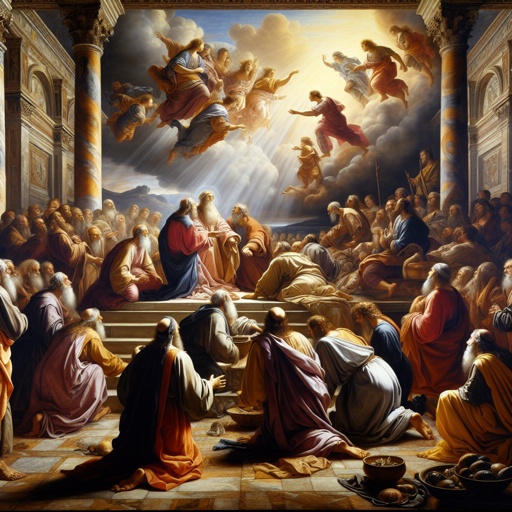
1 Samuel 17:49

2 Samuel 1. 17-27

1 Samuel 18:24 - "And the servants of Saul told him, saying, On this manner spake David."

1 Samuel 17:38-40

1 Samuel 17:14 - "And David was the youngest: and the three eldest followed Saul."

1 Samuel 17:45-49

1 Chronicles 24:17 - "The one and twentieth to Jachin, the two and twentieth to Gamul,"

1 Samuel 15:24 - "¶ And Saul said unto Samuel, I have sinned: for I have transgressed the commandment of the LORD, and thy words: because I feared the people, and obeyed their voice."

1 Samuel 17:56 - "And the king said, Enquire thou whose son the stripling is."

1 Samuel 9:17 - "And when Samuel saw Saul, the LORD said unto him, Behold the man whom I spake to thee of! this same shall reign over my people."