What does 1 Samuel 17:29 mean?
"And David said, What have I now done? Is there not a cause?" - 1 Samuel 17:29
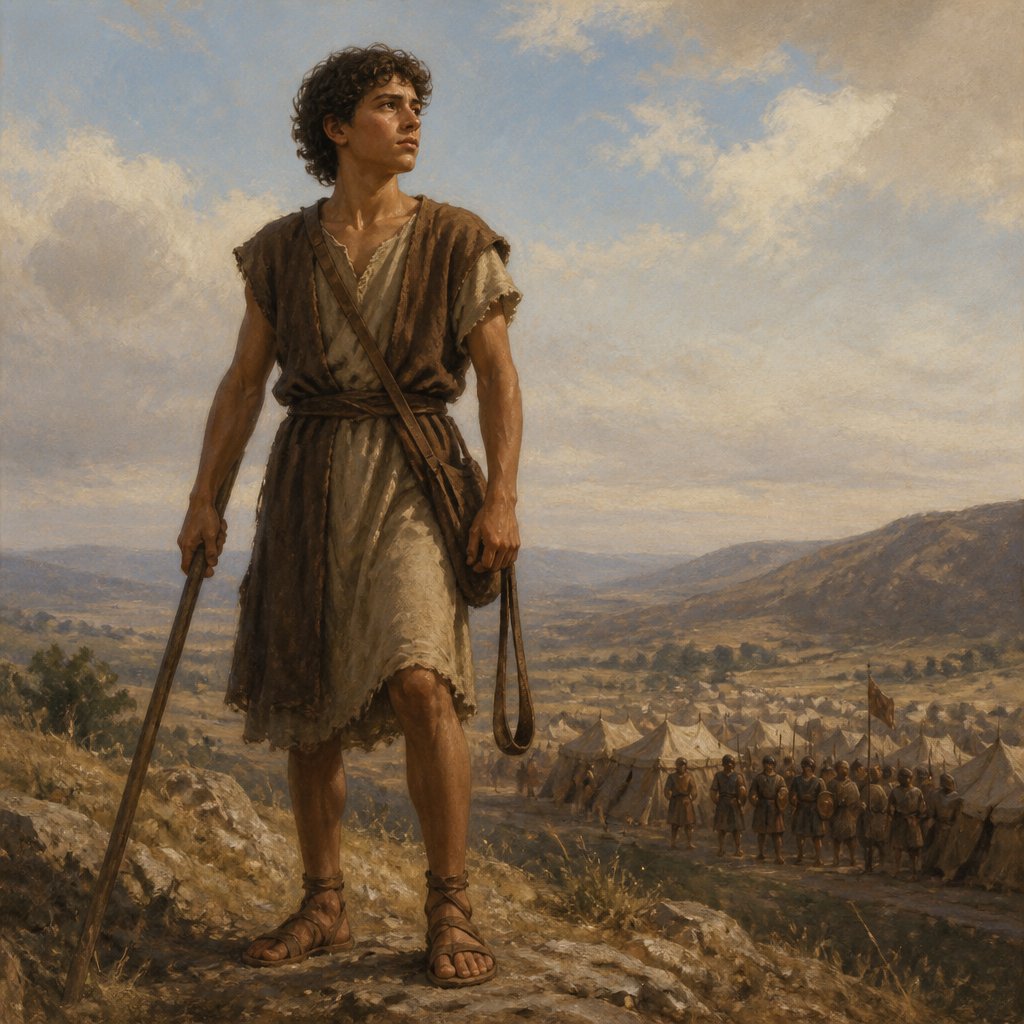
The verse 1 Samuel 17:29 in the King James Version (KJV) reads, "And David said, What have I now done? Is there not a cause?" This verse is part of the larger passage that tells the story of David and Goliath, a well-known and iconic biblical tale. The story of David and Goliath is often used as a metaphor for overcoming seemingly insurmountable odds, and this verse plays a crucial role in setting up David's courageous act of facing the giant Goliath.
The context of this verse is important in understanding its meaning. In the previous verses, Goliath, a giant and champion of the Philistines, is challenging the Israelites to send out a champion to fight him in single combat. The Israelites are terrified and no one is willing to step forward to face Goliath. However, David, a young shepherd, expresses his willingness to take on the challenge. When his older brother, Eliab, hears of David's intentions, he becomes angry and chastises David for his audacity. It is in response to this criticism that David asks, "What have I now done? Is there not a cause?"
Within this verse, David's words reveal his deep conviction and understanding of the situation. He is challenging his brother's skeptical attitude and affirming his belief that there is a righteous cause behind his actions. David is essentially asking Eliab what wrong he has committed and emphasizing the importance of the cause for which he is about to fight. His words demonstrate his unwavering faith and determination to stand up for what is right, despite the fears and doubts of those around him.
The themes present in this verse are numerous and profound. One of the central themes is the idea of courage in the face of adversity. David's question embodies his unwavering courage and determination to face the formidable Goliath. Additionally, David's question raises the theme of righteousness and justice. He believes that there is a just cause for him to confront Goliath and is willing to take a stand for what is right.
Another important theme is the concept of faith and trust in God. Throughout the story of David and Goliath, David's unwavering faith in God is evident. His willingness to face Goliath comes from his strong belief that God will deliver him and grant him victory. The verse reflects David's confidence in the righteousness of his cause and his trust in God's support.
Moreover, the verse also touches upon the theme of sibling rivalry and familial relationships. David's interaction with his brother Eliab highlights the tension and conflict that can arise within families. Despite the discouragement from his brother, David remains steadfast in his conviction.
There is also a strong element of rebellion against societal norms and expectations. Despite his youth and lack of experience in warfare, David defies the conventional wisdom and takes on the challenge that no one else is willing to face. His question challenges the status quo and demonstrates his unwillingness to be dissuaded by the doubts of others.
Symbolically, David's question can be seen as a representation of the inner dialogue that individuals have when faced with daunting challenges. It embodies the universal struggle to find meaning and purpose in the face of adversity. David's question serves as a reminder of the importance of standing up for what is right, even when it may seem daunting or unpopular.
In conclusion, 1 Samuel 17:29 is a powerful and thought-provoking verse that encapsulates themes of courage, righteousness, faith, and rebellion. It highlights the unwavering determination of David to confront Goliath and serves as a timeless example of resilience in the face of overwhelming odds. This verse continues to inspire and resonate with readers, encouraging them to question the status quo and stand up for what they believe is just and true.
Have questions about 1 Samuel 17:29?
Dive deeper into this scripture with Bible Chat — an AI-powered tool for exploring God's Word through conversation. Ask questions, get context, and grow in your understanding of the Bible.
Get Our Apps


1 Samuel 17:29 Artwork

1 Samuel 17:29 - "And David said, What have I now done? Is there not a cause?"
"And David said, What have I now done? Is there not a cause?" - 1 Samuel 17:29

2 Samuel 7:1–29

1 Samuel 20:27-29

2 Samuel 17:29 - "And honey, and butter, and sheep, and cheese of kine, for David, and for the people that were with him, to eat: for they said, The people is hungry, and weary, and thirsty, in the wilderness."

1 Samuel 10:17 - "¶ And Samuel called the people together unto the LORD to Mizpeh;"

1 Samuel 17:33

1 Samuel 1:15-17

1 Chronicles 29:29 - "Now the acts of David the king, first and last, behold, they are written in the book of Samuel the seer, and in the book of Nathan the prophet, and in the book of Gad the seer,"

1 Samuel 17:34-35

1 Samuel 17:49

1 Samuel 29:1 - "Now the Philistines gathered together all their armies to Aphek: and the Israelites pitched by a fountain which is in Jezreel."

1 Samuel 17:45

1 Samuel 17:49

1 Samuel 17:45

1 Samuel 18:29 - "And Saul was yet the more afraid of David; and Saul became David's enemy continually."

1 samuel 17:3

1 Samuel 17:49

1 Samuel 17:45
1 Samuel 17:49

1 Samuel 29:7 - "Wherefore now return, and go in peace, that thou displease not the lords of the Philistines."

1 Samuel 23:29 - "And David went up from thence, and dwelt in strong holds at En-gedi."

2 Samuel 1. 17-27

1 Samuel 17:38-40

1 Samuel 17:14 - "And David was the youngest: and the three eldest followed Saul."

1 Samuel 17:45-49

1 Samuel 29:2 - "And the lords of the Philistines passed on by hundreds, and by thousands: but David and his men passed on in the rereward with Achish."

1 Samuel 15:29 - "And also the Strength of Israel will not lie nor repent: for he is not a man, that he should repent."

1 Samuel 17:56 - "And the king said, Enquire thou whose son the stripling is."

1 Samuel 9:17 - "And when Samuel saw Saul, the LORD said unto him, Behold the man whom I spake to thee of! this same shall reign over my people."