What does 1 Samuel 16:2 mean?
"And Samuel said, How can I go? if Saul hear it, he will kill me. And the LORD said, Take an heifer with thee, and say, I am come to sacrifice to the LORD." - 1 Samuel 16:2
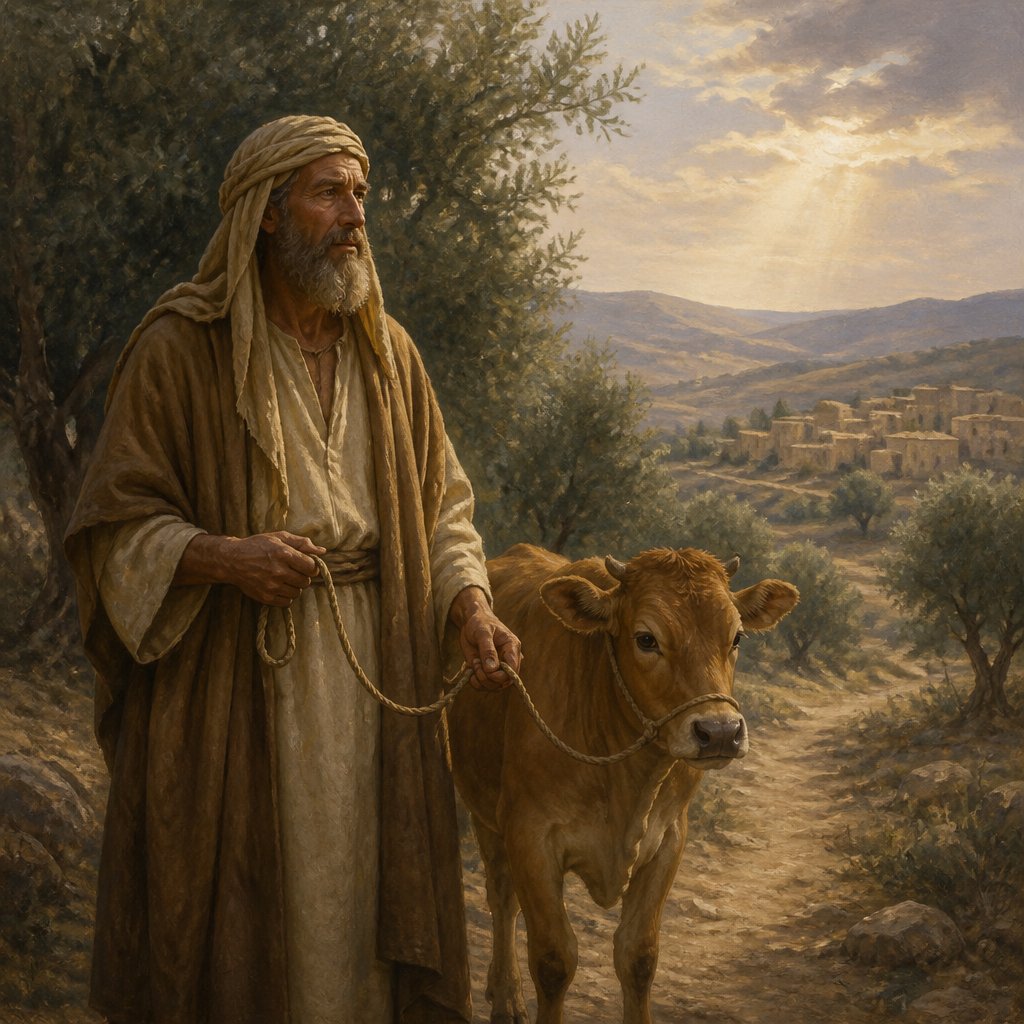
The verse 1 Samuel 16:2 from the King James Version of the Bible reads, "And Samuel said, How can I go? If Saul hear it, he will kill me. And the Lord said, Take an heifer with thee, and say, I am come to sacrifice to the Lord."
This verse comes from the story of the anointing of David as the future king of Israel. The context of this verse is crucial to understanding its significance. Saul, the first king of Israel, has fallen out of favor with God due to his disobedience, and God has instructed the prophet Samuel to anoint a new king from the house of Jesse in Bethlehem. Jesse presents his eldest sons to Samuel, assuming that one of them will be chosen as the new king. However, none of them are chosen. This verse occurs as Samuel expresses his concern to God about the potential danger of carrying out this task, as Saul would surely be angered by the anointing of a new king while he still sits on the throne.
In this verse, Samuel is expressing his fear to the Lord about the potential consequences of anointing a new king while Saul is still on the throne. He is worried that Saul will not only reject the chosen one but also seek retribution against him for daring to betray him. This reveals Samuel's very human concern about the danger he is facing, and it also shows the very real political and personal risks involved in publicly anointing a new king while the current one is still alive.
The response from the Lord provides a solution to Samuel's fear. The Lord instructs Samuel to take a heifer with him and to say that he has come to sacrifice to the Lord. This is a strategic and relatively innocuous cover story that allows Samuel to carry out his mission without immediately arousing suspicion or hostility from Saul. It provides Samuel with a way to remain safe while fulfilling the divine command to anoint the new king.
This verse can be seen as an example of the tension between human fear and divine guidance. Samuel's fear is understandable given the dangerous and uncertain political climate, but God's response demonstrates His ability to provide practical solutions to human concerns. It also reveals God's power to use even potentially perilous situations to accomplish His will.
There are several themes and symbols that can be drawn from this verse. One prominent theme is the idea of obedience and faith in the face of fear. Despite his legitimate concerns, Samuel ultimately obeys the Lord's command and takes the necessary steps to fulfill his mission. This reflects the broader theme of trusting in God's guidance and sovereignty, even when faced with potential danger or uncertainty.
The heifer itself can be seen as a symbol of sacrifice and a reminder of the importance of ritual and worship in Israelite society. By instructing Samuel to take a heifer with him and to say that he has come to sacrifice to the Lord, God emphasizes the importance of proper religious observance and the role of sacrifice in seeking God's favor.
Furthermore, this verse also foreshadows the theme of unexpected outcomes and the idea of God's chosen leaders being unconventional. The fact that David, the youngest and least likely of Jesse's sons, is ultimately chosen as the new king despite not initially being presented for consideration, demonstrates God's tendency to work in ways that defy human expectations and norms. This sets the stage for David's eventual rise to power, which is marked by victories, trials, and a deep dependence on God.
In conclusion, 1 Samuel 16:2 offers valuable insights into the complex interplay between human fear and divine guidance, as well as the themes of obedience, sacrifice, and unexpected outcomes. It serves as a pivotal moment in the larger story of David's anointing as king and sets the stage for the unfolding drama of Israel's monarchy. Additionally, the verse continues to resonate with readers today, reminding them of the importance of trusting in God's direction, even in the face of potential danger and uncertainty.
Have questions about 1 Samuel 16:2?
Dive deeper into this scripture with Bible Chat — an AI-powered tool for exploring God's Word through conversation. Ask questions, get context, and grow in your understanding of the Bible.
Get Our Apps


1 Samuel 16:2 Artwork

1 Samuel 16:2 - "And Samuel said, How can I go? if Saul hear it, he will kill me. And the LORD said, Take an heifer with thee, and say, I am come to sacrifice to the LORD."
"And Samuel said, How can I go? if Saul hear it, he will kill me. And the LORD said, Take an heifer with thee, and say, I am come to sacrifice to the LORD." - 1 Samuel 16:2

1 Samuel 16:1–13

2 Samuel 5:16 - "And Elishama, and Eliada, and Eliphalet."

1 Samuel 3:16 - "Then Eli called Samuel, and said, Samuel, my son. And he answered, Here am I."

2 Samuel 1:16 - "And David said unto him, Thy blood be upon thy head; for thy mouth hath testified against thee, saying, I have slain the LORD'S anointed."

1 Samuel 16:10 - "Again, Jesse made seven of his sons to pass before Samuel. And Samuel said unto Jesse, The LORD hath not chosen these."

1 Samuel 16:8 - "Then Jesse called Abinadab, and made him pass before Samuel. And he said, Neither hath the LORD chosen this."

2 Samuel 8:16 - "And Joab the son of Zeruiah was over the host; and Jehoshaphat the son of Ahilud was recorder;"

"And Elishama, and Eliada, and Eliphalet." - 2 Samuel 5:16

1 Samuel 28:16 - "Then said Samuel, Wherefore then dost thou ask of me, seeing the LORD is departed from thee, and is become thine enemy?"

2 Samuel 16:15 - "¶ And Absalom, and all the people the men of Israel, came to Jerusalem, and Ahithophel with him."

2 Samuel 16:14 - "And the king, and all the people that were with him, came weary, and refreshed themselves there."

1 Samuel 16:4 - "And Samuel did that which the LORD spake, and came to Beth-lehem. And the elders of the town trembled at his coming, and said, Comest thou peaceably?"

1 Samuel 16:13 - "Then Samuel took the horn of oil, and anointed him in the midst of his brethren: and the Spirit of the LORD came upon David from that day forward. So Samuel rose up, and went to Ramah."

1 Samuel 15:16 - "Then Samuel said unto Saul, Stay, and I will tell thee what the LORD hath said to me this night. And he said unto him, Say on."

1 Samuel 17:16 - "And the Philistine drew near morning and evening, and presented himself forty days."

1 Samuel 6:16 - "And when the five lords of the Philistines had seen it, they returned to Ekron the same day."

2 Samuel 16:16 - "And it came to pass, when Hushai the Archite, David's friend, was come unto Absalom, that Hushai said unto Absalom, God save the king, God save the king."

1 Samuel 16:14 - "¶ But the Spirit of the LORD departed from Saul, and an evil spirit from the LORD troubled him."

1 Samuel 10:16 - "And Saul said unto his uncle, He told us plainly that the asses were found. But of the matter of the kingdom, whereof Samuel spake, he told him not."

2 Samuel 16:20 - "¶ Then said Absalom to Ahithophel, Give counsel among you what we shall do."

1 Samuel 2:16 - "And if any man said unto him, Let them not fail to burn the fat presently, and then take as much as thy soul desireth; then he would answer him, Nay; but thou shalt give it me now: and if not, I will take it by force."

2 Samuel 16:12 - "It may be that the LORD will look on mine affliction, and that the LORD will requite me good for his cursing this day."

1 Samuel 1:16 - "Count not thine handmaid for a daughter of Belial: for out of the abundance of my complaint and grief have I spoken hitherto."

2 Samuel 16:1 - "And when David was a little past the top of the hill, behold, Ziba the servant of Mephibosheth met him, with a couple of asses saddled, and upon them two hundred loaves of bread, and an hundred bunches of raisins, and an hundred of summer fruits, and a bottle of wine."

2 Samuel 16:17 - "And Absalom said to Hushai, Is this thy kindness to thy friend? why wentest thou not with thy friend?"

1 Samuel 16:9 - "Then Jesse made Shammah to pass by. And he said, Neither hath the LORD chosen this."

1 Samuel 2:26 - "And the child Samuel grew on, and was in favour both with the LORD, and also with men."

2 Samuel 12:16 - "David therefore besought God for the child; and David fasted, and went in, and lay all night upon the earth."