What does 1 Samuel 15:26 mean?
"And Samuel said unto Saul, I will not return with thee: for thou hast rejected the word of the LORD, and the LORD hath rejected thee from being king over Israel." - 1 Samuel 15:26
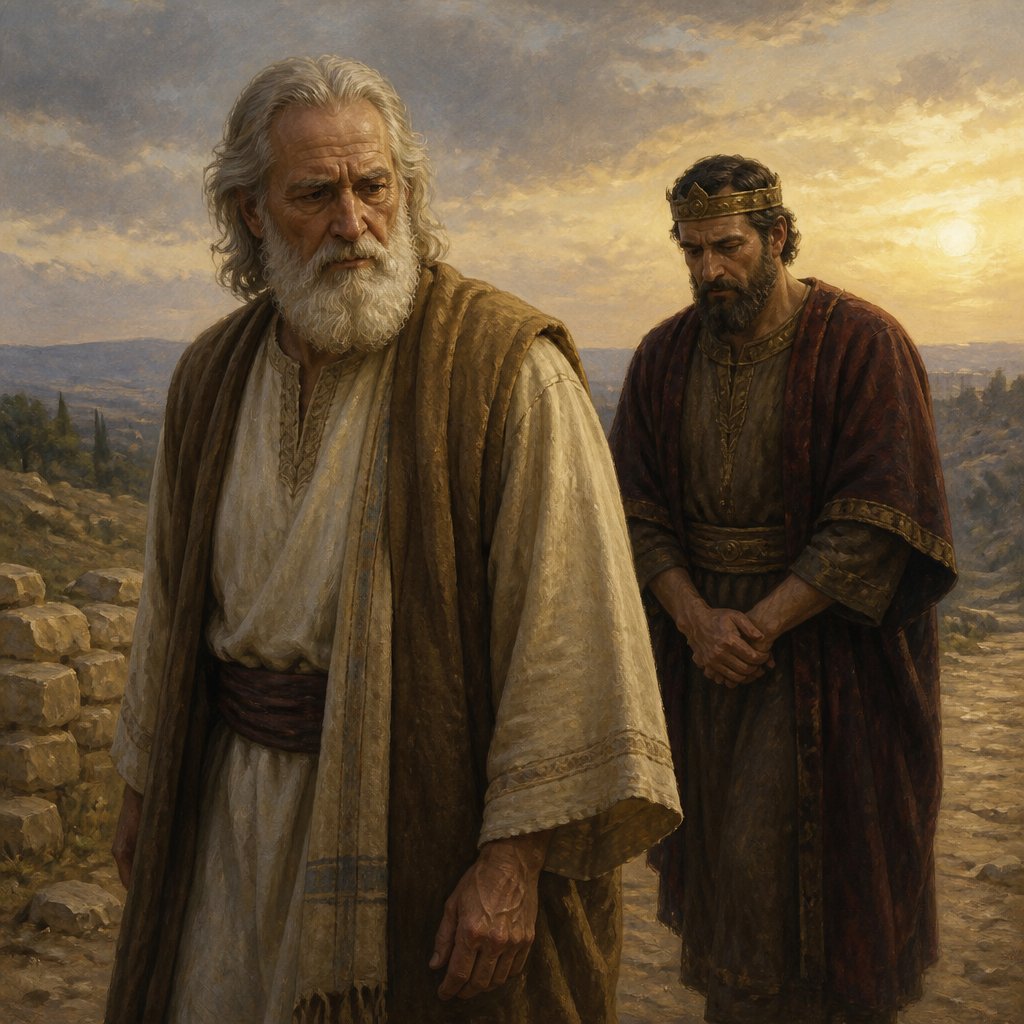
The verse 1 Samuel 15:26 in the King James Version (KJV) of the Bible reads: "And Samuel said unto Saul, I will not return with thee: for thou hast rejected the word of the Lord, and the Lord hath rejected thee from being king over Israel."
This verse comes at the conclusion of a significant event in the life of King Saul, who had been anointed by Samuel as the first king of Israel. The context of this verse is crucial in understanding its deep meaning and implications for the biblical narrative as a whole.
The broader context of 1 Samuel 15 is the account of Saul's disobedience to the Lord's command. God had instructed Saul to utterly destroy the Amalekites and all their possessions, as a punishment for their historical hostility towards the Israelites. However, Saul had spared King Agag and the best of the Amalekite livestock, in direct contradiction to God's command.
In verses 10-23, Samuel confronts Saul about his disobedience, and Saul tries to justify his actions by claiming that he had spared the animals to offer as sacrifices to the Lord. However, Samuel sternly rebukes Saul, emphasizing that obedience is far more significant to God than sacrifices. It is in this context that 1 Samuel 15:26 follows, as Samuel delivers the severe consequence of Saul's disobedience.
The theme of obedience to God's word is central to this verse. Saul's disobedience and subsequent rejection by the Lord serve as a warning to all believers about the consequences of disregarding God's commands. This theme is echoed throughout the Bible, from the story of Adam and Eve in the Garden of Eden to the teachings of Jesus in the New Testament. Obedience to God is a foundational principle of the Christian faith, and this verse in 1 Samuel serves as a sobering reminder of the grave ramifications of disobedience.
The verse also conveys the theme of divine sovereignty. In rejecting Saul as king over Israel, God asserts His authority as the ultimate ruler and judge. This serves as a powerful testament to the omnipotence and righteousness of God. It also foreshadows the eventual rise of King David, whom God had chosen as a man after His own heart.
Furthermore, 1 Samuel 15:26 is saturated with symbolism. It symbolizes the importance of heeding God's word and the severe consequences of defying His will. It also symbolizes the transition in leadership from Saul to David and the establishment of Davidic kingship, which plays a significant role in the biblical narrative.
In conclusion, 1 Samuel 15:26 is a poignant and weighty verse that encapsulates themes of obedience to God, divine sovereignty, and the symbolism of transition in leadership. Its placement within the broader context of Saul's disobedience and rejection by God accentuates its profound significance within the biblical narrative. As believers, it serves as a compelling exhortation to prioritize obedience to God's word above all else, and as a poignant reminder of God's unwavering authority and justice.
Have questions about 1 Samuel 15:26?
Dive deeper into this scripture with Bible Chat — an AI-powered tool for exploring God's Word through conversation. Ask questions, get context, and grow in your understanding of the Bible.
Get Our Apps


1 Samuel 15:26 Artwork

1 Samuel 15:26 - "And Samuel said unto Saul, I will not return with thee: for thou hast rejected the word of the LORD, and the LORD hath rejected thee from being king over Israel."

1 Samuel 15:26 (KJVA) 26 And Samuel said unto Saul, I will not return with thee: for thou hast rejected the word of the LORD, and the LORD hath rejected thee from being king over Israel.
"And Samuel said unto Saul, I will not return with thee: for thou hast rejected the word of the LORD, and the LORD hath rejected thee from being king over Israel." - 1 Samuel 15:26

1 Samuel 26:15 - "And David said to Abner, Art not thou a valiant man? and who is like to thee in Israel? wherefore then hast thou not kept thy lord the king? for there came one of the people in to destroy the king thy lord."

1 Samuel 2:26 - "And the child Samuel grew on, and was in favour both with the LORD, and also with men."

1 Samuel 15:10 - "¶ Then came the word of the LORD unto Samuel, saying,"

1 Samuel 7:15 - "And Samuel judged Israel all the days of his life."
1 Samuel 15:31 - "So Samuel turned again after Saul; and Saul worshipped the LORD."

John 15:26 NLT

1.samuel 15:30

1 Samuel 15:22

1 Samuel 15:22

1 Samuel 15:34 - "¶ Then Samuel went to Ramah; and Saul went up to his house to Gibeah of Saul."

1 Samuel 1:15-17

1.samuel 15:30

1 Samuel 3:15 - "¶ And Samuel lay until the morning, and opened the doors of the house of the LORD. And Samuel feared to shew Eli the vision."

1 Corinthians 15:26 - "The last enemy that shall be destroyed is death."

1 Samuel 28:15

1 Samuel 9:15 - "¶ Now the LORD had told Samuel in his ear a day before Saul came, saying,"
2 Samuel 15:26 - "But if he thus say, I have no delight in thee; behold, here am I, let him do to me as seemeth good unto him."

1 Samuel 26:4 - "David therefore sent out spies, and understood that Saul was come in very deed."

1 Samuel 28:15-20

1 Samuel 26:1 - "And the Ziphites came unto Saul to Gibeah, saying, Doth not David hide himself in the hill of Hachilah, which is before Jeshimon?"

1 Samuel 21:10-15

1 Samuel 28:15-19

1 Samuel 15:27 - "And as Samuel turned about to go away, he laid hold upon the skirt of his mantle, and it rent."

1 Samuel 15:13 - "And Samuel came to Saul: and Saul said unto him, Blessed be thou of the LORD: I have performed the commandment of the LORD."

1 Chronicles 26:15 - "To Obed-edom southward; and to his sons the house of Asuppim."

1 Samuel 10:15 - "And Saul's uncle said, Tell me, I pray thee, what Samuel said unto you."

1 Samuel 15:14 - "And Samuel said, What meaneth then this bleating of the sheep in mine ears, and the lowing of the oxen which I hear?"