What does 1 Peter 2:24 mean?
"Who his own self bare our sins in his own body on the tree, that we, being dead to sins, should live unto righteousness: by whose stripes ye were healed." - 1 Peter 2:24
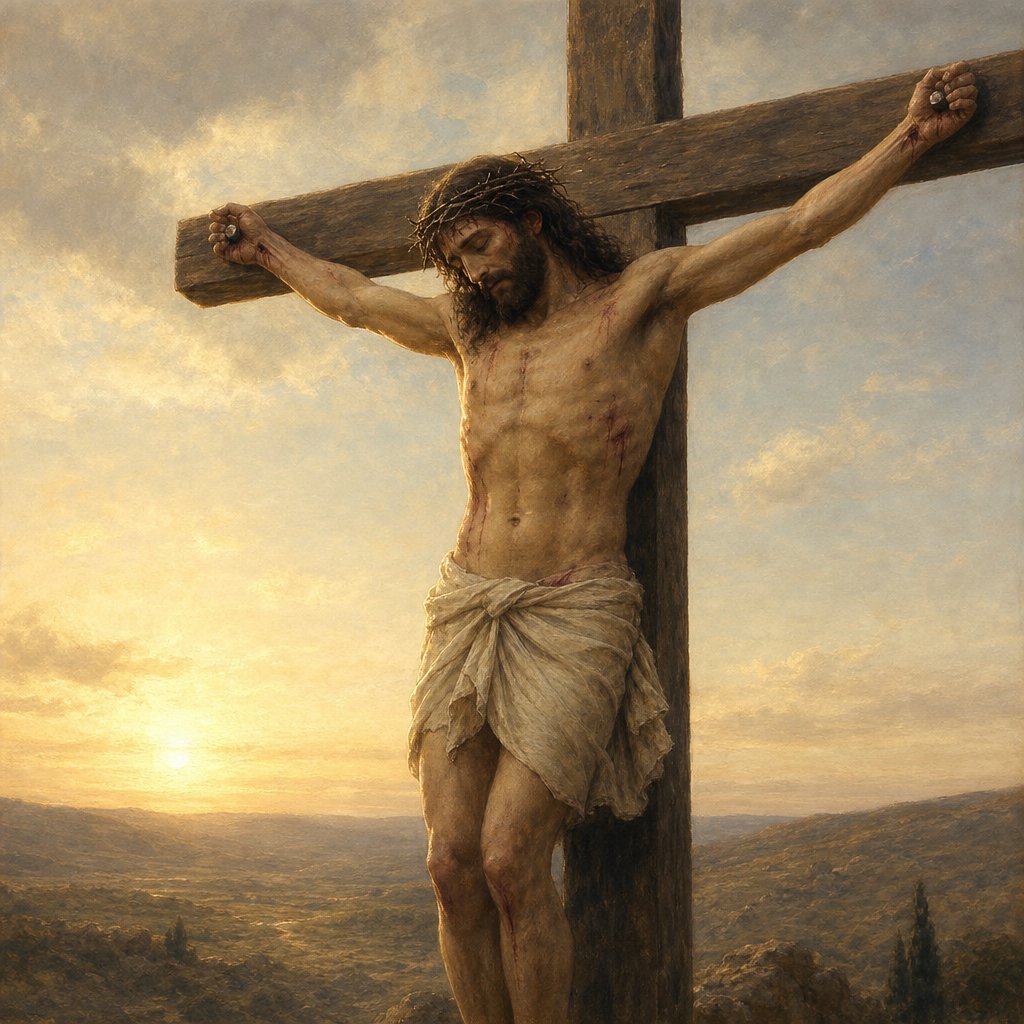
1 Peter 2:24 (KJV) - "Who his own self bare our sins in his own body on the tree, that we, being dead to sins, should live unto righteousness: by whose stripes ye were healed."
This powerful verse from the book of 1 Peter is rich in meaning and symbolism and carries a deep theological significance for Christians. In this verse, Peter is reflecting on the redemptive work of Jesus Christ and the impact it has on the lives of believers.
The verse begins with the phrase "Who his own self bore our sins in his own body on the tree." This captures the essence of the atonement, or the act of reconciliation between God and humanity through the sacrifice of Jesus. The use of the term "tree" is significant, as it harkens back to the Old Testament imagery of the tree of life and also alludes to the cross on which Jesus was crucified.
The phrase "that we, being dead to sins, should live unto righteousness" emphasizes the transformative power of Christ's sacrifice. Through his death and resurrection, believers are freed from the bondage of sin and are able to live in righteousness. This is a central theme in the New Testament, as it highlights the moral and spiritual transformation that occurs in the lives of those who accept Jesus as their savior.
The verse concludes with the powerful imagery of "by whose stripes ye were healed." This echoes the prophetic words of Isaiah 53:5, which foretold the suffering and redemption brought by the Messiah. The reference to "stripes" alludes to the physical wounds that Jesus endured during his crucifixion, and the healing symbolizes the spiritual restoration and wholeness that believers experience through his sacrifice.
The overarching theme of this verse is the atoning work of Christ and its implications for believers. It speaks to the universal human condition of sin and the need for redemption, as well as the transformative power of the gospel in the lives of those who believe. The verse also emphasizes the personal sacrifice of Jesus, who willingly bore the sins of humanity in his own body, demonstrating his love and commitment to the salvation of mankind.
In its historical context, the letter of 1 Peter was written to a group of persecuted Christians, encouraging them to stand firm in their faith despite opposition and suffering. This verse would have been a source of hope and reassurance for these early believers, reminding them of the redemptive work of Christ and the promise of new life in him. It continues to resonate with Christians today, offering comfort and inspiration to those facing trials and difficulties.
The symbolism in this verse is multi-layered and profound. The image of Jesus bearing our sins in his own body on the tree represents the substitutionary atonement, in which Jesus took on the punishment that was rightfully ours. The concept of being "dead to sins" and "living unto righteousness" speaks to the transformative nature of salvation, as believers are called to live in accordance with God's moral standards. The imagery of healing through the stripes of Jesus conveys the theme of restoration and wholeness, emphasizing the spiritual healing that comes through Christ's sacrifice.
In conclusion, 1 Peter 2:24 is a powerful and poignant verse that encapsulates the heart of the Christian gospel. It proclaims the redemptive work of Christ, the transformative power of his sacrifice, and the hope of new life in him. Its themes of atonement, transformation, and restoration continue to resonate with believers and offer comfort and inspiration in their spiritual journey.
Have questions about 1 Peter 2:24?
Dive deeper into this scripture with Bible Chat — an AI-powered tool for exploring God's Word through conversation. Ask questions, get context, and grow in your understanding of the Bible.
Get Our Apps


1 Peter 2:24 Artwork

"Who his own self bare our sins in his own body on the tree, that we, being dead to sins, should live unto righteousness: by whose stripes ye were healed." - 1 Peter 2:24

1 Peter 2:24 - "Who his own self bare our sins in his own body on the tree, that we, being dead to sins, should live unto righteousness: by whose stripes ye were healed."

1 Peter 2:24 “He himself bore our sins” in his body on the cross, so that we might die to sins and live for righteousness; “by his wounds you have been healed.”

1 Peter 2:24 “He himself bore our sins” in his body on the cross, so that we might die to sins and live for righteousness; “by his wounds you have been healed.”

1 Peter 2:24 “He himself bore our sins” in his body on the cross, so that we might die to sins and live for righteousness; “by his wounds you have been healed.”
"Who his own self bare our sins in his own body on the tree, that we, being dead to sins, should live unto righteousness: by whose stripes ye were healed." - 1 Peter 2:24

1 Peter 2:4 - "To whom coming, as unto a living stone, disallowed indeed of men, but chosen of God, and precious,"

"To whom coming, as unto a living stone, disallowed indeed of men, but chosen of God, and precious," - 1 Peter 2:4

1 Peter 1:24-25

1 Peter 2:5

1 Peter 2:5

1 Peter 2:5

1 Peter 2:5

1 Peter 2:5

1 Peter 2:5

1 Peter 2:4-5 - "As you come to him, the living Stone—rejected by humans but chosen by God and precious to him— you also, like living stones, are being built into a spiritual house to be a holy priesthood, offering spiritual sacrifices acceptable to God through Jesus Christ."

1 Peter 2:20-21

1 Peter 1:24 - "For all flesh is as grass, and all the glory of man as the flower of grass. The grass withereth, and the flower thereof falleth away:"

2 Peter 2:9

2 Peter 2:9

1 Peter 2:3 - "If so be ye have tasted that the Lord is gracious."

1 Peter 2:22 - "Who did no sin, neither was guile found in his mouth:"

1 Peter 2:17 - "Honour all men. Love the brotherhood. Fear God. Honour the king."

2 Peter 1:1 - "Simon Peter, a servant and an apostle of Jesus Christ, to them that have obtained like precious faith with us through the righteousness of God and our Saviour Jesus Christ:"

1 Peter 2:2 - "As newborn babes, desire the sincere milk of the word, that ye may grow thereby:"

1 Peter 2:1 - "Wherefore laying aside all malice, and all guile, and hypocrisies, and envies, and all evil speakings,"

1 Peter 2:11 - "Dearly beloved, I beseech you as strangers and pilgrims, abstain from fleshly lusts, which war against the soul;"

1 Peter 2:13 - "Submit yourselves to every ordinance of man for the Lord's sake: whether it be to the king, as supreme;"

1 Peter 2:16 - "As free, and not using your liberty for a cloke of maliciousness, but as the servants of God."

2 Peter 1:6 - "And to knowledge temperance; and to temperance patience; and to patience godliness;"