What does 1 Kings 7:38 mean?
"¶ Then made he ten lavers of brass: one laver contained forty baths: and every laver was four cubits: and upon every one of the ten bases one laver." - 1 Kings 7:38
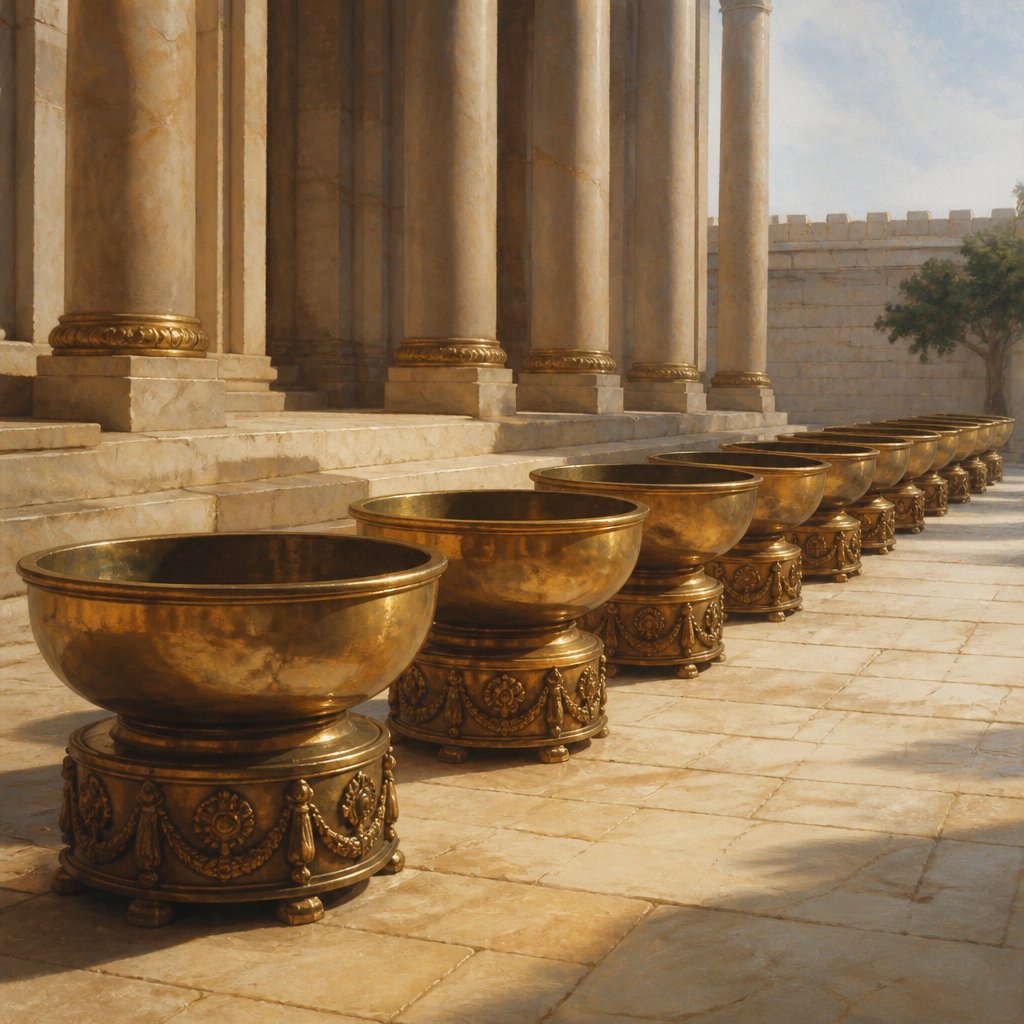
1 Kings 7:38 (KJV) describes a significant piece of architecture from the Old Testament; specifically, the construction of the temple of Solomon. The verse states, "Then made he ten lavers of brass: one laver contained forty baths: and every laver was four cubits: and upon every one of the ten bases one laver."
To understand the full meaning and significance of this verse, it is essential to consider the historical and cultural context of the time. King Solomon, the son of David, ruled over Israel at its peak of power and wealth. Under his reign, he constructed the magnificent temple in Jerusalem, a symbol of Israel's devotion to God and its status as a nation.
The lavers of brass mentioned in 1 Kings 7:38 were essentially large basins or containers used for ritualistic purification ceremonies. In the ancient Israelite culture, the act of cleansing and purifying oneself was of utmost importance, especially before approaching the presence of God. The lavers were used by priests for washing their hands and feet before offering sacrifices or performing other religious duties. Therefore, the construction of these lavers was not a mere architectural detail, but a crucial component of the religious life and practices of the Israelites.
The verse also provides specific details about the dimensions of the lavers - each containing forty baths and measuring four cubits in size. These specific measurements were not arbitrary but held symbolic significance. The number forty is used frequently in the Bible to represent a period of testing, trial, or probation, such as the forty days and nights of rain during the flood or the forty years the Israelites spent wandering in the wilderness. This suggests that the use of the number forty in relation to the lavers symbolized the importance of spiritual purification and the need for a period of testing and preparation before approaching God.
The construction of the lavers of brass reflects the meticulous attention to detail and the high level of craftsmanship that went into the building of the temple. This craftsmanship was not only a reflection of the Israelites' dedication to God but also a demonstration of their desire to offer the very best in their worship. The use of brass, a durable and valuable metal, further emphasizes the importance and reverence the Israelites placed on the rituals of purification and the sanctity of the temple.
Furthermore, the inclusion of the ten lavers and their bases highlights the significance of the number ten in the Bible. In the Old Testament, the number ten is often associated with completeness and divine order. The Ten Commandments, for example, represented the complete moral law given by God to His people. In this context, the ten lavers of brass symbolize the completeness and perfection of the rituals of purification within the temple, underscoring the importance of holiness and purity in the presence of God.
In conclusion, 1 Kings 7:38 offers a glimpse into the meticulous construction and symbolic significance of the lavers of brass in the temple of Solomon. These lavers were not mere functional items but served as a physical representation of the spiritual purity and dedication required in approaching God. The verse underscores the importance of ritualistic purification and the reverence the Israelites had for their worship and their God. It serves as a reminder of the significance of holiness and the need for spiritual preparation in drawing near to the divine.
Have questions about 1 Kings 7:38?
Dive deeper into this scripture with Bible Chat — an AI-powered tool for exploring God's Word through conversation. Ask questions, get context, and grow in your understanding of the Bible.
Get Our Apps


1 Kings 7:38 Artwork

1 Kings 7:38 - "¶ Then made he ten lavers of brass: one laver contained forty baths: and every laver was four cubits: and upon every one of the ten bases one laver."
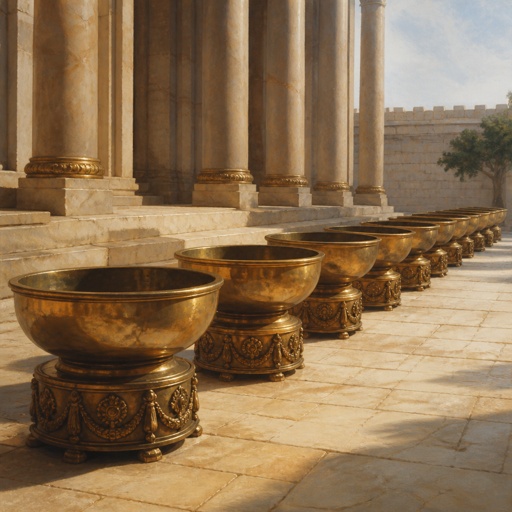
"¶ Then made he ten lavers of brass: one laver contained forty baths: and every laver was four cubits: and upon every one of the ten bases one laver." - 1 Kings 7:38

1 Kings 7:27-38

1 Kings 7:27-38

John 7:38

1 Chronicles 7:38 - "And the sons of Jether; Jephunneh, and Pispah, and Ara."

Elijah in the scene 1 Kings 18:36–38

1 Kings 20:38 - "So the prophet departed, and waited for the king by the way, and disguised himself with ashes upon his face."

1 Kings 18:38 - "Then the fire of the LORD fell, and consumed the burnt sacrifice, and the wood, and the stones, and the dust, and licked up the water that was in the trench."
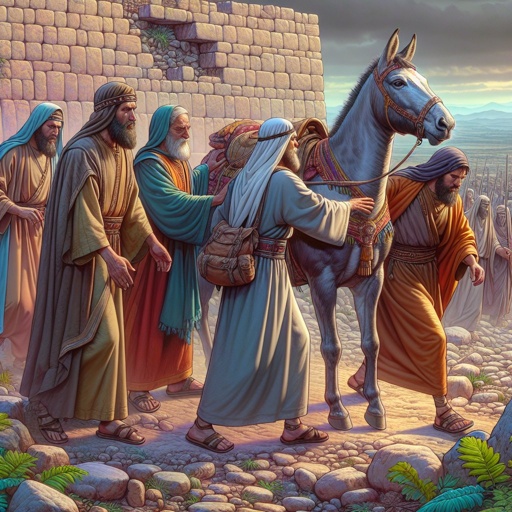
1 Kings 1:38 - "So Zadok the priest, and Nathan the prophet, and Benaiah the son of Jehoiada, and the Cherethites, and the Pelethites, went down, and caused Solomon to ride upon king David's mule, and brought him to Gihon."

1 Corinthians 7:38 - "So then he that giveth her in marriage doeth well; but he that giveth her not in marriage doeth better."

"And the sons of Jether; Jephunneh, and Pispah, and Ara." - 1 Chronicles 7:38

John 7:38

John 7:38

John 7:38

John 7:38
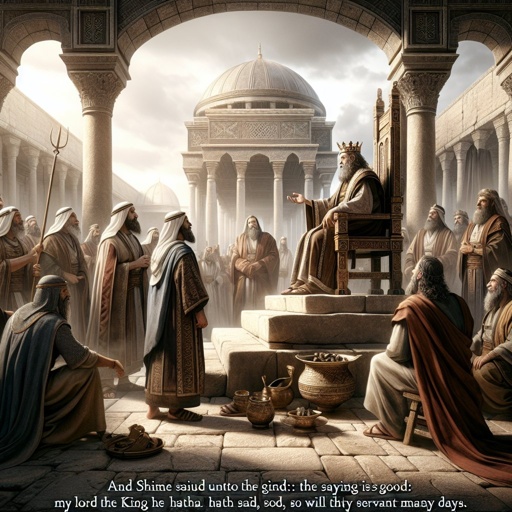
1 Kings 2:38 - "And Shimei said unto the king, The saying is good: as my lord the king hath said, so will thy servant do. And Shimei dwelt in Jerusalem many days."

1 kings 8:7

1 kings 8:7

1 Kings 8:7

John 7:38

John 7:38

1 Kings 22:38 - "And one washed the chariot in the pool of Samaria; and the dogs licked up his blood; and they washed his armour; according unto the word of the LORD which he spake."

1 Kings 6:38 - "And in the eleventh year, in the month Bul, which is the eighth month, was the house finished throughout all the parts thereof, and according to all the fashion of it. So was he seven years in building it."

1 Kings 7:43 - "And the ten bases, and ten lavers on the bases;"

1 Kings 7:13 - "¶ And king Solomon sent and fetched Hiram out of Tyre."

Job 38:4-7

1 Kings 7:44 - "And one sea, and twelve oxen under the sea;"

1kings 18:38
1 Kings 1:7 - "And he conferred with Joab the son of Zeruiah, and with Abiathar the priest: and they following Adonijah helped him."