What does 1 Kings 6:13 mean?
"And I will dwell among the children of Israel, and will not forsake my people Israel." - 1 Kings 6:13
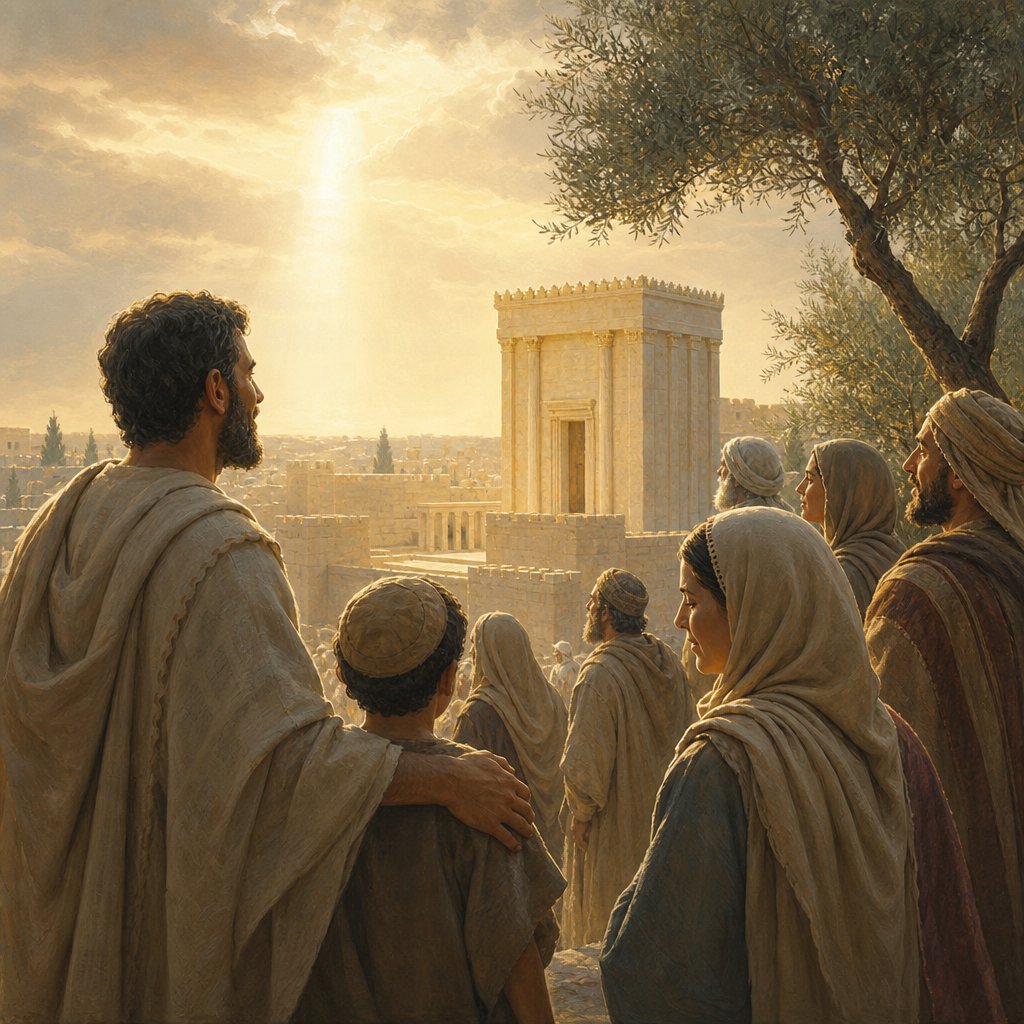
In the midst of describing Solomon’s building of the house of the LORD, 1 Kings 6 pauses the measurements, materials, and craftsmanship to record a word from God that interprets what the temple is truly for. The verse reads, in the language of the King James Bible: “And I will dwell among the children of Israel, and will not forsake my people Israel.” This statement is brief, but it functions like the heart-beat of the entire chapter. The temple is not presented as a monument to Solomon’s wealth or skill, nor as a mere national shrine, but as a visible sign of an invisible reality: the LORD’s own presence with His covenant people.
The immediate context is crucial. The chapter recounts the construction of the temple with exacting detail, and right in the middle of those details God speaks to Solomon about the condition under which His presence will be enjoyed. The word comes in connection with the building, but it is not primarily about architecture. It frames the temple as covenant space. God ties the idea of dwelling among Israel to Israel’s relationship with Him, reminding Solomon that the most important “building material” is obedience. The temple can be erected flawlessly, yet the blessing it signifies is inseparable from faithfulness to the LORD. The verse, therefore, is not a blanket endorsement of the structure itself as though it guaranteed blessing regardless of Israel’s conduct; it is the LORD declaring the goal of the temple within His covenant dealings: He will be present with His people and remain their God.
The theme of “dwelling” gathers up a long thread running through Scripture. God’s promise to “dwell among the children of Israel” echoes the earlier reality of the tabernacle in the wilderness, where the LORD placed His name and manifested His presence among a redeemed people. In 1 Kings, that mobile sanctuary gives way to a permanent house in Jerusalem, but the meaning remains the same: the LORD is not distant, and Israel is not abandoned to merely political identity or human religion. The house being built is a sign that the God who delivered, guided, and judged is still the God who draws near. The point is not that God can be contained by walls—indeed, Solomon will later confess that “the heaven and heaven of heavens cannot contain thee”—but that God graciously appoints a place where His people may approach Him under the terms He has given.
The promise “and will not forsake my people Israel” carries deep covenant weight. It recalls the LORD’s prior commitments to the patriarchs and to David, and it speaks into the fragility of Israel’s history. Israel has known chastening, wandering, and warfare; kings rise and fall; the people themselves are prone to forgetfulness. In that setting, God’s assurance is not mere sentiment but covenant faithfulness. It also implicitly warns. The language of not forsaking suggests that forsaking is the fearful opposite—an outcome associated elsewhere with persistent rebellion. Thus the verse holds together comfort and seriousness: comfort, because the LORD binds Himself to His people; seriousness, because the experience of that presence is not to be presumed upon as though it were automatic.
Symbolically, the verse also reframes the temple as a meeting point between holiness and mercy. God dwelling among Israel means that the Holy One chooses to be “among” a sinful people without ceasing to be holy. That requires mediation, sacrifice, cleansing, and ordered worship—all of which the temple system embodies. The dwelling is therefore not only nearness but regulated nearness, nearness that teaches Israel who God is and who they are. The temple’s inner spaces, its separations, its altar, and its rituals all express that God is present, yet not casually approached. In that light, 1 Kings 6:13 is the theological key that explains why such a house matters: it is about communion with God, sustained by His covenant provision.
The significance of the verse becomes even sharper when read against Israel’s later story. Israel will eventually experience judgment and exile, and the loss of the temple will feel like the loss of God’s presence. Yet even then, the underlying question remains the one 1 Kings 6 presses into: not whether a building stands, but whether God is truly “dwelling among” His people in covenant faithfulness, and whether they walk with Him. The temple can be built; it can also be defiled. God can promise His presence; the people can still grieve and resist it. In this way, 1 Kings 6:13 stands as both a gift and a summons: the gift of God’s pledged nearness—“I will dwell among the children of Israel”—and the summons to live as the people who are not forsaken because they belong to the LORD.
Have questions about 1 Kings 6:13?
Dive deeper into this scripture with Bible Chat — an AI-powered tool for exploring God's Word through conversation. Ask questions, get context, and grow in your understanding of the Bible.
Get Our Apps


1 Kings 6:13 Artwork

1 Kings 6:13 - "And I will dwell among the children of Israel, and will not forsake my people Israel."

"And I will dwell among the children of Israel, and will not forsake my people Israel." - 1 Kings 6:13
"And I will dwell among the children of Israel, and will not forsake my people Israel." - 1 Kings 6:13

"And I will dwell among the children of Israel, and will not forsake my people Israel." - 1 Kings 6:13

1 Kings 6:11-13

1 Kings 6:11-13

1 Kings 6:11-13

1 Kings 6:11-13

1 Kings 6:11-13

2 Kings 6:13 - "¶ And he said, Go and spy where he is, that I may send and fetch him. And it was told him, saying, Behold, he is in Dothan."

1 Kings 11:13

1 Kings 11:13

1 Kings 13:6 - "And the king answered and said unto the man of God, Intreat now the face of the LORD thy God, and pray for me, that my hand may be restored me again. And the man of God besought the LORD, and the king's hand was restored him again, and became as it was before."

1 Corinthians 13:4-6

1 Corinthians 13:4-6

1 Corinthians 13:4-6

1 Corinthians 13:4-6

1 Corinthians 13:4-6

1 Corinthians 13:4-6

1 Corinthians 13:4-6

1 Corinthians 13:4-6

1 kings 11:11-13

1 Kings 11:11-13

1 Kings 11:11-13

1 Kings 7:13 - "¶ And king Solomon sent and fetched Hiram out of Tyre."

1 Kings 6:28 - "And he overlaid the cherubims with gold."

Ezekiel 1:6-13

1 Kings 8:6-8

1 Kings 6:11 - "¶ And the word of the LORD came to Solomon, saying,"

1 Kings 6:14 - "So Solomon built the house, and finished it."