What does 1 Kings 3:2 mean?
"Only the people sacrificed in high places, because there was no house built unto the name of the LORD, until those days." - 1 Kings 3:2
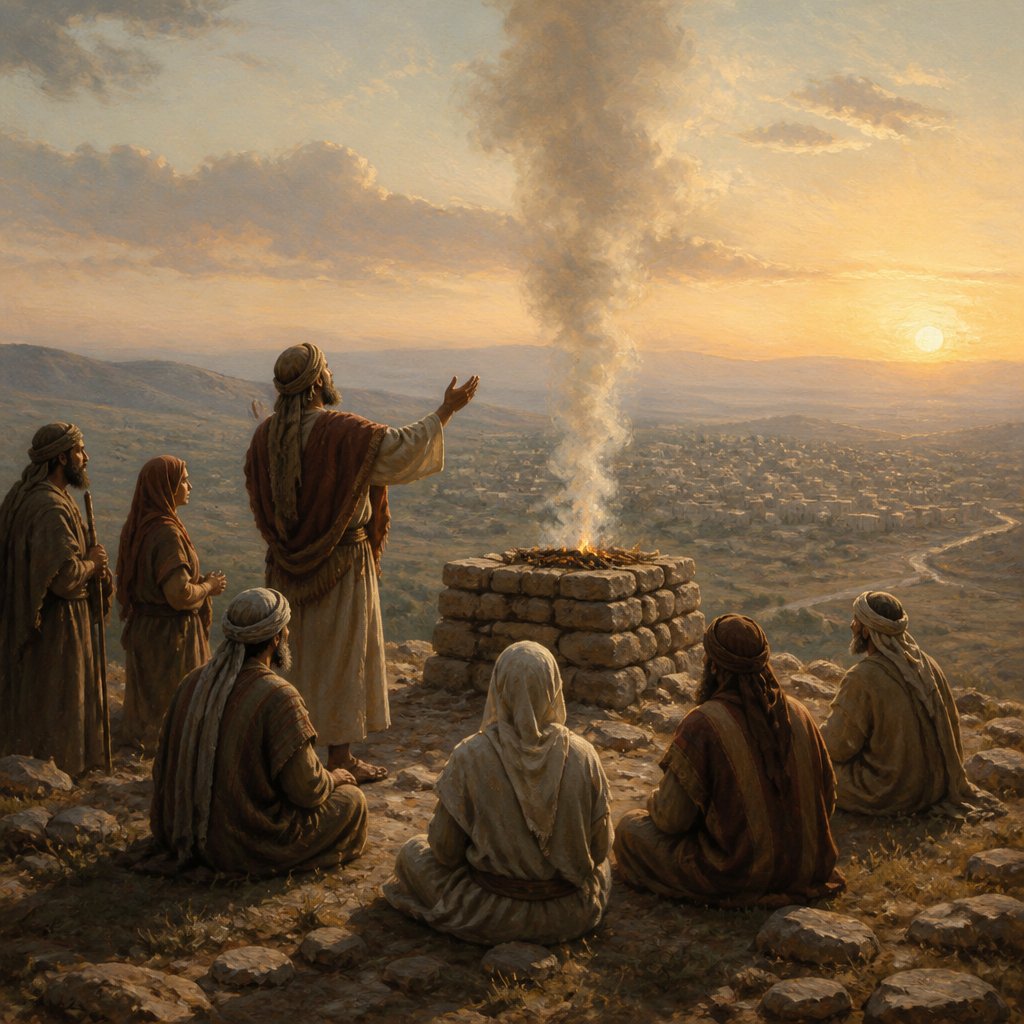
1 Kings 3:2 (KJV) reads: "Only the people sacrificed in high places because there was no house built unto the name of the Lord until those days."
This verse comes from the Book of 1 Kings which is believed to have been written by the prophet Jeremiah. The Book of 1 Kings is a historical narrative that tells the story of the kings of Israel from the death of King David to the captivity of Israel.
In 1 Kings 3:2, we are given a glimpse into the spiritual condition of the people of Israel during the reign of King Solomon. This verse reveals that the people were engaging in religious practices outside of the authorized worship at the temple in Jerusalem. The "high places" referred to in this verse were locations where the people would offer sacrifices to God, often on hilltops or elevated areas. While these sacrifices were intended to honor and worship God, they were not being performed in accordance with the laws and regulations set forth by God in the Mosaic covenant.
The significance of this verse lies in the fact that at this time, there was no temple built to the name of the Lord. The temple was considered the central place of worship for the Jewish people and was where God chose to make His presence known among His people. However, as mentioned in 1 Kings 3:2, the temple had not yet been built, and thus, the people were sacrificing in high places.
One of the central themes in this verse is the concept of proper worship. The Israelites were engaging in religious practices, but they were doing so outside of the designated place of worship. This raises questions about the validity of their sacrifices and the sincerity of their worship. It also highlights the importance of obedience to God's commands and the significance of performing acts of worship in the manner prescribed by God.
Furthermore, this verse also serves as a precursor to the construction of the temple. This event is significant in the history of Israel as it marked the establishment of a centralized and permanent place of worship for the Jewish people. The construction of the temple was a monumental undertaking and it represented a physical manifestation of God's presence among His people. It also solidified Jerusalem as the spiritual and political capital of Israel.
Symbolically, the building of the temple also foreshadowed the coming of Jesus Christ as the ultimate sacrifice for the sins of humanity. The temple was the place where sacrifices were made to atone for sins, but with the coming of Jesus, His sacrifice on the cross rendered the need for such sacrifices obsolete. As Jesus Himself declared in Matthew 12:6, "But I say unto you, That in this place is one greater than the temple."
In conclusion, 1 Kings 3:2 serves as a poignant reminder of the importance of proper worship and obedience to God's commands. It also marks a significant point in the history of Israel as the construction of the temple represented a turning point in the spiritual life of the nation. It ultimately points to the fulfillment of God's plan for salvation through the ultimate sacrifice of Jesus Christ. This verse provides valuable insights into the spiritual and historical context of the Old Testament and lays the foundation for the redemptive work of Jesus in the New Testament.
Have questions about 1 Kings 3:2?
Dive deeper into this scripture with Bible Chat — an AI-powered tool for exploring God's Word through conversation. Ask questions, get context, and grow in your understanding of the Bible.
Get Our Apps


1 Kings 3:2 Artwork

1 Kings 3:2 - "Only the people sacrificed in high places, because there was no house built unto the name of the LORD, until those days."
"Only the people sacrificed in high places, because there was no house built unto the name of the LORD, until those days." - 1 Kings 3:2

1 kings 3:15

1 kings 3:12

1 kings 3:15

1 Kings 3:9

2 Kings 3:1 - "Now Jehoram the son of Ahab began to reign over Israel in Samaria the eighteenth year of Jehoshaphat king of Judah, and reigned twelve years."

2 Kings 3:15

2 Kings 3:15

2 Kings 3:15

2 Kings 3:16-19

2 Kings 3:10 - "And the king of Israel said, Alas! that the LORD hath called these three kings together, to deliver them into the hand of Moab!"

2 Kings 3:2 - "And he wrought evil in the sight of the LORD; but not like his father, and like his mother: for he put away the image of Baal that his father had made."

2 Kings 3:23 - "And they said, This is blood: the kings are surely slain, and they have smitten one another: now therefore, Moab, to the spoil."

2 Kings 1:3 - "But the angel of the LORD said to Elijah the Tishbite, Arise, go up to meet the messengers of the king of Samaria, and say unto them, Is it not because there is not a God in Israel, that ye go to enquire of Baal-zebub the god of Ekron?"

2 Kings 19:2

2 Kings 19:2

2 Kings 19:2

1 Kings 3:10 - "And the speech pleased the Lord, that Solomon had asked this thing."

1 Kings 3:19 - "And this woman's child died in the night; because she overlaid it."

1 Kings 3:24 - "And the king said, Bring me a sword. And they brought a sword before the king."

1 Kings 3:16 - "¶ Then came there two women, that were harlots, unto the king, and stood before him."

2 Kings 3:3 - "Nevertheless he cleaved unto the sins of Jeroboam the son of Nebat, which made Israel to sin; he departed not therefrom."

2 Kings 3:6 - "¶ And king Jehoram went out of Samaria the same time, and numbered all Israel."

2 Kings 3:5 - "But it came to pass, when Ahab was dead, that the king of Moab rebelled against the king of Israel."

2 Kings 3:16 - "And he said, Thus saith the LORD, Make this valley full of ditches."

1 Kings 1:3 - "So they sought for a fair damsel throughout all the coasts of Israel, and found Abishag a Shunammite, and brought her to the king."

1 Kings 3:3 - "And Solomon loved the LORD, walking in the statutes of David his father: only he sacrificed and burnt incense in high places."

2 Kings 3:18 - "And this is but a light thing in the sight of the LORD: he will deliver the Moabites also into your hand."

2 Kings 25:3 - "And on the ninth day of the fourth month the famine prevailed in the city, and there was no bread for the people of the land."