What does 1 Kings 2:15 mean?
"And he said, Thou knowest that the kingdom was mine, and that all Israel set their faces on me, that I should reign: howbeit the kingdom is turned about, and is become my brother's: for it was his from the LORD." - 1 Kings 2:15
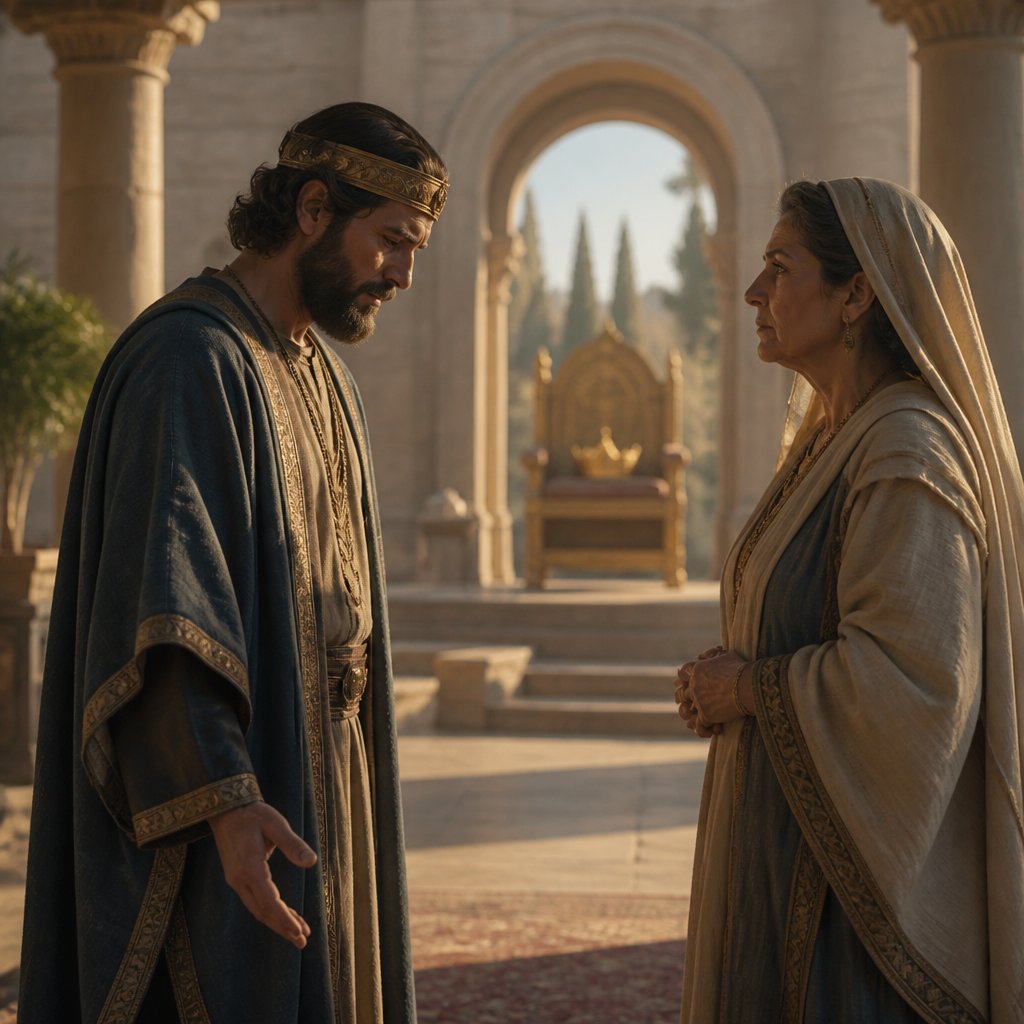
1 Kings 2:15 (KJV) states, "And he said, Thou knowest that the kingdom was mine, and that all Israel set their faces on me, that I should reign: howbeit the kingdom is turned about, and is become my brother's: for it was his from the Lord."
This verse is part of a larger passage that tells the story of the succession of King Solomon to the throne following the death of his father, King David. Adonijah, Solomon's older half-brother, had actually attempted to usurp the throne earlier, but Solomon had been anointed as king by David. However, Adonijah's actions had not gone unnoticed, and after David's death, Solomon had him executed.
In this verse, Adonijah is speaking to Bathsheba, the mother of Solomon, and he is expressing his bitterness and resentment at losing the kingdom to his younger brother. He acknowledges that the kingdom was to be his, but that it has now been taken away from him and given to Solomon by divine decree. Adonijah's words reveal his sense of entitlement and his unwillingness to accept God's will in the matter.
The themes present in this verse are power, justice, and divine sovereignty. Adonijah's desire for the throne represents a lust for power, and his refusal to accept Solomon's rule highlights the destructive nature of ambition. On the other hand, Solomon's ascension to the throne signifies the establishment of justice and the fulfillment of God's plan for the monarchy in Israel. The verse also underscores the belief in divine sovereignty, as it is made clear that the kingdom was not given to Solomon by mere human decision, but rather by the Lord's intervention.
The context of this verse is important for understanding its significance. Adonijah's attempt to seize power and Solomon's subsequent actions to secure his reign are indicative of the struggles for power and ambition that are common to human history. The political intrigue and the dynamics of family relationships seen in this passage serve as a reflection of the complexities of power and authority. The text provides a cautionary tale about the dangers of ambition and entitlement and the importance of submitting to God's will.
Symbolically, the transfer of the kingdom from Adonijah to Solomon serves as a metaphor for the broader theme of the establishment of God's rule over His people. The verse emphasizes that it is ultimately God who determines the course of history and holds the ultimate authority over earthly kingdoms. Furthermore, the contrast between Adonijah's self-serving ambition and Solomon's acceptance of God's will serves as a model for understanding the difference between human desires and divine purpose.
In conclusion, 1 Kings 2:15 from the King James Version provides a rich and multifaceted message about power, justice, and divine sovereignty. The verse offers valuable insights into human ambition, the struggle for power, and the importance of submitting to God's will. It underscores the significance of acknowledging God's authority in all aspects of life and serves as a cautionary reminder about the destructive nature of unchecked ambition. Ultimately, the verse speaks to the enduring relevance of these themes and the timeless wisdom found in the biblical text.
Have questions about 1 Kings 2:15?
Dive deeper into this scripture with Bible Chat — an AI-powered tool for exploring God's Word through conversation. Ask questions, get context, and grow in your understanding of the Bible.
Get Our Apps


1 Kings 2:15 Artwork

1 Kings 2:15 - "And he said, Thou knowest that the kingdom was mine, and that all Israel set their faces on me, that I should reign: howbeit the kingdom is turned about, and is become my brother's: for it was his from the LORD."
"And he said, Thou knowest that the kingdom was mine, and that all Israel set their faces on me, that I should reign: howbeit the kingdom is turned about, and is become my brother's: for it was his from the LORD." - 1 Kings 2:15

1 Kings 15:2 - "Three years reigned he in Jerusalem. And his mother's name was Maachah, the daughter of Abishalom."

2 Kings 15:1 - "In the twenty and seventh year of Jeroboam king of Israel began Azariah son of Amaziah king of Judah to reign."

2 Kings 15:15 - "And the rest of the acts of Shallum, and his conspiracy which he made, behold, they are written in the book of the chronicles of the kings of Israel."

2 Kings 1:15 - "And the angel of the LORD said unto Elijah, Go down with him: be not afraid of him. And he arose, and went down with him unto the king."

2 Kings 3:15

2 Kings 3:15

2 Kings 3:15

2 Kings 15:11 - "And the rest of the acts of Zachariah, behold, they are written in the book of the chronicles of the kings of Israel."

1 kings 3:15

2 Kings 15:6 - "And the rest of the acts of Azariah, and all that he did, are they not written in the book of the chronicles of the kings of Judah?"

1 kings 3:15

2 Kings 15:21 - "¶ And the rest of the acts of Menahem, and all that he did, are they not written in the book of the chronicles of the kings of Israel?"

2 Kings 15:31 - "And the rest of the acts of Pekah, and all that he did, behold, they are written in the book of the chronicles of the kings of Israel."

2 Kings 15:36 - "¶ Now the rest of the acts of Jotham, and all that he did, are they not written in the book of the chronicles of the kings of Judah?"

2 Kings 15:26 - "And the rest of the acts of Pekahiah, and all that he did, behold, they are written in the book of the chronicles of the kings of Israel."

1 Kings 15:31 - "¶ Now the rest of the acts of Nadab, and all that he did, are they not written in the book of the chronicles of the kings of Israel?"

1 Kings 10:15 - "Beside that he had of the merchantmen, and of the traffick of the spice merchants, and of all the kings of Arabia, and of the governors of the country."

1 Kings 15:1 - "Now in the eighteenth year of king Jeroboam the son of Nebat reigned Abijam over Judah."

1 Timothy 6:15-16 – "God, the blessed and only Ruler, the King of kings and Lord of lords."

1 Kings 15:32 - "And there was war between Asa and Baasha king of Israel all their days."

1 Kings 15:16 - "¶ And there was war between Asa and Baasha king of Israel all their days."

1 Kings 11:1-5

1 Timothy 6:15-16 – "God, the blessed and only Ruler, the King of kings and Lord of lords."

1 Timothy 6:15-16 – "God, the blessed and only Ruler, the King of kings and Lord of lords."

1 Timothy 6:15-16 – "God, the blessed and only Ruler, the King of kings and Lord of lords."

2 Kings 15:29 show the army and attack

1 Kings 1:15 - "¶ And Bath-sheba went in unto the king into the chamber: and the king was very old; and Abishag the Shunammite ministered unto the king."

"Three years reigned he in Jerusalem. And his mother's name was Maachah, the daughter of Abishalom." - 1 Kings 15:2