What does 1 Kings 22:43 mean?
"And he walked in all the ways of Asa his father; he turned not aside from it, doing that which was right in the eyes of the LORD: nevertheless the high places were not taken away; for the people offered and burnt incense yet in the high places." - 1 Kings 22:43
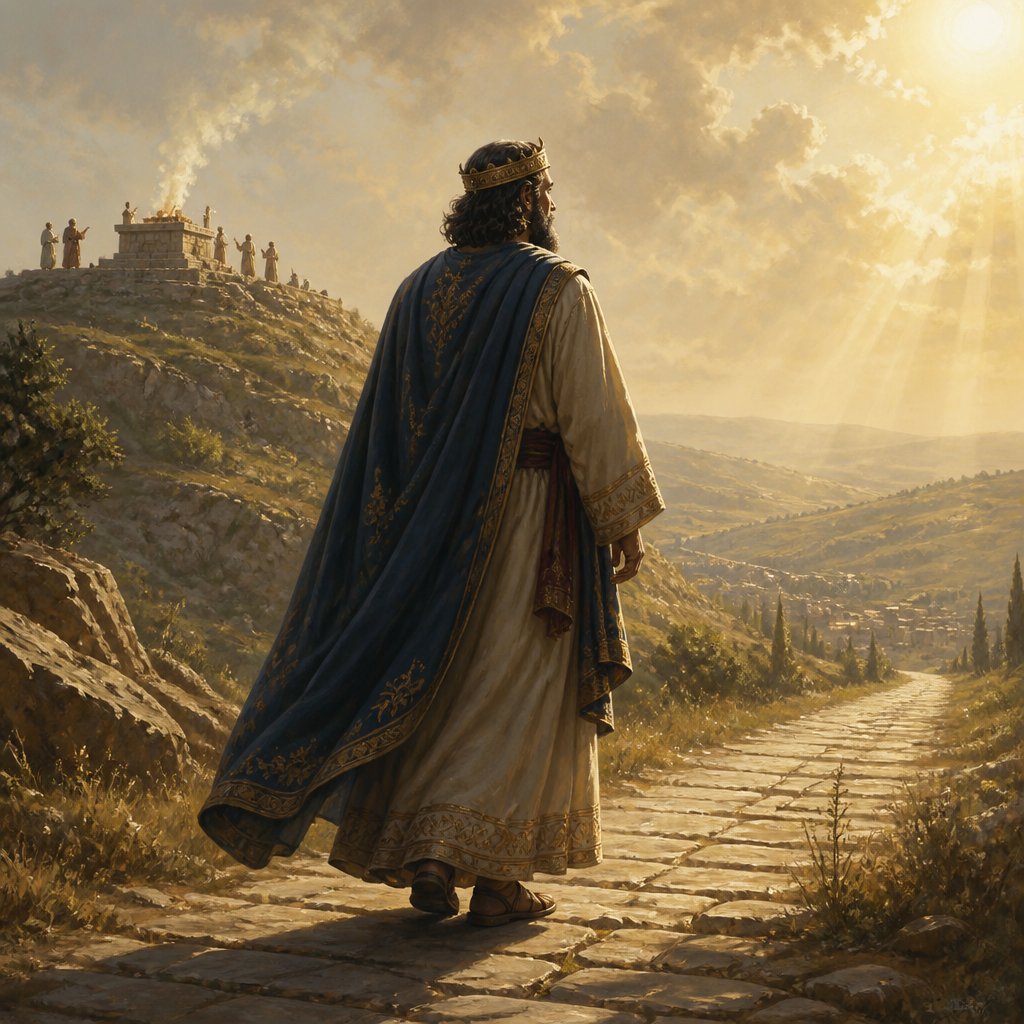
1 Kings 22:43 (KJV) states, "And he walked in all the ways of Asa his father; he turned not aside from it, doing that which was right in the eyes of the Lord: nevertheless, the high places were not taken away; for the people offered and burnt incense yet in the high places."
In this verse, we see a snapshot of the reign of King Jehoshaphat, who succeeded his father, King Asa, as the ruler of Judah. The verse highlights that Jehoshaphat followed in the footsteps of his father, Asa, by maintaining a commitment to the ways of the Lord. However, it also reveals that there were areas of spiritual compromise during his reign, as the high places, which were locations of pagan worship, were not removed.
One of the central themes of this verse is the tension between faithfulness to God and the persistence of idolatry. Throughout the Old Testament, the presence of high places is a recurring issue, as they represented places where the people of Judah and Israel would engage in idolatrous practices, offering sacrifices and burning incense to false gods. Despite Jehoshaphat's overall commitment to the Lord, he failed to fully eradicate these high places, allowing the influence of pagan worship to persist in the land.
The context of this verse is crucial to understanding its significance. The reign of Jehoshaphat was marked by both successes and failures in the realm of spiritual leadership. He is commended for his dedication to God, as seen in his early efforts to remove idols and promote worship of the Lord (2 Chronicles 17:6). However, his failure to completely eliminate the high places represents a failure to fully align the nation with God's commandments.
Symbolically, the high places represent the presence of impurity and compromise within the spiritual life of Judah. They stand as a reminder of the ongoing struggle between faithfulness to God and the enticements of false gods. Jehoshaphat's inability to rid the land of these high places mirrors the inner struggles and conflicts that often plague believers as they seek to live a life of devotion to God while facing the temptations of the world.
The broader significance of this verse is its timeless message about the dangers of half-hearted commitment to God. While Jehoshaphat is praised for his overall faithfulness, his failure to completely eradicate idolatry serves as a warning to believers about the importance of wholehearted devotion to God. It demonstrates that even a relatively good reign can still be tainted by the presence of compromise, and the negative consequences that result from failing to fully obey the commands of the Lord.
Overall, 1 Kings 22:43 is a reminder of the ongoing struggle between faith and compromise, and the imperative for believers to continuously strive for total obedience to God. It serves as a cautionary tale, calling on God's people to remain vigilant and steadfast in their commitment to follow Him completely, without allowing any room for compromise or idolatry. Through the example of Jehoshaphat, we are reminded of the importance of wholehearted devotion to God and the potential consequences of allowing areas of compromise to persist in our lives.
Have questions about 1 Kings 22:43?
Dive deeper into this scripture with Bible Chat — an AI-powered tool for exploring God's Word through conversation. Ask questions, get context, and grow in your understanding of the Bible.
Get Our Apps


1 Kings 22:43 Artwork

1 Kings 22:43 - "And he walked in all the ways of Asa his father; he turned not aside from it, doing that which was right in the eyes of the LORD: nevertheless the high places were not taken away; for the people offered and burnt incense yet in the high places."
"And he walked in all the ways of Asa his father; he turned not aside from it, doing that which was right in the eyes of the LORD: nevertheless the high places were not taken away; for the people offered and burnt incense yet in the high places." - 1 Kings 22:43

1 Kings 7:43 - "And the ten bases, and ten lavers on the bases;"

1 Kings 20:43 - "And the king of Israel went to his house heavy and displeased, and came to Samaria."

1 Kings 1:43 - "And Jonathan answered and said to Adonijah, Verily our lord king David hath made Solomon king."

1 Kings 2:43 - "Why then hast thou not kept the oath of the LORD, and the commandment that I have charged thee with?"

"And the ten bases, and ten lavers on the bases;" - 1 Kings 7:43

1 Chronicles 1:43 - "¶ Now these are the kings that reigned in the land of Edom before any king reigned over the children of Israel; Bela the son of Beor: and the name of his city was Dinhabah."

1 Kings 11:43 - "And Solomon slept with his fathers, and was buried in the city of David his father: and Rehoboam his son reigned in his stead."

1 kings 22:19

1 Kings 8:22

1 Kings 22:47 - "There was then no king in Edom: a deputy was king."

1 Kings 22:44 - "And Jehoshaphat made peace with the king of Israel."

"And the king of Israel went to his house heavy and displeased, and came to Samaria." - 1 Kings 20:43

1 Kings 22:1 - "And they continued three years without war between Syria and Israel."

1 Kings 1:22 - "¶ And, lo, while she yet talked with the king, Nathan the prophet also came in."

1 Kings 18:43 - "And said to his servant, Go up now, look toward the sea. And he went up, and looked, and said, There is nothing. And he said, Go again seven times."

1 Kings 22:37 - "¶ So the king died, and was brought to Samaria; and they buried the king in Samaria."

Luke 22:43 - "And there appeared an angel unto him from heaven, strengthening him."

"And Jonathan answered and said to Adonijah, Verily our lord king David hath made Solomon king." - 1 Kings 1:43

1 Kings 22:29 - "So the king of Israel and Jehoshaphat the king of Judah went up to Ramoth-gilead."

1 Kings 22:45 - "Now the rest of the acts of Jehoshaphat, and his might that he shewed, and how he warred, are they not written in the book of the chronicles of the kings of Judah?"

1 Kings 12:22 - "But the word of God came unto Shemaiah the man of God, saying,"

"There was then no king in Edom: a deputy was king." - 1 Kings 22:47

1 Kings 22:9 - "Then the king of Israel called an officer, and said, Hasten hither Micaiah the son of Imlah."

"Why then hast thou not kept the oath of the LORD, and the commandment that I have charged thee with?" - 1 Kings 2:43

1 Kings 22:2 - "And it came to pass in the third year, that Jehoshaphat the king of Judah came down to the king of Israel."

Matthew 22:43 - "He saith unto them, How then doth David in spirit call him Lord, saying,"

1 Kings 7:22 - "And upon the top of the pillars was lily work: so was the work of the pillars finished."

1 Kings 22:39 - "Now the rest of the acts of Ahab, and all that he did, and the ivory house which he made, and all the cities that he built, are they not written in the book of the chronicles of the kings of Israel?"