What does 1 Kings 22:3 mean?
"And the king of Israel said unto his servants, Know ye that Ramoth in Gilead is our's, and we be still, and take it not out of the hand of the king of Syria?" - 1 Kings 22:3
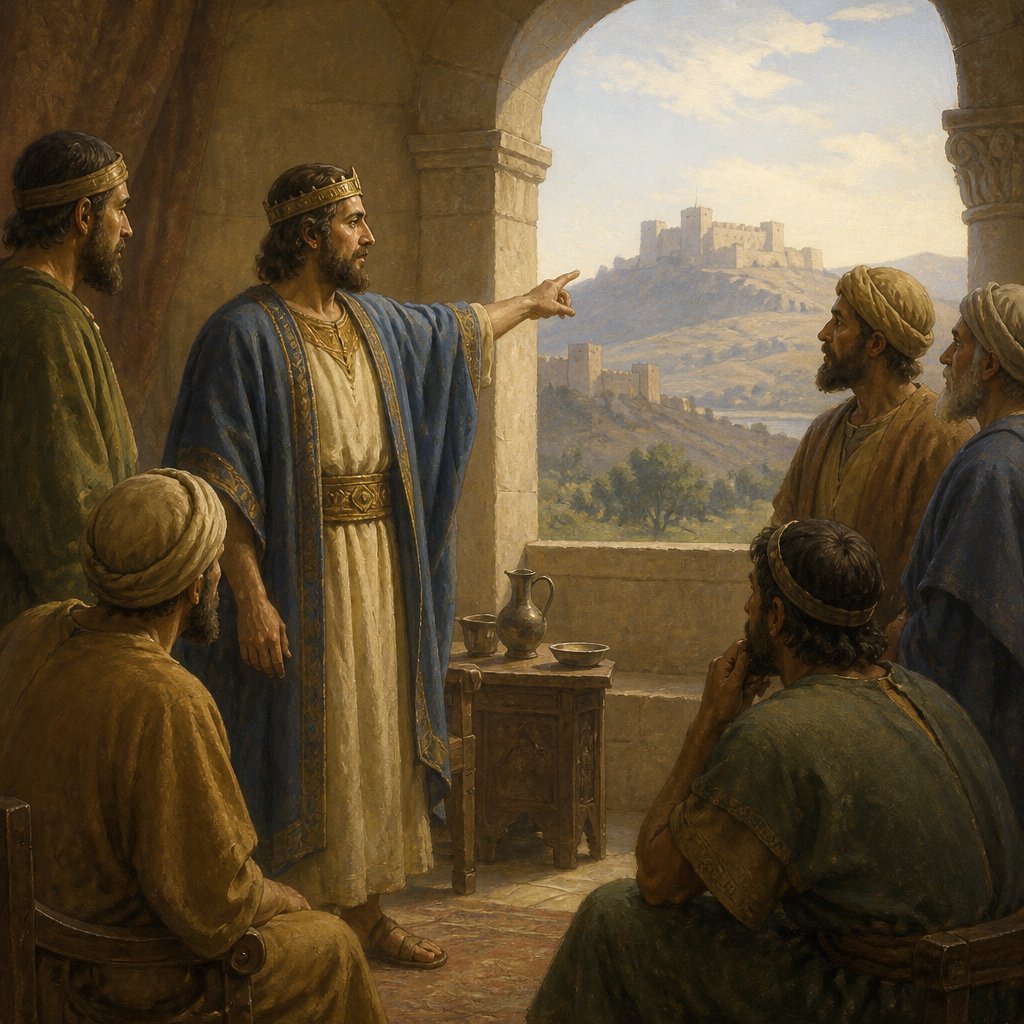
The Bible verse 1 Kings 22:3 in the King James Version reads: "And the king of Israel said unto his servants, Know ye that Ramoth in Gilead is ours, and we be still, and take it not out of the hand of the king of Syria?"
This verse is a part of a larger narrative in the Old Testament, specifically in the book of 1 Kings, which tells the story of the prophet Elijah and the reign of various kings in ancient Israel. In this particular passage, the focus is on King Ahab of Israel and his desire to take control of the city of Ramoth in Gilead, which was currently held by the king of Syria.
The context of this verse is crucial for understanding its meaning and significance. King Ahab was a king of Israel who is described in the Bible as one who did evil in the sight of the Lord. He married Jezebel, a Phoenician princess who introduced the worship of the god Baal in Israel, leading the people away from the worship of the one true God. King Ahab's reign was marked by conflict and turmoil, as the nation of Israel was often at odds with their neighbors, including the kingdom of Syria.
In this particular passage, King Ahab is seen expressing his desire to reclaim the city of Ramoth in Gilead, which he believed belonged to Israel. However, he also acknowledges the current state of inaction, questioning why they have not taken the city back from the king of Syria. This reveals Ahab's ambition to expand his territory and exert his power, even at the expense of engaging in warfare with a neighboring kingdom.
The themes present in this verse include the pursuit of power and control, the nature of leadership, and the consequences of disobedience to God's will. King Ahab's desire to take control of Ramoth in Gilead reflects his ambition as a ruler, and his willingness to engage in military conflict to achieve his goals. This reflects a broader theme of the pursuit of power and the consequences of selfish ambition, as Ahab's actions ultimately lead to his downfall and death.
Additionally, this passage also highlights the importance of seeking and following God's will. Throughout the Old Testament, the nation of Israel is repeatedly called to obedience to God's commands and reliance on His guidance. King Ahab's disregard for God's will and his pursuit of his own desires ultimately leads to his demise and the divine judgment against his reign.
Symbolism in this verse can be seen in the city of Ramoth in Gilead itself. The city represents a physical territory that King Ahab seeks to reclaim, but it also serves as a symbol of power and influence. Ahab's desire for Ramoth in Gilead reflects his thirst for territorial expansion and dominance over neighboring kingdoms. This symbolizes the corrupting nature of power and the potential for moral compromise in the pursuit of worldly ambitions.
In conclusion, 1 Kings 22:3 offers a glimpse into the character of King Ahab and the political climate of ancient Israel. It reveals themes of power, leadership, and obedience to God's will, as well as symbolism in the city of Ramoth in Gilead. This passage serves as a cautionary tale about the dangers of unchecked ambition and the consequences of disobedience to God, offering valuable insights for readers of the Bible.
Have questions about 1 Kings 22:3?
Dive deeper into this scripture with Bible Chat — an AI-powered tool for exploring God's Word through conversation. Ask questions, get context, and grow in your understanding of the Bible.
Get Our Apps


1 Kings 22:3 Artwork

1 Kings 22:3 - "And the king of Israel said unto his servants, Know ye that Ramoth in Gilead is our's, and we be still, and take it not out of the hand of the king of Syria?"
"And the king of Israel said unto his servants, Know ye that Ramoth in Gilead is our's, and we be still, and take it not out of the hand of the king of Syria?" - 1 Kings 22:3

1 Kings 3:22 - "And the other woman said, Nay; but the living is my son, and the dead is thy son. And this said, No; but the dead is thy son, and the living is my son. Thus they spake before the king."

1 kings 22:19

1 Kings 8:22

1 Kings 22:47 - "There was then no king in Edom: a deputy was king."

1 Kings 22:44 - "And Jehoshaphat made peace with the king of Israel."

1 Kings 22:1 - "And they continued three years without war between Syria and Israel."

1 Kings 1:22 - "¶ And, lo, while she yet talked with the king, Nathan the prophet also came in."

1 Kings 22:37 - "¶ So the king died, and was brought to Samaria; and they buried the king in Samaria."

revelations 22:1-3

2 Kings 22:3 - "¶ And it came to pass in the eighteenth year of king Josiah, that the king sent Shaphan the son of Azaliah, the son of Meshullam, the scribe, to the house of the LORD, saying,"

2 Kings 3:22 - "And they rose up early in the morning, and the sun shone upon the water, and the Moabites saw the water on the other side as red as blood:"

1 Kings 22:29 - "So the king of Israel and Jehoshaphat the king of Judah went up to Ramoth-gilead."

1 Kings 22:45 - "Now the rest of the acts of Jehoshaphat, and his might that he shewed, and how he warred, are they not written in the book of the chronicles of the kings of Judah?"

1 Kings 12:22 - "But the word of God came unto Shemaiah the man of God, saying,"

"There was then no king in Edom: a deputy was king." - 1 Kings 22:47

1 Kings 22:9 - "Then the king of Israel called an officer, and said, Hasten hither Micaiah the son of Imlah."

1 Kings 3:9

1 kings 3:15

1 Kings 22:2 - "And it came to pass in the third year, that Jehoshaphat the king of Judah came down to the king of Israel."

1 kings 3:15

1 kings 3:12

1 Kings 7:22 - "And upon the top of the pillars was lily work: so was the work of the pillars finished."

1 Kings 22:39 - "Now the rest of the acts of Ahab, and all that he did, and the ivory house which he made, and all the cities that he built, are they not written in the book of the chronicles of the kings of Israel?"

1 Kings 22:21 - "And there came forth a spirit, and stood before the LORD, and said, I will persuade him."

1 Kings 22:7 - "And Jehoshaphat said, Is there not here a prophet of the LORD besides, that we might enquire of him?"

1 Kings 22:5 - "And Jehoshaphat said unto the king of Israel, Enquire, I pray thee, at the word of the LORD to day."

1 Kings 22:41 - "¶ And Jehoshaphat the son of Asa began to reign over Judah in the fourth year of Ahab king of Israel."

"And Jehoshaphat made peace with the king of Israel." - 1 Kings 22:44