What does 1 Kings 20:12 mean?
"And it came to pass, when Ben-hadad heard this message, as he was drinking, he and the kings in the pavilions, that he said unto his servants, Set yourselves in array. And they set themselves in array against the city." - 1 Kings 20:12
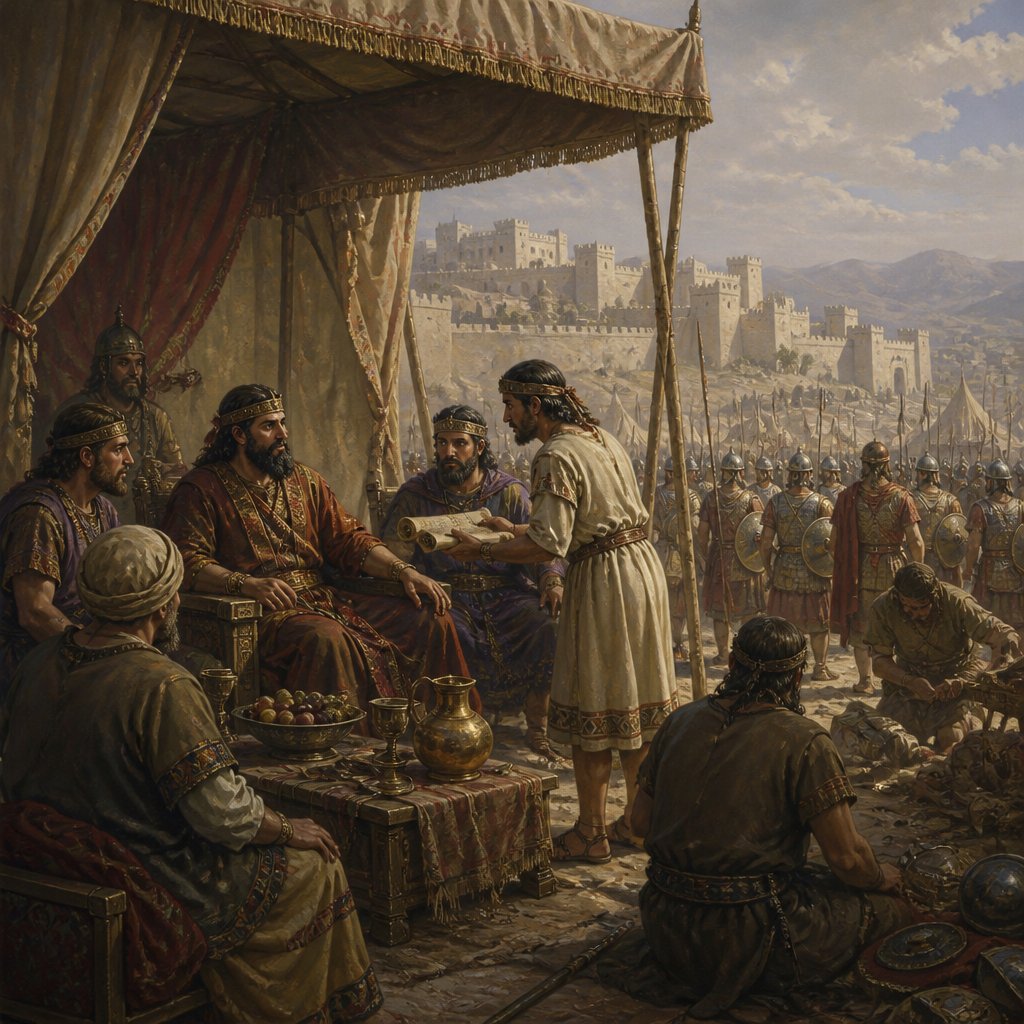
In 1 Kings 20:12 (KJV), the verse reads: "And it came to pass, when Ben-hadad heard this message, as he was drinking, he and the kings in the pavilions, that he said unto his servants, Set yourselves in array. And they set themselves in array against the city."
This verse is part of a larger passage in the book of 1 Kings that describes a conflict between the Israelites and the Arameans. Ben-hadad was the king of Aram, and in this particular verse, he has received a message and is preparing to attack the city. The verse highlights the impulsiveness and arrogance of Ben-hadad as he abruptly interrupts his leisurely activities, in this case, drinking, to prepare for battle.
The context of this verse is important to understand its deeper meaning. In the preceding verses, Ben-hadad had sent messengers to Ahab, the king of Israel, demanding that he hand over his silver, gold, wives, and children. Ahab initially agrees to the demands, but Ben-hadad's demands grow even more aggressive and unreasonable. This leads to a confrontation and ultimately to a battle between the two kingdoms.
The verse reflects themes of power, pride, and the folly of human wisdom. Ben-hadad's reaction to the message he receives while drinking indicates his impulsive and rash nature. Rather than carefully considering the situation and seeking wisdom, he immediately orders his servants to prepare for battle. This is a demonstration of his pride and confidence in his own abilities and the strength of his army. However, as the story unfolds, it becomes clear that Ben-hadad's arrogance will ultimately lead to his downfall.
The verse also serves as a reminder of the dangers of placing too much trust in earthly pleasures and pursuits. Ben-hadad's indulgence in drinking is interrupted by the urgent message, highlighting the temporary and fleeting nature of worldly pleasures. It also serves as a cautionary tale about the perils of prioritizing material desires over spiritual and moral concerns.
Symbolically, Ben-hadad's response to the message can be seen as a representation of the folly of human wisdom. In his haste to prepare for battle, he overlooks the potential consequences of his actions and fails to seek guidance or consider the potential outcomes. This can be interpreted as a warning against relying solely on human understanding and failing to seek divine wisdom and guidance in decision-making.
Ultimately, the verse in 1 Kings 20:12 serves to illustrate the consequences of pride, impulsiveness, and worldly pursuits. It warns against the dangers of trusting in human wisdom and earthly pleasures over spiritual and moral values. It also serves as a reminder of the importance of seeking divine guidance and wisdom in all matters. From a broader perspective, the verse can be interpreted as a call for humility, wisdom, and faith in God's guidance in the face of conflict and adversity.
Have questions about 1 Kings 20:12?
Dive deeper into this scripture with Bible Chat — an AI-powered tool for exploring God's Word through conversation. Ask questions, get context, and grow in your understanding of the Bible.
Get Our Apps


1 Kings 20:12 Artwork

1 Kings 20:12 - "And it came to pass, when Ben-hadad heard this message, as he was drinking, he and the kings in the pavilions, that he said unto his servants, Set yourselves in array. And they set themselves in array against the city."
"And it came to pass, when Ben-hadad heard this message, as he was drinking, he and the kings in the pavilions, that he said unto his servants, Set yourselves in array. And they set themselves in array against the city." - 1 Kings 20:12

2 Kings 20:12 - "¶ At that time Berodach-baladan, the son of Baladan, king of Babylon, sent letters and a present unto Hezekiah: for he had heard that Hezekiah had been sick."

1 Kings 14:1-20

1 Kings 12:20 - "And it came to pass, when all Israel heard that Jeroboam was come again, that they sent and called him unto the congregation, and made him king over all Israel: there was none that followed the house of David, but the tribe of Judah only."

2 Kings 12:20 - "And his servants arose, and made a conspiracy, and slew Joash in the house of Millo, which goeth down to Silla."

1 Kings 20:16 - "And they went out at noon. But Ben-hadad was drinking himself drunk in the pavilions, he and the kings, the thirty and two kings that helped him."

1 Kings 12:11

1 Kings 12:11

1 Kings 12:10

1 Kings 12:10

1 Kings 12:10

1 kings 3:12

1 Kings 12:11

1 Kings 12:10
1 Kings 12:11

1 Kings 12:14

1 Kings 12:14

1 Kings 12:11

1 Kings 20:24 - "And do this thing, Take the kings away, every man out of his place, and put captains in their rooms:"

1 Kings 16:20 - "Now the rest of the acts of Zimri, and his treason that he wrought, are they not written in the book of the chronicles of the kings of Israel?"

1 Kings 20:20 - "And they slew every one his man: and the Syrians fled; and Israel pursued them: and Ben-hadad the king of Syria escaped on an horse with the horsemen."

1 Kings 20:1 - "And Ben-hadad the king of Syria gathered all his host together: and there were thirty and two kings with him, and horses, and chariots: and he went up and besieged Samaria, and warred against it."

1 Kings 20:43 - "And the king of Israel went to his house heavy and displeased, and came to Samaria."

1 Corinthians 12:20 - "But now are they many members, yet but one body."

1 Kings 12:1 - "And Rehoboam went to Shechem: for all Israel were come to Shechem to make him king."

1 Kings 20:21 - "And the king of Israel went out, and smote the horses and chariots, and slew the Syrians with a great slaughter."

1 Kings 20:38 - "So the prophet departed, and waited for the king by the way, and disguised himself with ashes upon his face."

1 Kings 21:12 - "They proclaimed a fast, and set Naboth on high among the people."

1 Kings 12:12 - "¶ So Jeroboam and all the people came to Rehoboam the third day, as the king had appointed, saying, Come to me again the third day."