What does 1 Kings 19:4 mean?
"¶ But he himself went a day's journey into the wilderness, and came and sat down under a juniper tree: and he requested for himself that he might die; and said, It is enough; now, O LORD, take away my life; for I am not better than my fathers." - 1 Kings 19:4
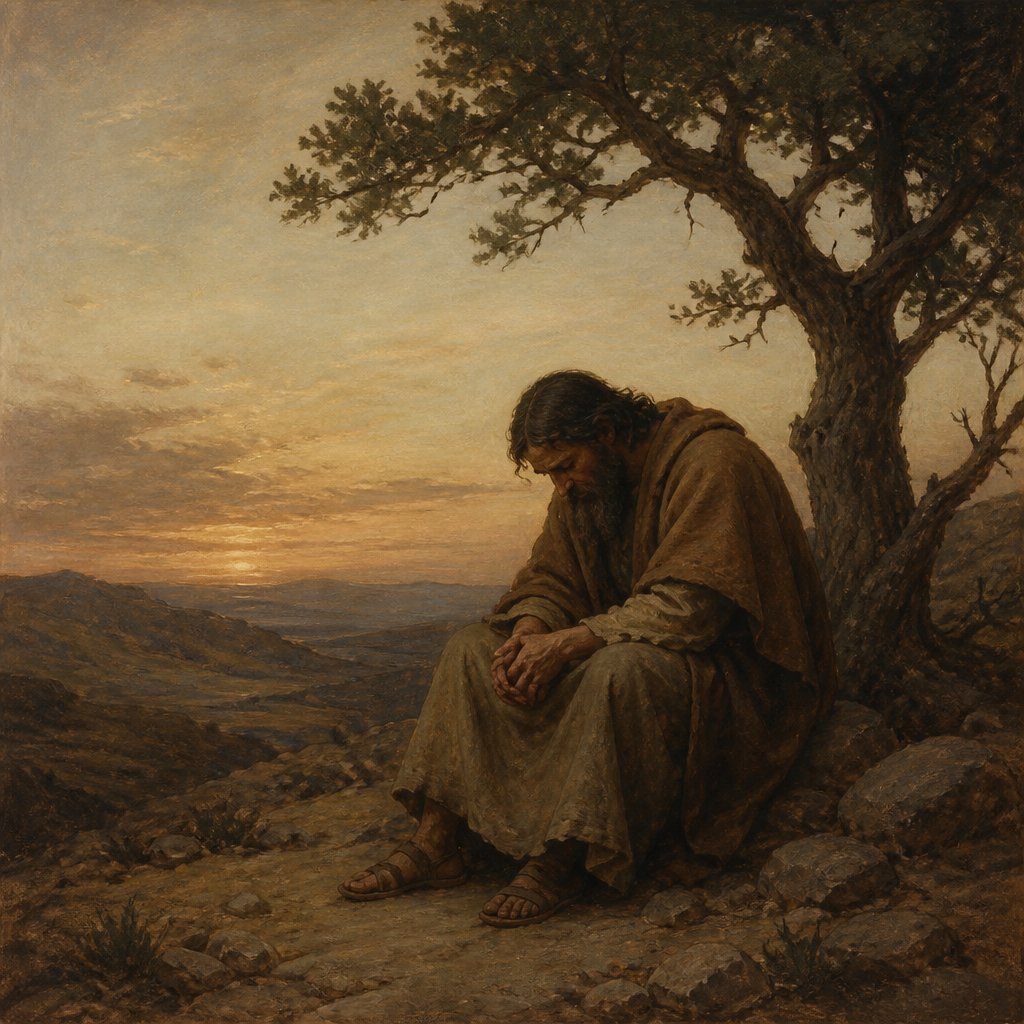
The Bible verse 1 Kings 19:4 (KJV) states:
“But he himself went a day's journey into the wilderness, and came and sat down under a juniper tree: and he requested for himself that he might die; and said, It is enough; now, O Lord, take away my life; for I am not better than my fathers.”
This verse is taken from the Old Testament and is part of the story of the prophet Elijah. Elijah had just defeated the prophets of Baal and had called down fire from heaven to consume his sacrifice, proving the power of the one true God. However, despite this great victory, he found himself in a place of deep despair and hopelessness.
The context of this verse is important in understanding its meaning. After the great victory on Mount Carmel, Elijah received a death threat from Queen Jezebel. Fearing for his life, he fled to the wilderness and sat down under a juniper tree. It was in this place of solitude and desperation that he cried out to God, expressing his desire to die. Despite his recent triumph, Elijah was overwhelmed by fear and exhaustion, feeling as though he could not go on.
This verse addresses the very real and human experience of despair and depression. Elijah, a mighty prophet of God, found himself in a place of deep emotional turmoil. This serves as a reminder that even the strongest and most faithful individuals can struggle with feelings of hopelessness and inadequacy.
The themes present in this verse include the idea of spiritual exhaustion and the struggle with doubt and fear. Elijah had given so much of himself in service to God, but when faced with opposition and threat, he felt unable to continue. This resonates with many people who have experienced burnout in their own lives, feeling as though they have nothing left to give.
The symbolism of the juniper tree is also significant. In biblical times, the juniper tree was often seen as a symbol of solitude and a place of refuge. Elijah, in his distress, sought out this lonely place to pour out his heart to God. This symbolizes the solitude many seek when feeling overwhelmed, desiring a quiet place to wrestle with their innermost thoughts and emotions.
Despite his plea for death, God did not abandon Elijah. Instead, God provided for him, sending an angel to minister to his physical needs and ultimately restoring him to a place of strength and purpose.
Overall, 1 Kings 19:4 is a powerful reminder of the very real struggles that individuals face in their faith journey. It speaks to the universal experience of despair and the need for restoration and renewal. It reminds us that even in our lowest moments, God is present and ready to provide comfort and strength. This verse offers hope and encouragement to those who may be experiencing similar feelings of exhaustion and hopelessness, showing that even the most faithful can experience moments of doubt and despair, and that it is okay to seek solace and renewal in times of struggle.
Have questions about 1 Kings 19:4?
Dive deeper into this scripture with Bible Chat — an AI-powered tool for exploring God's Word through conversation. Ask questions, get context, and grow in your understanding of the Bible.
Get Our Apps


1 Kings 19:4 Artwork

1 Kings 19:4 - "¶ But he himself went a day's journey into the wilderness, and came and sat down under a juniper tree: and he requested for himself that he might die; and said, It is enough; now, O LORD, take away my life; for I am not better than my fathers."
"¶ But he himself went a day's journey into the wilderness, and came and sat down under a juniper tree: and he requested for himself that he might die; and said, It is enough; now, O LORD, take away my life; for I am not better than my fathers." - 1 Kings 19:4
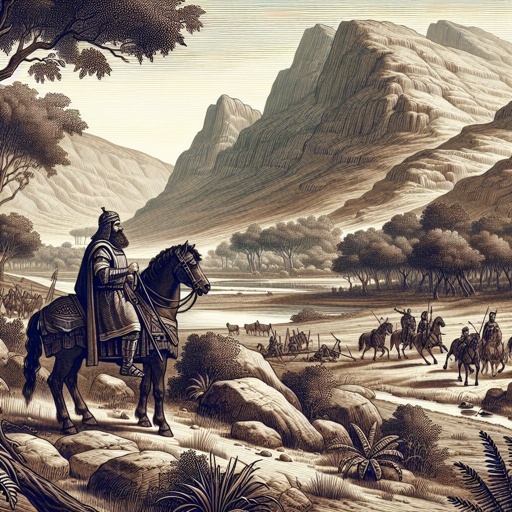
1 Kings 4:19 - "Geber the son of Uri was in the country of Gilead, in the country of Sihon king of the Amorites, and of Og king of Bashan; and he was the only officer which was in the land."

1 Kings 19:1-18

2 Kings 19:2

2 Kings 19:2

1 kings 22:19

2 Kings 19:2

Philippians 4:19

1 Kings 4:1 - "So king Solomon was king over all Israel."

1 Kings 3:19 - "And this woman's child died in the night; because she overlaid it."

1 Kings 14:19 - "And the rest of the acts of Jeroboam, how he warred, and how he reigned, behold, they are written in the book of the chronicles of the kings of Israel."

Psalm 19:3-4

1 Kings 12:19 - "So Israel rebelled against the house of David unto this day."

2 Kings 4:19 - "And he said unto his father, My head, my head. And he said to a lad, Carry him to his mother."

Philippians 4:19, mature spirituality

1 Kings 4:4 - "And Benaiah the son of Jehoiada was over the host: and Zadok and Abiathar were the priests:"

1 Kings 1:4 - "And the damsel was very fair, and cherished the king, and ministered to him: but the king knew her not."

1 peter 4:12-19

1 Kings 6:19 - "And the oracle he prepared in the house within, to set there the ark of the covenant of the LORD."

Philippians 4:19 god will provide

1 Kings 4:18 - "Shimei the son of Elah, in Benjamin:"

1 Kings 4:17 - "Jehoshaphat the son of Paruah, in Issachar:"
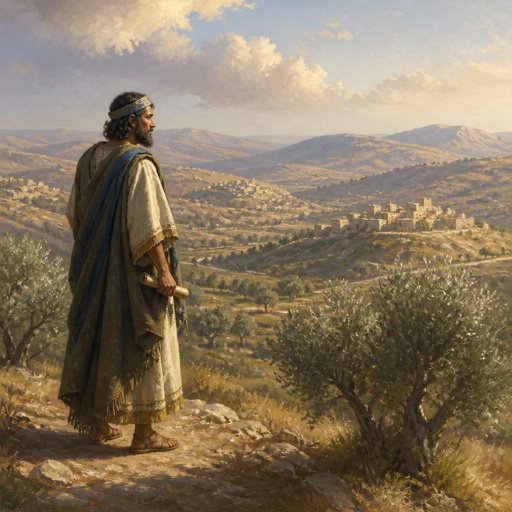
"Geber the son of Uri was in the country of Gilead, in the country of Sihon king of the Amorites, and of Og king of Bashan; and he was the only officer which was in the land." - 1 Kings 4:19

1 Kings 19:12 - "And after the earthquake a fire; but the LORD was not in the fire: and after the fire a still small voice."

1 Kings 19:1 - "And Ahab told Jezebel all that Elijah had done, and withal how he had slain all the prophets with the sword."

1 Kings 4:8 - "And these are their names: The son of Hur, in mount Ephraim:"

1 Kings 4:14 - "Ahinadab the son of Iddo had Mahanaim:"

1 Kings 4:16 - "Baanah the son of Hushai was in Asher and in Aloth:"

1 Kings 7:19 - "And the chapiters that were upon the top of the pillars were of lily work in the porch, four cubits."