What does 1 Kings 19:13 mean?
"And it was so, when Elijah heard it, that he wrapped his face in his mantle, and went out, and stood in the entering in of the cave. And, behold, there came a voice unto him, and said, What doest thou here, Elijah?" - 1 Kings 19:13
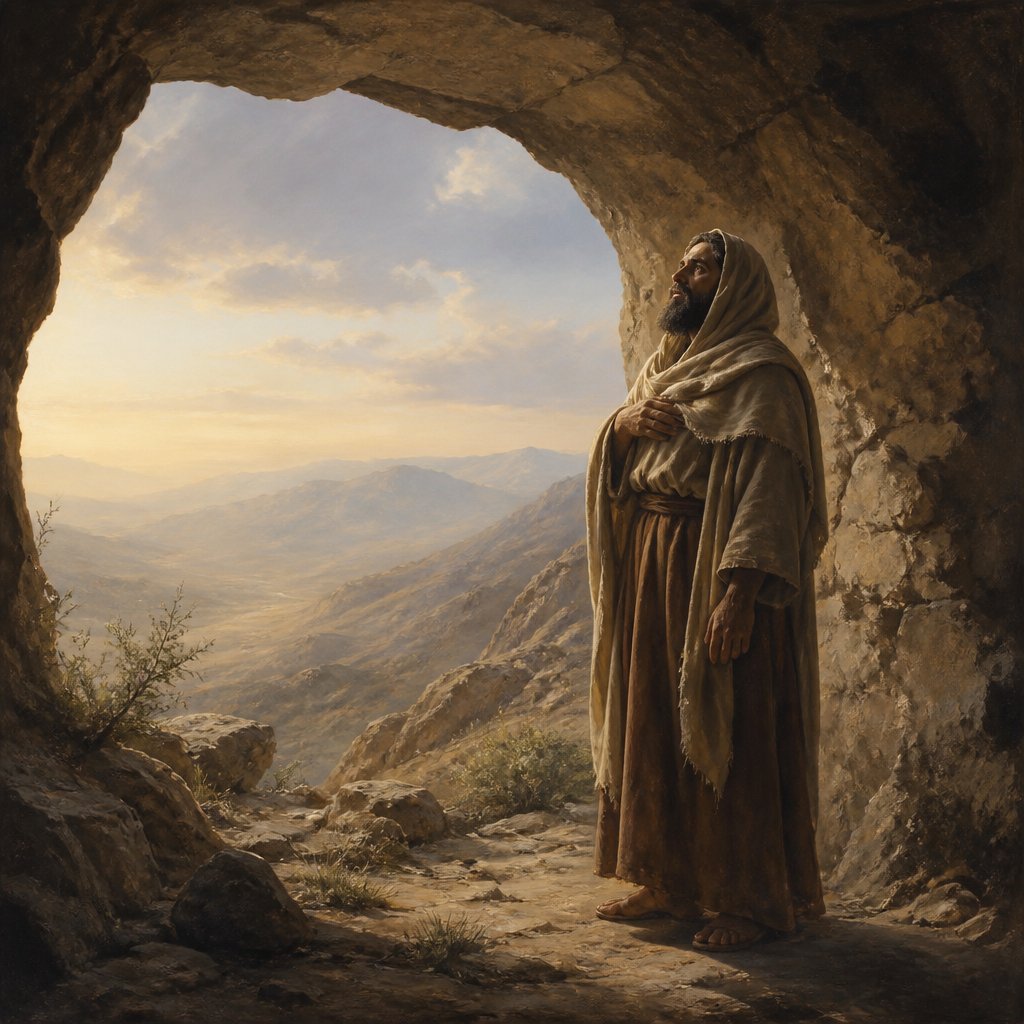
The Bible verse 1 Kings 19:13 from the King James Version reads, "And it was so, when Elijah heard it, that he wrapped his face in his mantle, and went out, and stood in the entering in of the cave. And, behold, there came a voice unto him, and said, What doest thou here, Elijah?" This verse comes from the Old Testament and is part of a larger narrative that tells the story of the prophet Elijah, who was a key figure in the history of Israel.
To fully understand the meaning and significance of this verse, it is important to provide some context. In 1 Kings 19, Elijah is fleeing for his life from the wrath of Queen Jezebel, who was determined to kill him after he had defeated the prophets of Baal in a dramatic showdown on Mount Carmel. Fearing for his life, Elijah ran to the wilderness and sought refuge in a cave. He was feeling despondent and exhausted, and he cried out to God, feeling that he was the only faithful servant left in Israel.
It is in the midst of this emotional and physical exhaustion that the verse 1 Kings 19:13 takes place. After a series of dramatic events, including experiencing a powerful wind, an earthquake, and a fire, Elijah hears a still, small voice. This is the moment when Elijah wraps his face in his mantle and goes to stand in the entrance of the cave. This action can be seen as a sign of reverence and humility before God. His response shows a deep sense of respect and awe, as he covers his face to indicate his unworthiness in the presence of the divine.
The voice that comes to Elijah asks him a poignant question, "What doest thou here, Elijah?" This simple yet profound question cuts to the heart of Elijah's despair and sense of abandonment. It forces Elijah to confront the reasons for his flight and his feelings of isolation and hopelessness. In a broader sense, this question challenges Elijah to examine his purpose and calling as a prophet of God.
The themes and symbolism in this passage are rich and deeply significant. One of the primary themes is the faithfulness and sovereignty of God. Despite Elijah's fear and despair, God does not abandon him. Instead, God reaches out to him in a still, small voice, demonstrating His presence and care for His servant. This serves as a powerful reminder that even in the midst of our darkest moments, God is with us, speaking to us in the quiet and stillness.
Another theme is the idea of spiritual renewal and restoration. Elijah's flight to the wilderness and his encounter with God in the cave can be seen as a metaphor for the spiritual journey of faith. In the midst of his weariness and fear, Elijah experiences a profound encounter with the divine, which ultimately renews and strengthens him for the challenges ahead. This serves as a powerful message of hope and encouragement for believers who may be experiencing their own periods of doubt and despair.
Additionally, there is a strong theme of divine calling and purpose. The question posed to Elijah, "What doest thou here," challenges him to reevaluate his purpose and calling as a prophet of God. This question serves as a reminder that our lives are meant to be lived in alignment with God's will and purpose for us. It urges us to reflect on whether we are fulfilling the calling and mission that God has placed upon our lives.
In conclusion, 1 Kings 19:13 from the King James Version offers a powerful and poignant portrayal of Elijah's encounter with God in the wilderness. It conveys important themes of faithfulness, renewal, and calling, and serves as a timeless reminder of God's presence and care for His people. The verse continues to inspire and encourage believers to seek God in the midst of their struggles and to draw strength and renewal from His still, small voice.
Have questions about 1 Kings 19:13?
Dive deeper into this scripture with Bible Chat — an AI-powered tool for exploring God's Word through conversation. Ask questions, get context, and grow in your understanding of the Bible.
Get Our Apps


1 Kings 19:13 Artwork

When Elijah heard it, he pulled his cloak over his face and went out and stood at the mouth of the cave. 1 Kings 19:13

1 Kings 19:13 - "And it was so, when Elijah heard it, that he wrapped his face in his mantle, and went out, and stood in the entering in of the cave. And, behold, there came a voice unto him, and said, What doest thou here, Elijah?"
"And it was so, when Elijah heard it, that he wrapped his face in his mantle, and went out, and stood in the entering in of the cave. And, behold, there came a voice unto him, and said, What doest thou here, Elijah?" - 1 Kings 19:13

1 Kings 13:19 - "So he went back with him, and did eat bread in his house, and drank water."

2 Kings 19:13 - "Where is the king of Hamath, and the king of Arpad, and the king of the city of Sepharvaim, of Hena, and Ivah?"

1 Kings 19:1-18

2 Kings 19:2

2 Kings 19:2

1 kings 22:19

"So he went back with him, and did eat bread in his house, and drank water." - 1 Kings 13:19

2 Kings 19:2

1 Kings 11:13

1 Kings 11:13

1 Kings 6:11-13

1 kings 11:11-13

1 Kings 11:11-13

1 Kings 3:19 - "And this woman's child died in the night; because she overlaid it."

1 Kings 14:19 - "And the rest of the acts of Jeroboam, how he warred, and how he reigned, behold, they are written in the book of the chronicles of the kings of Israel."

1 Kings 6:11-13

1 Kings 6:11-13

1 Kings 6:11-13

1 Kings 6:11-13

1 Kings 11:11-13

1 Kings 7:13 - "¶ And king Solomon sent and fetched Hiram out of Tyre."

1 Kings 12:19 - "So Israel rebelled against the house of David unto this day."

1 Kings 6:19 - "And the oracle he prepared in the house within, to set there the ark of the covenant of the LORD."

"Where is the king of Hamath, and the king of Arpad, and the king of the city of Sepharvaim, of Hena, and Ivah?" - 2 Kings 19:13

1 Kings 13:13 - "And he said unto his sons, Saddle me the ass. So they saddled him the ass: and he rode thereon,"

1 Kings 19:12 - "And after the earthquake a fire; but the LORD was not in the fire: and after the fire a still small voice."

1 Kings 12:13 - "And the king answered the people roughly, and forsook the old men's counsel that they gave him;"