What does 1 Kings 19:12 mean?
"And after the earthquake a fire; but the LORD was not in the fire: and after the fire a still small voice." - 1 Kings 19:12

In 1 Kings 19, Elijah is at one of the lowest points of his ministry. Immediately after the public victory over Baal on mount Carmel, where fire fell from heaven and the people were confronted with the LORD’s supremacy, Elijah is threatened by Jezebel and flees for his life. The chapter shows him exhausted, afraid, and spiritually spent, even asking that he might die. God then draws Elijah away from the noise of crisis into the solitude of Horeb, “the mount of God,” the place associated with Moses and the giving of the law. That setting is important, because Elijah is not only a prophet in personal distress; he stands within the larger covenant story of Israel, and he is brought to a place where God has historically revealed himself with weight and authority.
Against that background, 1 Kings 19:12 (KJV) reads: “And after the earthquake a fire; but the LORD was not in the fire: and after the fire a still small voice.” The verse sits inside a sequence of mighty phenomena that pass before Elijah: a strong wind that rends the mountains and breaks rocks, an earthquake, and then a fire. Each of these carries strong biblical associations with divine power and judgment, and they would naturally call to mind earlier scenes of God’s presence, including Sinai/Horeb itself, where there was fire, trembling, and overwhelming majesty. Yet the text deliberately repeats the same correction: “but the LORD was not in” these events. This does not mean that God is absent from sovereignty over nature; rather, it means that in this moment God is choosing not to disclose himself to Elijah in the mode Elijah might expect—through spectacular, earthshaking displays. The narrative is teaching Elijah how to recognize the LORD’s present way of working, and it is reorienting his understanding of what faithful ministry looks like when outward appearances suggest defeat.
The climax is not in the wind, the earthquake, or the fire, but “after the fire a still small voice.” The phrase “still small voice” in the KJV conveys quietness and subtlety, the opposite of the violent shaking that preceded it. Symbolically, it confronts Elijah’s assumption that the LORD’s cause must always advance through dramatic manifestations like Carmel. Elijah has just seen fire fall and crowds respond, yet he now feels as though nothing has changed and he alone is left. God answers by revealing that his presence and guidance are not confined to the extraordinary sign. The LORD can, and often does, speak in a manner that requires attentiveness rather than adrenaline. The “voice” emphasizes communication, direction, and personal encounter; the “still” emphasizes calm, restraint, and intimacy; the “small” emphasizes that what seems unimpressive to human expectations may nevertheless be the chosen vehicle of divine revelation.
The immediate context confirms that this “still small voice” is the true turning point. When Elijah hears it, he responds differently than he did to the earlier phenomena: he wraps his face in his mantle and stands at the entering in of the cave. That gesture suggests reverence and recognition that he is in the presence of the LORD, echoing the instinct to cover oneself before holiness. Then comes the question that frames the chapter: “What doest thou here, Elijah?” God is not asking for information; he is drawing Elijah to articulate his burden and then to receive correction, comfort, and renewed commission. The “still small voice” becomes the medium through which God restores a discouraged servant, not by overwhelming him with force, but by addressing his heart and calling him back into obedient purpose.
The verse also carries wider themes about how God advances his covenant purposes. Elijah has been grieved by Israel’s apostasy and by the apparent triumph of wickedness. The wind, earthquake, and fire can evoke judgment, and Elijah may have desired a sweeping, immediate purging of evil. Yet God’s disclosure in the “still small voice” anticipates what he will do next in the chapter: he will send Elijah to anoint agents of change—Hazael, Jehu, and Elisha—through whom judgment and reform will come in God’s time and through providential means. The quiet voice does not deny judgment; it places it within a larger, often gradual and carefully directed plan. In other words, God’s work can be decisive without being noisy, and his rule can be absolute without constant spectacle.
There is also a pastoral significance in the symbolism. Elijah’s condition in the chapter includes fear, isolation, and spiritual fatigue. God first meets physical need—food and rest—then brings Elijah to a place of encounter, then speaks. The “still small voice” suggests that in seasons of exhaustion, God may not minister by intensifying the drama, but by drawing near with quiet clarity. It is not that the wind, earthquake, and fire are worthless; they show that God is powerful enough to shatter what seems immovable. But the verse insists that power is not the only way God makes himself known to his servants. Sometimes the most decisive divine moment is not the one that can be measured by noise or visible upheaval, but the one that is heard, inwardly received, and obeyed.
Finally, 1 Kings 19:12 functions as a corrective to a narrow expectation of God’s presence. The KJV’s repeated refrain “but the LORD was not in” prevents Elijah—and the reader—from equating God’s nearness with the sensational. The LORD is free to reveal himself through mighty acts, and he has done so; yet he is equally free to reveal himself through the gentle speech that steadies a trembling prophet and sends him back into service. The significance of the verse, then, lies in its portrayal of divine holiness and freedom, its rebuke of despair that measures God’s success by immediate outward results, and its invitation to listen for God’s guiding word even when it comes in a form the world would call small.
Have questions about 1 Kings 19:12?
Dive deeper into this scripture with Bible Chat — an AI-powered tool for exploring God's Word through conversation. Ask questions, get context, and grow in your understanding of the Bible.
Get Our Apps


1 Kings 19:12 Artwork

1 Kings 19:12 - "And after the earthquake a fire; but the LORD was not in the fire: and after the fire a still small voice."
!["And after the earthquake a fire; [but] the LORD [was] not in the fire: and after the fire a still small voice." - 1 Kings 19:12](https://media.bible.art/472a453b-456d-4823-9472-470880d0f467-thumbnail.jpg)
"And after the earthquake a fire; [but] the LORD [was] not in the fire: and after the fire a still small voice." - 1 Kings 19:12

"And after the earthquake a fire; but the LORD was not in the fire: and after the fire a still small voice." - 1 Kings 19:12

1 Kings 12:19 - "So Israel rebelled against the house of David unto this day."

1 Kings 19:11-12 – "The Lord said, 'Go out and stand on the mountain in the presence of the Lord, for the Lord is about to pass by.'"

1 Kings 19:11-12 – "The Lord said, 'Go out and stand on the mountain in the presence of the Lord, for the Lord is about to pass by.'"

2 Kings 12:19 - "¶ And the rest of the acts of Joash, and all that he did, are they not written in the book of the chronicles of the kings of Judah?"

"So Israel rebelled against the house of David unto this day." - 1 Kings 12:19

1 Kings 19:1-18

2 Kings 19:2

2 Kings 19:2

1 kings 22:19

2 Kings 19:2

Exodus 12:1-19

1 Kings 12:11

1 Kings 12:11

1 Kings 12:10

1 Kings 12:10

1 Kings 12:10

1 kings 3:12

1 Kings 12:11

1 Kings 12:10
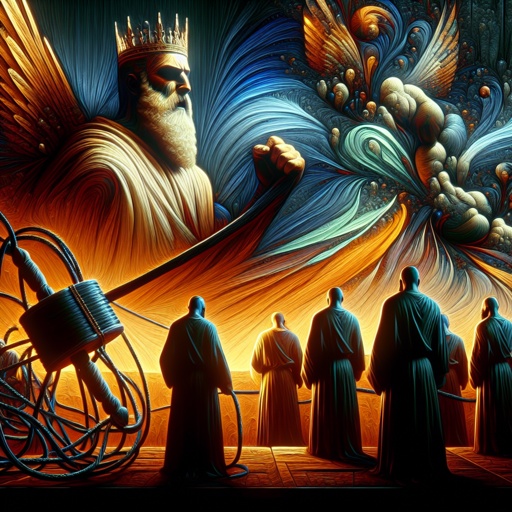
1 Kings 12:11

1 Kings 12:14

1 Kings 12:14

1 Kings 12:11

"¶ And the rest of the acts of Joash, and all that he did, are they not written in the book of the chronicles of the kings of Judah?" - 2 Kings 12:19

1 peter 4:12-19

1 Kings 3:19 - "And this woman's child died in the night; because she overlaid it."

1 Kings 14:19 - "And the rest of the acts of Jeroboam, how he warred, and how he reigned, behold, they are written in the book of the chronicles of the kings of Israel."