What does 1 Kings 18:38 mean?
"Then the fire of the LORD fell, and consumed the burnt sacrifice, and the wood, and the stones, and the dust, and licked up the water that was in the trench." - 1 Kings 18:38
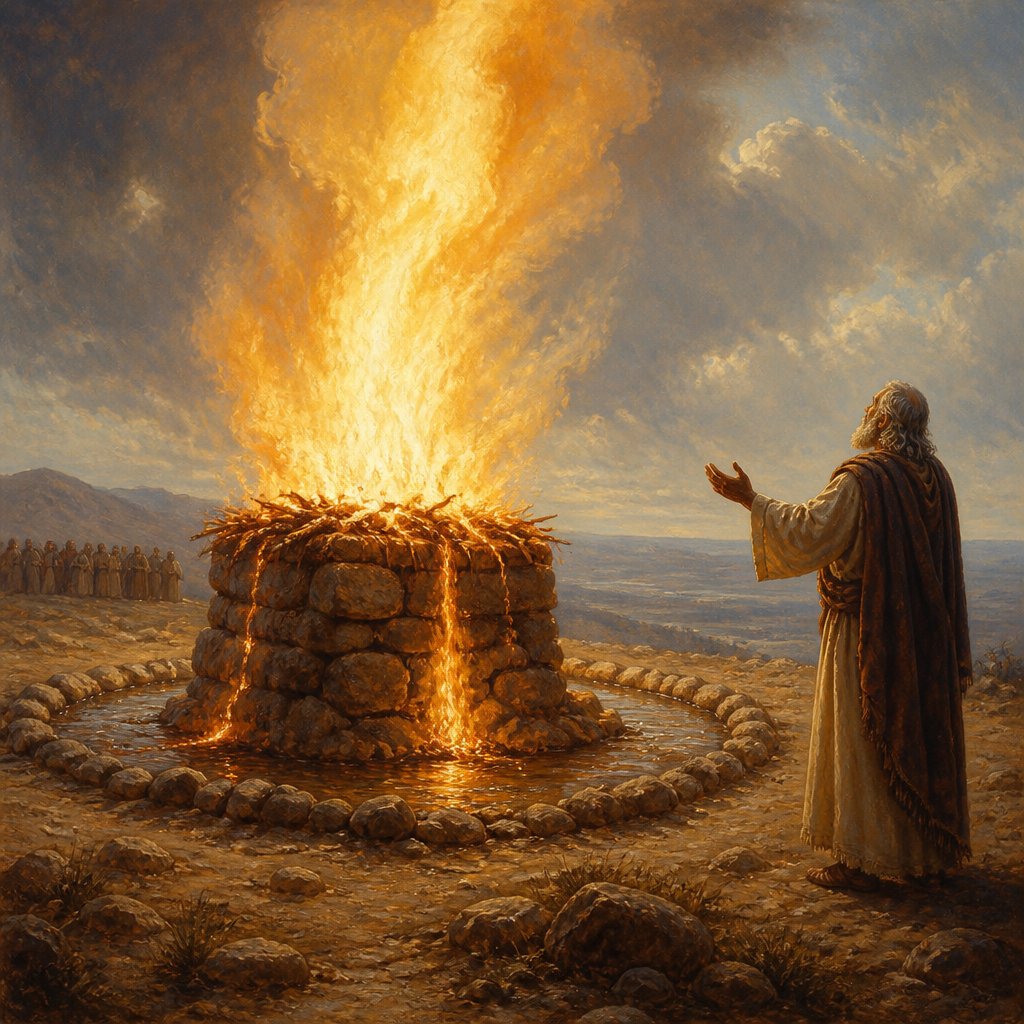
“Then the fire of the LORD fell, and consumed the burnt sacrifice, and the wood, and the stones, and the dust, and licked up the water that was in the trench.” (1 Kings 18:38, KJV)
In its immediate context, this verse is the turning point of the contest on mount Carmel between Elijah, the prophet of the LORD, and the prophets of Baal. Israel under Ahab’s rule has been pulled into idolatry, and the nation’s loyalty is divided. The chapter sets the issue plainly: which is truly God, the LORD or Baal? The prophets of Baal cry out, plead, and cut themselves, but “there was neither voice, nor any to answer” (1 Kings 18:29, KJV). Elijah, by contrast, prays briefly and directly, asking that the LORD would answer so that the people would know who is God and that their hearts might be turned back again (1 Kings 18:36–37, KJV). Verse 38 records the LORD’s answer, and the manner of that answer carries the theological weight of the whole scene.
The first and most direct meaning is that the LORD publicly vindicates His own name and His prophet. “The fire of the LORD fell” is not simply a helpful sign; it is a decisive revelation. Where Baal—reputed to be a god of storm and lightning—cannot produce so much as a spark, the LORD sends fire at once. The verse thus exposes the emptiness of idols and the living reality of the God of Israel. It is also an act of covenant mercy, because the purpose of the sign is not mere spectacle but restoration: that the people might return from divided allegiance to wholehearted worship of the LORD.
The verse also draws on sacrificial and temple imagery. Fire from God is associated in the Scriptures with divine acceptance of sacrifice. The language “consumed the burnt sacrifice” evokes the whole burnt offering, an offering wholly given up to God. On Carmel, this “consuming” indicates that the LORD receives what Elijah has set before Him. Yet this is not an ordinary acceptance. The fire does not stop at the animal and the wood; it “consumed … the stones, and the dust.” That description emphasizes a holiness and power that exceed human control. It is not a fire that must be tended, measured, or explained away. It is the LORD’s own act, overwhelming in intensity, leaving no room for a naturalistic excuse or a claim that Elijah staged the outcome.
The water is among the strongest symbols in the scene, and verse 38 makes its meaning unmistakable: the fire “licked up the water that was in the trench.” Earlier, Elijah has the offering drenched repeatedly until the water runs around the altar and fills a trench (1 Kings 18:33–35, KJV). In ordinary terms, water prevents fire; on Carmel, the water functions as a deliberate barrier against suspicion. By having the sacrifice soaked, Elijah strips away every possibility that the fire could be a trick, a hidden ember, or a humanly sustained flame. When the fire not only ignites the sacrifice but also consumes the water, the miracle becomes total. The LORD is shown to be sovereign over elements that oppose one another, able to overcome what should make His answer impossible. The “water in the trench” can also be felt as a quiet rebuke to Baal worship: the true God is not limited by drought or abundance, by dryness or flooding, by the conditions of nature; He rules over them.
The stones and dust deepen the symbolism of judgment and cleansing. An altar is made of stones, the stable, visible structure of worship. That the fire consumes “the stones, and the dust” suggests that God’s answer reaches beneath the surface, not merely touching what is offered but burning through what is built. In a setting where worship has been corrupted, the verse communicates that the LORD’s presence both proves and purifies. His response is not a mild endorsement but a searching holiness that leaves the ground bare. At the same time, it is a mercy to Israel: the LORD makes Himself known with such clarity that the people can no longer honestly remain undecided.
Theologically, the verse announces that the LORD alone is God and that He answers prayer according to His purpose. Elijah’s prayer is notable for its simplicity and its God-centered aim: “that this people may know that thou art the LORD God” (1 Kings 18:37, KJV). The fire falls immediately after that prayer, reinforcing the truth that the LORD is not like idols—silent, distant, or dependent on human frenzy—but the living God who hears and acts. The sheer completeness of the consumption—sacrifice, wood, stones, dust, and water—underscores His absolute sufficiency. Nothing must be added to make Him effective; nothing can be added to make the sign clearer.
In the flow of the narrative, 1 Kings 18:38 also functions as the hinge between revelation and response. The people’s confession, “The LORD, he is the God; the LORD, he is the God” (1 Kings 18:39, KJV), comes because the fire has removed ambiguity. In that way, the verse is about more than miraculous power; it is about turning hearts. Israel’s crisis is not merely political or agricultural but spiritual, and the LORD’s answer by fire is a merciful intervention aimed at restoring covenant faithfulness. Fire here is both evidence and summons: evidence that the LORD is present and supreme, and summons to abandon divided worship and return to Him alone.
So the significance of 1 Kings 18:38 is that it portrays the LORD’s self-disclosure in unmistakable terms. The verse presents divine fire as a sign of true Godhood, divine acceptance, and divine holiness, overcoming every obstacle Elijah placed in the way of doubt. By consuming even the water, stones, and dust, the LORD demonstrates that His reality is not fragile, His power is not negotiable, and His claim on Israel is total. The meaning is ultimately covenantal: the LORD proves Himself so that His people might know Him, fear Him, and turn back again.
Have questions about 1 Kings 18:38?
Dive deeper into this scripture with Bible Chat — an AI-powered tool for exploring God's Word through conversation. Ask questions, get context, and grow in your understanding of the Bible.
Get Our Apps


1 Kings 18:38 Artwork

1 Kings 18:38 - "Then the fire of the LORD fell, and consumed the burnt sacrifice, and the wood, and the stones, and the dust, and licked up the water that was in the trench."

1kings 18:38
!["Then the fire of the LORD fell, and consumed the burnt sacrifice, and the wood, and the stones, and the dust, and licked up the water that [was] in the trench." - 1 Kings 18:38](https://media.bible.art/88269115-63c5-4785-a5d2-39824ebd8210-thumbnail.jpg)
"Then the fire of the LORD fell, and consumed the burnt sacrifice, and the wood, and the stones, and the dust, and licked up the water that [was] in the trench." - 1 Kings 18:38
"Then the fire of the LORD fell, and consumed the burnt sacrifice, and the wood, and the stones, and the dust, and licked up the water that was in the trench." - 1 Kings 18:38

Elijah in the scene 1 Kings 18:36–38

1 Kings 7:27-38

1 Kings 7:27-38

1 Kings 20:38 - "So the prophet departed, and waited for the king by the way, and disguised himself with ashes upon his face."

1 Kings 19:1-18
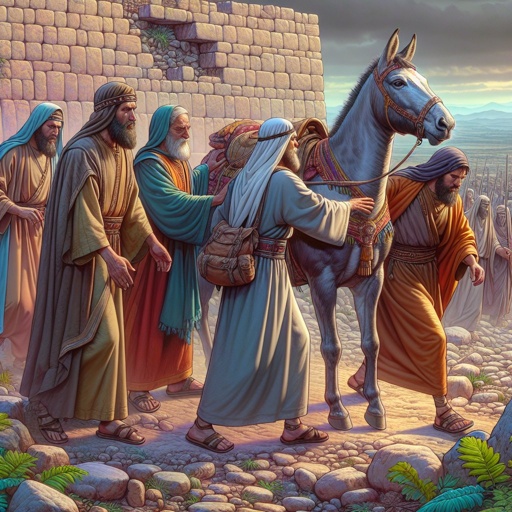
1 Kings 1:38 - "So Zadok the priest, and Nathan the prophet, and Benaiah the son of Jehoiada, and the Cherethites, and the Pelethites, went down, and caused Solomon to ride upon king David's mule, and brought him to Gihon."

1 Kings 4:18 - "Shimei the son of Elah, in Benjamin:"

1 Kings 9:18 - "And Baalath, and Tadmor in the wilderness, in the land,"

2 Kings 1:18 - "Now the rest of the acts of Ahaziah which he did, are they not written in the book of the chronicles of the kings of Israel?"

1 Kings 1:18 - "And now, behold, Adonijah reigneth; and now, my lord the king, thou knowest it not:"
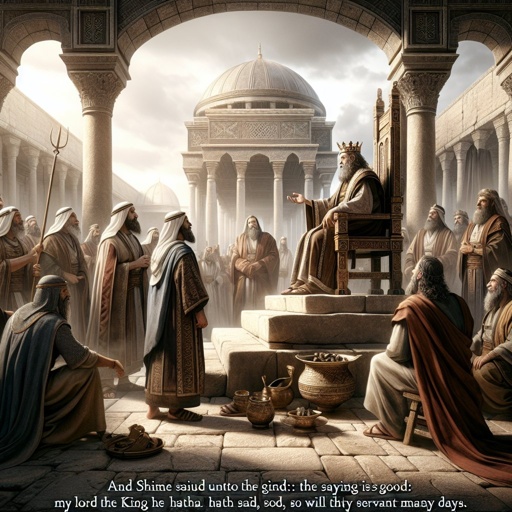
1 Kings 2:38 - "And Shimei said unto the king, The saying is good: as my lord the king hath said, so will thy servant do. And Shimei dwelt in Jerusalem many days."

1 Kings 22:38 - "And one washed the chariot in the pool of Samaria; and the dogs licked up his blood; and they washed his armour; according unto the word of the LORD which he spake."

1 Kings 10:18 - "¶ Moreover the king made a great throne of ivory, and overlaid it with the best gold."

1 Kings 7:38 - "¶ Then made he ten lavers of brass: one laver contained forty baths: and every laver was four cubits: and upon every one of the ten bases one laver."
1 Kings 6:38 - "And in the eleventh year, in the month Bul, which is the eighth month, was the house finished throughout all the parts thereof, and according to all the fashion of it. So was he seven years in building it."

1 Kings 2:18 - "And Bath-sheba said, Well; I will speak for thee unto the king."

1 Kings 18:2 - "And Elijah went to shew himself unto Ahab. And there was a sore famine in Samaria."

1 Kings 18:35 - "And the water ran round about the altar; and he filled the trench also with water."

1 Kings 18:11 - "And now thou sayest, Go, tell thy lord, Behold, Elijah is here."

Psalms 38:18 - "For I will declare mine iniquity; I will be sorry for my sin."

1 Kings 18:18 - "And he answered, I have not troubled Israel; but thou, and thy father's house, in that ye have forsaken the commandments of the LORD, and thou hast followed Baalim."

"Shimei the son of Elah, in Benjamin:" - 1 Kings 4:18

"And Baalath, and Tadmor in the wilderness, in the land," - 1 Kings 9:18

Job 38:18 - "Hast thou perceived the breadth of the earth? declare if thou knowest it all."

1 Kings 18:16 - "So Obadiah went to meet Ahab, and told him: and Ahab went to meet Elijah."

1 Kings 6:18 - "And the cedar of the house within was carved with knops and open flowers: all was cedar; there was no stone seen."