What does 1 Kings 18:34 mean?
"And he said, Do it the second time. And they did it the second time. And he said, Do it the third time. And they did it the third time." - 1 Kings 18:34
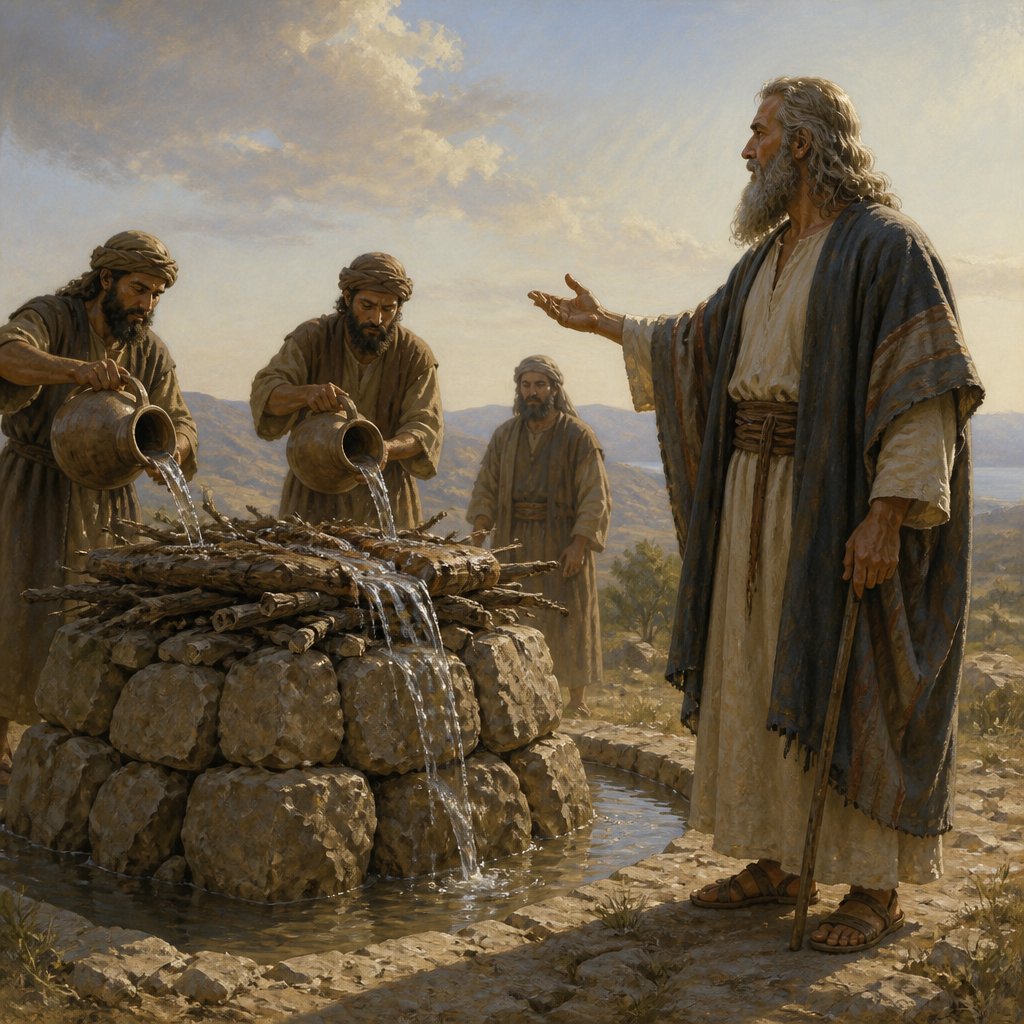
The Bible verse 1 Kings 18:34 from the King James Version (KJV) states, "And he said, Fill four barrels with water, and pour it on the burnt sacrifice, and on the wood. And he said, Do it the second time. And they did it the second time. And he said, Do it the third time. And they did it the third time."
This verse is part of the story of the prophet Elijah and his confrontation with the prophets of Baal on Mount Carmel. The context of this verse is essential to understand its deeper meaning and significance.
The story begins with the land of Israel experiencing a severe drought. King Ahab, who was influenced by his wife Jezebel to worship the pagan god Baal, was confronted by the prophet Elijah. Elijah challenged the prophets of Baal to a test to prove which god was the true God. Each group was to build an altar and offer a sacrifice, and the true God would answer with fire from heaven.
The prophets of Baal went first, and despite their fervent cries and attempts to call on Baal, nothing happened. Then it was Elijah's turn. He rebuilt the altar of the Lord, placed the sacrifice on it, and then ordered the people to pour water over the sacrifice and the wood. This act of pouring water on the sacrifice, not once, but three times, was significant because it made the sacrifice and the wood even more difficult to ignite.
The pouring of water on the sacrifice was contrary to logic and reason. By doing so, Elijah was demonstrating his faith in God's power to perform the miraculous. The number three is also significant in biblical numerology, representing completeness and wholeness. By repeating the act of pouring water three times, Elijah was emphasizing the thoroughness and completeness of his faith in God's ability to answer by fire.
The act of pouring water on the sacrifice can be seen as a symbol of surrender and submission. It was an act of humility, acknowledging the inadequacy of human efforts and relying solely on God's power and intervention. By pouring water on the altar, Elijah was relinquishing control and putting his trust in the Lord.
Furthermore, the pouring of water can also be seen as a symbol of purification and consecration. In the Old Testament, water was often used in rituals to symbolize cleansing and spiritual renewal. By pouring water on the sacrifice, Elijah was symbolically purifying it before presenting it to God.
The significance of this act is further emphasized by the fact that God answered Elijah's prayer with fire from heaven, consuming not only the sacrifice but also the water, the wood, and even the stones of the altar.
The themes of faith, obedience, and the power of God are prominent in this verse. Elijah's unwavering faith in God's ability to perform the miraculous, his obedience to God's instructions, and the undeniable power of God demonstrated through the consuming fire all point to the overarching theme of God's sovereignty and the importance of complete trust and reliance on Him.
In conclusion, 1 Kings 18:34 from the King James Version is a powerful and compelling account of Elijah's faith, obedience, and God's undeniable power. The act of pouring water on the sacrifice serves as a symbol of surrender, purification, and faith in the face of impossible odds. It reminds us of the importance of trusting in God's power and being obedient to His will, even when it seems illogical or impossible. This verse continues to be a source of inspiration and encouragement for believers, reminding them of the faithfulness and power of God.
Have questions about 1 Kings 18:34?
Dive deeper into this scripture with Bible Chat — an AI-powered tool for exploring God's Word through conversation. Ask questions, get context, and grow in your understanding of the Bible.
Get Our Apps


1 Kings 18:34 Artwork

1 Kings 18:34 - "And he said, Do it the second time. And they did it the second time. And he said, Do it the third time. And they did it the third time."
"And he said, Do it the second time. And they did it the second time. And he said, Do it the third time. And they did it the third time." - 1 Kings 18:34

Psalm 34:18

Psalms 34:18

2 Kings 18:34 - "Where are the gods of Hamath, and of Arpad? where are the gods of Sepharvaim, Hena, and Ivah? have they delivered Samaria out of mine hand?"

1 Kings 4:34 - "And there came of all people to hear the wisdom of Solomon, from all kings of the earth, which had heard of his wisdom."

1 Kings 19:1-18

1 Kings 7:34 - "And there were four undersetters to the four corners of one base: and the undersetters were of the very base itself."

1 Kings 1:34 - "And let Zadok the priest and Nathan the prophet anoint him there king over Israel: and blow ye with the trumpet, and say, God save king Solomon."

1 Kings 13:34 - "And this thing became sin unto the house of Jeroboam, even to cut it off, and to destroy it from off the face of the earth."
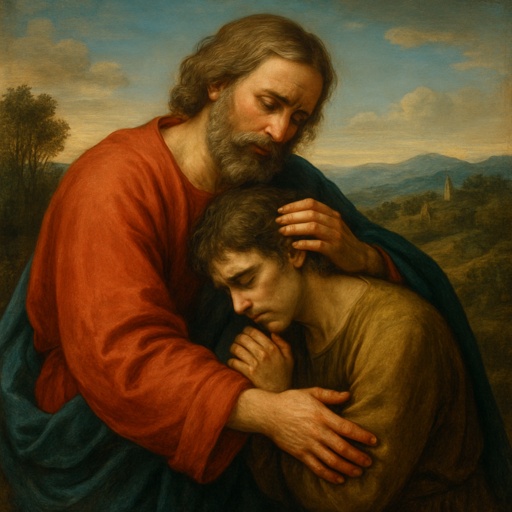
Psalm 34:18: "The Lord is near to the brokenhearted and saves those who are crushed in spirit".

1 Kings 4:18 - "Shimei the son of Elah, in Benjamin:"

1 Kings 9:18 - "And Baalath, and Tadmor in the wilderness, in the land,"

2 Kings 1:18 - "Now the rest of the acts of Ahaziah which he did, are they not written in the book of the chronicles of the kings of Israel?"

1 Kings 1:18 - "And now, behold, Adonijah reigneth; and now, my lord the king, thou knowest it not:"

1 Kings 15:34 - "And he did evil in the sight of the LORD, and walked in the way of Jeroboam, and in his sin wherewith he made Israel to sin."

1 Kings 6:34 - "And the two doors were of fir tree: the two leaves of the one door were folding, and the two leaves of the other door were folding."

Psalms 34:18

1 Kings 10:18 - "¶ Moreover the king made a great throne of ivory, and overlaid it with the best gold."

1 Kings 8:34 - "Then hear thou in heaven, and forgive the sin of thy people Israel, and bring them again unto the land which thou gavest unto their fathers."

1 Kings 2:34 - "So Benaiah the son of Jehoiada went up, and fell upon him, and slew him: and he was buried in his own house in the wilderness."

1 Kings 2:18 - "And Bath-sheba said, Well; I will speak for thee unto the king."

Matthew 18:23-34

Matthew 18:23-34

Matthew 18:23-34

Elijah in the scene 1 Kings 18:36–38

1 Kings 18:2 - "And Elijah went to shew himself unto Ahab. And there was a sore famine in Samaria."

Matthew 18:23-34

"Where are the gods of Hamath, and of Arpad? where are the gods of Sepharvaim, Hena, and Ivah? have they delivered Samaria out of mine hand?" - 2 Kings 18:34

1 Kings 18:35 - "And the water ran round about the altar; and he filled the trench also with water."