What does 1 Kings 16:33 mean?
"And Ahab made a grove; and Ahab did more to provoke the LORD God of Israel to anger than all the kings of Israel that were before him." - 1 Kings 16:33
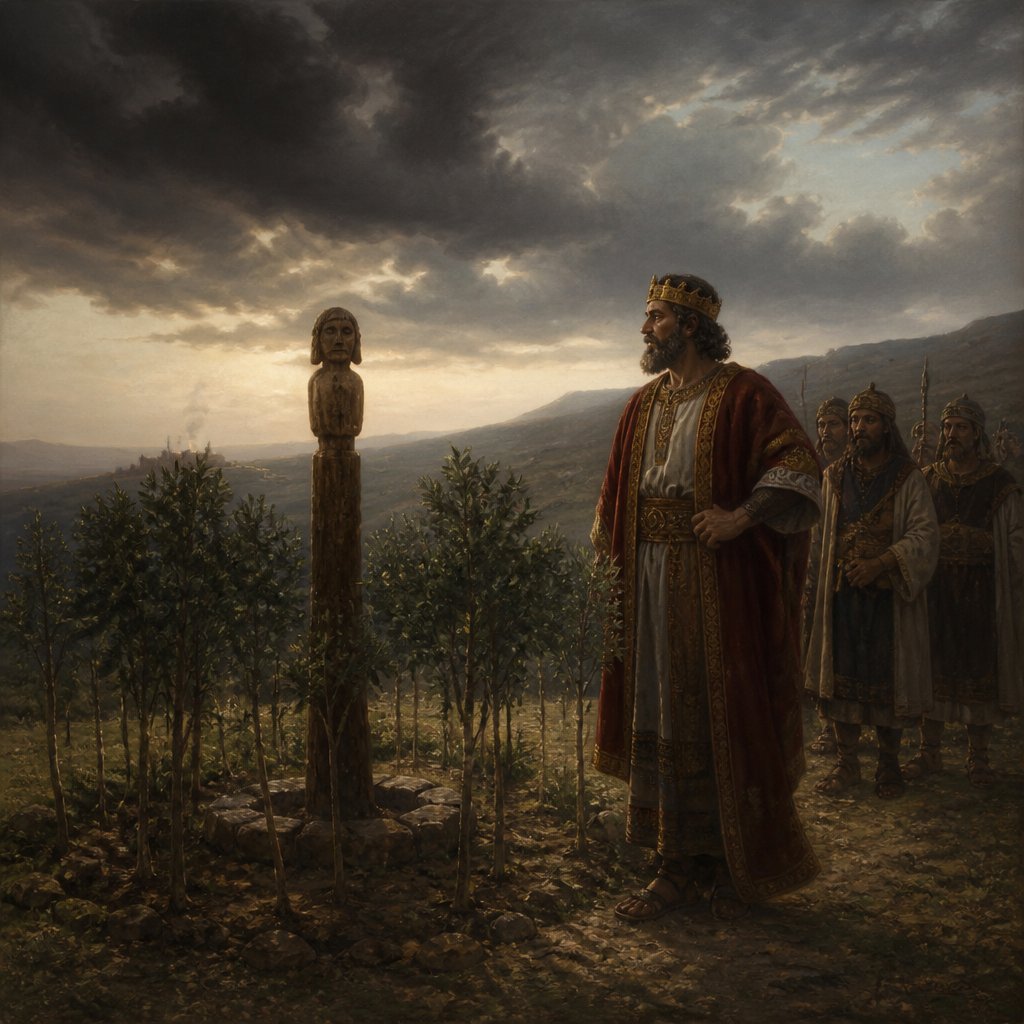
The verse 1 Kings 16:33 from the King James Version states, "And Ahab made a grove; and Ahab did more to provoke the LORD God of Israel to anger than all the kings of Israel that were before him." This verse comes from the Old Testament, specifically from the book of 1 Kings, which documents the history of the kings of Israel.
This verse is a part of the narrative that describes the reign of Ahab, who was the seventh king of Israel. Ahab is portrayed as a particularly wicked and unrighteous king, and this verse highlights the extent of his disobedience and provocation towards the Lord. Ahab's actions are seen as not only sinful but also as a deliberate attempt to anger God.
The act of Ahab making a grove is significant in understanding the context of this verse. In ancient Israel, a grove was typically associated with the worship of pagan deities, particularly Asherah, the Canaanite goddess of fertility. Ahab's construction of a grove symbolizes his promotion of idolatry and the abandonment of the true worship of Yahweh, the God of Israel.
The construction of the grove is seen as a direct violation of the commandments of God, particularly the first commandment which states, "Thou shalt have no other gods before me" (Exodus 20:3). Ahab's actions are not only seen as a personal disobedience but also as a national apostasy, leading the people of Israel away from the true faith and into the worship of false gods.
The verse also emphasizes the severity of Ahab's actions by comparing him to the previous kings of Israel. It suggests that Ahab's level of disobedience surpassed all those who came before him, indicating the depth of his sin and the seriousness of his provocation of the Lord.
The theme of disobedience and idolatry is central to this verse. It serves as a cautionary tale, warning against the dangers of forsaking the worship of the one true God and turning towards false idols. It also highlights the consequences of such actions, as the subsequent chapters in 1 Kings document the judgment and punishment that Ahab and his descendants faced due to their unfaithfulness.
The broader context of this verse within the book of 1 Kings also sheds light on the political and social climate of ancient Israel. Ahab's reign was characterized by political alliances, military conflicts, and the influence of foreign cultures and religions. His marriage to Jezebel, a Phoenician princess who promoted the worship of Baal, further exacerbated the idolatrous practices in Israel.
In conclusion, 1 Kings 16:33 from the King James Version offers a powerful commentary on the consequences of disobedience and idolatry. It serves as a moral lesson, reminding readers of the importance of remaining faithful to God and rejecting false idols. The verse also provides insight into the political and religious challenges faced by the ancient Israelites, as well as the moral and spiritual decay that resulted from the abandonment of the worship of Yahweh.
Have questions about 1 Kings 16:33?
Dive deeper into this scripture with Bible Chat — an AI-powered tool for exploring God's Word through conversation. Ask questions, get context, and grow in your understanding of the Bible.
Get Our Apps


1 Kings 16:33 Artwork

1 Kings 16:33 - "And Ahab made a grove; and Ahab did more to provoke the LORD God of Israel to anger than all the kings of Israel that were before him."
"And Ahab made a grove; and Ahab did more to provoke the LORD God of Israel to anger than all the kings of Israel that were before him." - 1 Kings 16:33

1 Chronicles 16:33 – "Then shall the trees of the forest sing for joy before the Lord, for he comes to judge the earth."

1 Kings 22:33 - "And it came to pass, when the captains of the chariots perceived that it was not the king of Israel, that they turned back from pursuing him."

1 Kings 6:33 - "So also made he for the door of the temple posts of olive tree, a fourth part of the wall."

1 Chronicles 16:33 - "Then shall the trees of the wood sing out at the presence of the LORD, because he cometh to judge the earth."

1 Kings 7:33 - "And the work of the wheels was like the work of a chariot wheel: their axletrees, and their naves, and their felloes, and their spokes, were all molten."

John 16:33

John 16:33

John 16:33

John 16:33

John 16:33

John 16:33

1 Kings 20:16 - "And they went out at noon. But Ben-hadad was drinking himself drunk in the pavilions, he and the kings, the thirty and two kings that helped him."

1 Kings 15:33 - "In the third year of Asa king of Judah began Baasha the son of Ahijah to reign over all Israel in Tirzah, twenty and four years."

1 Kings 16:14 - "Now the rest of the acts of Elah, and all that he did, are they not written in the book of the chronicles of the kings of Israel?"

1 Kings 1:16 - "And Bath-sheba bowed, and did obeisance unto the king. And the king said, What wouldest thou?"

1 Kings 1:33 - "The king also said unto them, Take with you the servants of your lord, and cause Solomon my son to ride upon mine own mule, and bring him down to Gihon:"

1 Kings 4:16 - "Baanah the son of Hushai was in Asher and in Aloth:"

1 Kings 16:1 - "Then the word of the LORD came to Jehu the son of Hanani against Baasha, saying,"

1 Kings 16:5 - "Now the rest of the acts of Baasha, and what he did, and his might, are they not written in the book of the chronicles of the kings of Israel?"

1 Kings 16:20 - "Now the rest of the acts of Zimri, and his treason that he wrought, are they not written in the book of the chronicles of the kings of Israel?"

1 Timothy 6:15-16 – "God, the blessed and only Ruler, the King of kings and Lord of lords."

1 Timothy 6:15-16 – "God, the blessed and only Ruler, the King of kings and Lord of lords."
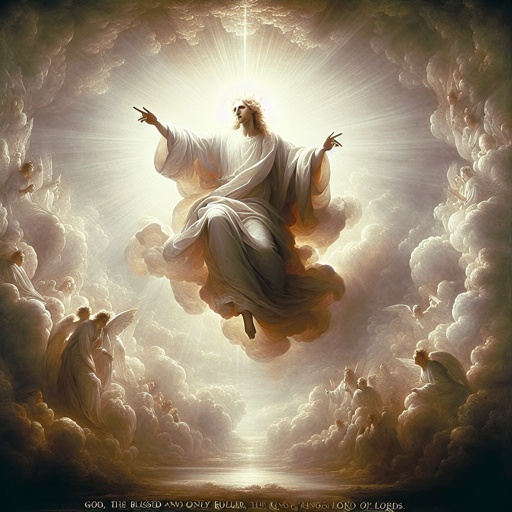
1 Timothy 6:15-16 – "God, the blessed and only Ruler, the King of kings and Lord of lords."

John 16 : 33

1 Timothy 6:15-16 – "God, the blessed and only Ruler, the King of kings and Lord of lords."

1 Kings 15:16 - "¶ And there was war between Asa and Baasha king of Israel all their days."

1 Timothy 6:15-16 – "God, the blessed and only Ruler, the King of kings and Lord of lords."

1 Kings 3:16 - "¶ Then came there two women, that were harlots, unto the king, and stood before him."