What does 1 Kings 16:24 mean?
"And he bought the hill Samaria of Shemer for two talents of silver, and built on the hill, and called the name of the city which he built, after the name of Shemer, owner of the hill, Samaria." - 1 Kings 16:24
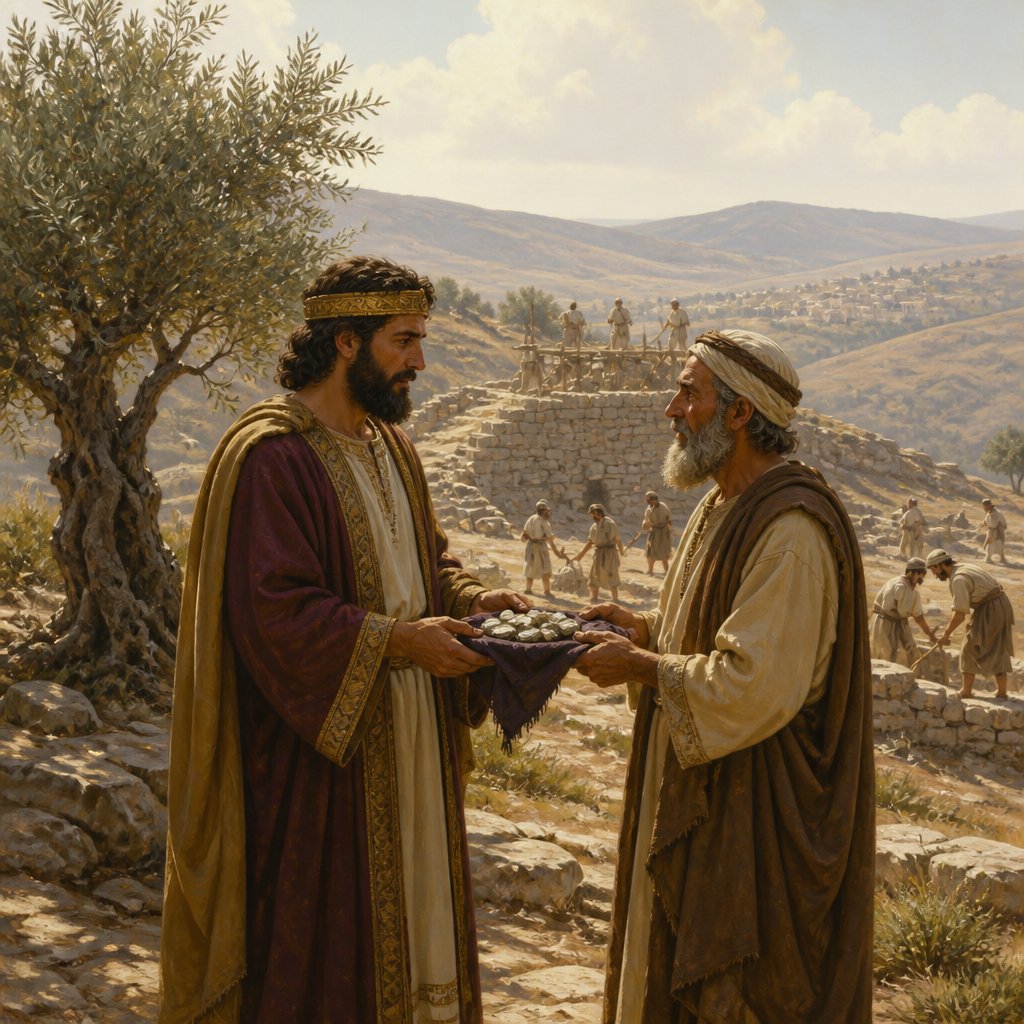
The Bible verse 1 Kings 16:24 from the King James Version reads, "And he bought the hill Samaria of Shemer for two talents of silver, and built on the hill, and called the name of the city which he built, after the name of Shemer, owner of the hill, Samaria."
This verse comes as a part of the narrative of the reign of King Omri, who ruled over Israel from 884 BC to 873 BC. During this period, Israel was divided into two separate kingdoms: the northern kingdom of Israel and the southern kingdom of Judah. King Omri, after a period of civil war, established a new capital city in Samaria and built a palace there. This verse describes the process by which King Omri acquired the hill of Samaria and built the city that would become the capital of the northern kingdom of Israel.
In the larger context of the book of 1 Kings, the verse takes place during a period of political instability and moral decline in Israel. The nation's leaders had turned away from God and pursued their own selfish desires, leading to a series of corrupt and idolatrous kings. King Omri himself is described as having done more evil than all the kings before him. This verse serves as a reflection of the materialism, ambition, and disregard for God's will that characterized the reign of King Omri, and the larger trend of moral decay within Israel.
The act of purchasing the hill of Samaria for two talents of silver and naming the city after the previous owner, Shemer, has several layers of symbolism and meaning within the broader historical and theological context of the Bible. Firstly, the purchase of the hill of Samaria with silver represents the acquisition of power and authority through material means rather than reliance on God's provision. This reflects a broader theme of materialism and greed that is condemned throughout the Bible, most notably in the teachings of Jesus in the New Testament.
Additionally, the naming of the city after the former owner, Shemer, suggests a form of vanity and self-glorification on the part of King Omri. It highlights the king's desire to establish his own legacy and perpetuate his name through the city he built. This focus on personal glory stands in stark contrast to the biblical emphasis on humility and the exaltation of God's name above all others.
The naming of the city as Samaria also has deeper historical and theological significance. Samaria would go on to become a key location in the biblical narrative, particularly in the ministries of the prophets Elijah and Elisha. The city would become a symbol of the spiritual and moral corruption that plagued the kingdom of Israel, and it would ultimately be conquered and destroyed by the Assyrians as a result of the nation's disobedience to God.
In conclusion, 1 Kings 16:24 serves as a poignant reflection of the spiritual and moral decline within Israel during the reign of King Omri. The verse portrays a stark contrast between the pursuit of earthly power and prestige and the biblical emphasis on humility, obedience to God, and reliance on His provision. As such, it serves as a sobering reminder of the consequences of turning away from God and pursuing worldly ambitions. Ultimately, it points to the larger biblical theme of the need for repentance, obedience, and a renewed commitment to serving God's will.
Have questions about 1 Kings 16:24?
Dive deeper into this scripture with Bible Chat — an AI-powered tool for exploring God's Word through conversation. Ask questions, get context, and grow in your understanding of the Bible.
Get Our Apps


1 Kings 16:24 Artwork

1 Kings 16:24 - "And he bought the hill Samaria of Shemer for two talents of silver, and built on the hill, and called the name of the city which he built, after the name of Shemer, owner of the hill, Samaria."
"And he bought the hill Samaria of Shemer for two talents of silver, and built on the hill, and called the name of the city which he built, after the name of Shemer, owner of the hill, Samaria." - 1 Kings 16:24

Exodus 24:16

1 Chronicles 24:16 - "The nineteenth to Pethahiah, the twentieth to Jehezekel,"

1 Kings 20:24 - "And do this thing, Take the kings away, every man out of his place, and put captains in their rooms:"

2 Chronicles 24:16 - "And they buried him in the city of David among the kings, because he had done good in Israel, both toward God, and toward his house."

1 Kings 3:24 - "And the king said, Bring me a sword. And they brought a sword before the king."

1 Corinthians 16:24 - "My love be with you all in Christ Jesus. Amen."

2 Kings 24:16 - "And all the men of might, even seven thousand, and craftsmen and smiths a thousand, all that were strong and apt for war, even them the king of Babylon brought captive to Babylon."

1 Kings 20:16 - "And they went out at noon. But Ben-hadad was drinking himself drunk in the pavilions, he and the kings, the thirty and two kings that helped him."

1 Kings 16:14 - "Now the rest of the acts of Elah, and all that he did, are they not written in the book of the chronicles of the kings of Israel?"

1 Kings 1:16 - "And Bath-sheba bowed, and did obeisance unto the king. And the king said, What wouldest thou?"

1 Kings 4:16 - "Baanah the son of Hushai was in Asher and in Aloth:"

1 Kings 16:1 - "Then the word of the LORD came to Jehu the son of Hanani against Baasha, saying,"

1 Kings 16:5 - "Now the rest of the acts of Baasha, and what he did, and his might, are they not written in the book of the chronicles of the kings of Israel?"

1 Kings 16:20 - "Now the rest of the acts of Zimri, and his treason that he wrought, are they not written in the book of the chronicles of the kings of Israel?"

1 Timothy 6:15-16 – "God, the blessed and only Ruler, the King of kings and Lord of lords."

1 Timothy 6:15-16 – "God, the blessed and only Ruler, the King of kings and Lord of lords."
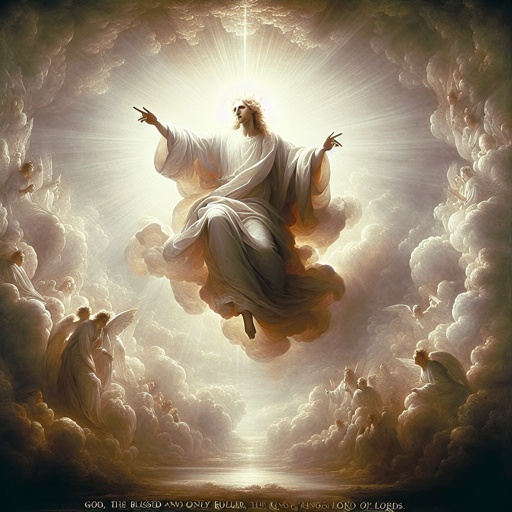
1 Timothy 6:15-16 – "God, the blessed and only Ruler, the King of kings and Lord of lords."

1 Timothy 6:15-16 – "God, the blessed and only Ruler, the King of kings and Lord of lords."

1 Kings 15:16 - "¶ And there was war between Asa and Baasha king of Israel all their days."

1 Timothy 6:15-16 – "God, the blessed and only Ruler, the King of kings and Lord of lords."

1 Kings 3:16 - "¶ Then came there two women, that were harlots, unto the king, and stood before him."

1 Chronicles 16:24 - "Declare his glory among the heathen; his marvellous works among all nations."

1 Kings 16:27 - "Now the rest of the acts of Omri which he did, and his might that he shewed, are they not written in the book of the chronicles of the kings of Israel?"
"The nineteenth to Pethahiah, the twentieth to Jehezekel," - 1 Chronicles 24:16

1 Kings 16:33 - "And Ahab made a grove; and Ahab did more to provoke the LORD God of Israel to anger than all the kings of Israel that were before him."

1 Kings 1:24 - "And Nathan said, My lord, O king, hast thou said, Adonijah shall reign after me, and he shall sit upon my throne?"

1 Kings 10:24 - "¶ And all the earth sought to Solomon, to hear his wisdom, which God had put in his heart."

2 Kings 16:1 - "In the seventeenth year of Pekah the son of Remaliah Ahaz the son of Jotham king of Judah began to reign."