What does 1 Kings 16:11 mean?
"¶ And it came to pass, when he began to reign, as soon as he sat on his throne, that he slew all the house of Baasha: he left him not one that pisseth against a wall, neither of his kinsfolks, nor of his friends." - 1 Kings 16:11
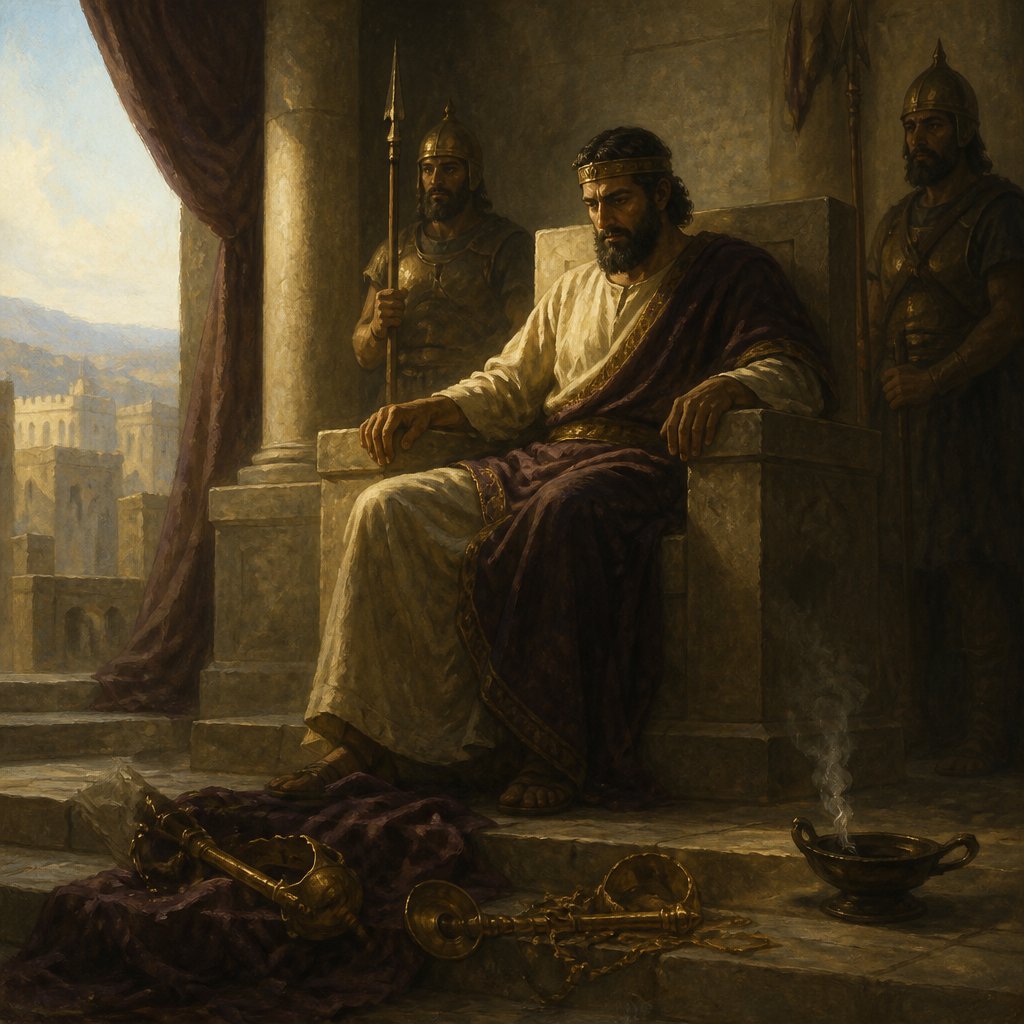
The verse 1 Kings 16:11 from the King James Version of the Bible reads, "And it came to pass, when he began to reign, as soon as he sat on his throne, that he slew all the house of Baasha: he left him not one that pisseth against a wall, neither of his kinsfolks, nor of his friends." This verse is part of the historical account of the reign of King Baasha of Israel and his eventual downfall.
To understand the meaning and significance of this verse, it's important to delve into the historical and cultural context of the time. During the period of the kings of Israel, a lineage of rulers fought for power and dominance. Baasha was one of the kings who rose to power through a coup, overthrowing the previous ruling dynasty. The verse depicts the violent nature of ancient power struggles, as the new king Baasha brutally wiped out all members of the former ruling house, including even the potential heirs and relatives who could challenge his reign.
The verse highlights the ruthless and brutal nature of political power struggles in ancient times. It reflects the prevailing belief that those who held the throne had to eliminate all potential threats to secure their position and protect their sovereignty. The act of killing all members of the previous ruling house was a common practice in the ancient Near East, and it served as a warning to potential rivals and as a means of consolidating power.
From a broader thematic perspective, this verse also serves as a cautionary tale about the corrupting influence of power. King Baasha's reign is marked by bloodshed and violence, and his ruthless actions only serve to perpetuate a cycle of power struggles and instability in the kingdom. The verse speaks to the destructive nature of unchecked ambition and the devastating consequences of pursuing power at any cost.
Furthermore, the verse also raises questions about the nature of justice and morality. The indiscriminate slaughter of an entire lineage, including innocent individuals who posed no threat, raises ethical and moral concerns. In the context of ancient Israelite society, where moral codes and laws were deeply ingrained, Baasha's actions would have been seen as a grave deviation from the principles of justice and righteousness.
Symbolically, the verse can be interpreted as a warning against the dangers of unchecked ambition, the corrupting influence of power, and the destructive consequences of violence and oppression. It serves as a reminder of the moral and ethical responsibilities that come with wielding authority and the importance of upholding justice and righteousness in leadership.
In conclusion, the verse 1 Kings 16:11 from the King James Version of the Bible offers a poignant commentary on the nature of power, morality, and justice. It provides a window into the brutal and ruthless world of ancient political struggles while also highlighting the moral and ethical implications of wielding authority. Ultimately, it serves as a cautionary tale and a timeless reminder of the consequences of unchecked ambition and the importance of upholding justice and righteousness in leadership.
Have questions about 1 Kings 16:11?
Dive deeper into this scripture with Bible Chat — an AI-powered tool for exploring God's Word through conversation. Ask questions, get context, and grow in your understanding of the Bible.
Get Our Apps


1 Kings 16:11 Artwork
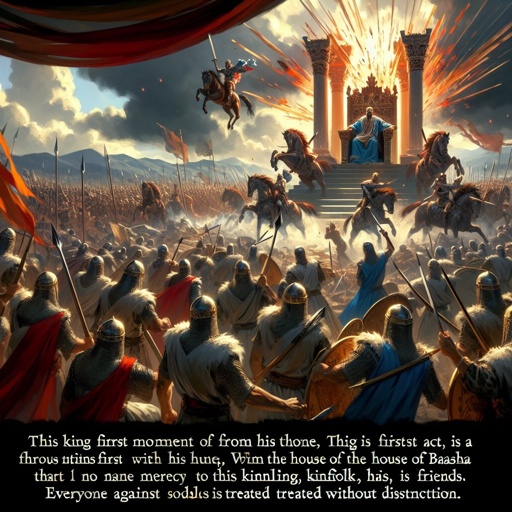
1 Kings 16:11 - "¶ And it came to pass, when he began to reign, as soon as he sat on his throne, that he slew all the house of Baasha: he left him not one that pisseth against a wall, neither of his kinsfolks, nor of his friends."
"¶ And it came to pass, when he began to reign, as soon as he sat on his throne, that he slew all the house of Baasha: he left him not one that pisseth against a wall, neither of his kinsfolks, nor of his friends." - 1 Kings 16:11

1 Kings 11:16 - "(For six months did Joab remain there with all Israel, until he had cut off every male in Edom:)"

1 Kings 11:11

1 Kings 11:11

1 Kings 11:11

1 Kings 11:11

1 Kings 11:11

1 kings 11:11-13

1 Kings 11:11-13

1 Kings 11:11-13

2 Chronicles 16:11 - "¶ And, behold, the acts of Asa, first and last, lo, they are written in the book of the kings of Judah and Israel."

2 Kings 11:16 - "And they laid hands on her; and she went by the way by the which the horses came into the king's house: and there was she slain."

1 Kings 11:1-5

1 Kings 12:11

1 Kings 11:13

1 Kings 12:11

1 Kings 11:5

1 Kings 11:13

1 Kings 12:11

1 Kings 12:11

1 Kings 12:11

1 Kings 20:16 - "And they went out at noon. But Ben-hadad was drinking himself drunk in the pavilions, he and the kings, the thirty and two kings that helped him."

1 Kings 16:14 - "Now the rest of the acts of Elah, and all that he did, are they not written in the book of the chronicles of the kings of Israel?"

1 Kings 1:16 - "And Bath-sheba bowed, and did obeisance unto the king. And the king said, What wouldest thou?"

1 Kings 4:16 - "Baanah the son of Hushai was in Asher and in Aloth:"

1 Kings 16:1 - "Then the word of the LORD came to Jehu the son of Hanani against Baasha, saying,"

2 Kings 16:11 - "And Urijah the priest built an altar according to all that king Ahaz had sent from Damascus: so Urijah the priest made it against king Ahaz came from Damascus."

1 Kings 16:5 - "Now the rest of the acts of Baasha, and what he did, and his might, are they not written in the book of the chronicles of the kings of Israel?"

1 Kings 16:20 - "Now the rest of the acts of Zimri, and his treason that he wrought, are they not written in the book of the chronicles of the kings of Israel?"