What does 1 Kings 15:33 mean?
"In the third year of Asa king of Judah began Baasha the son of Ahijah to reign over all Israel in Tirzah, twenty and four years." - 1 Kings 15:33
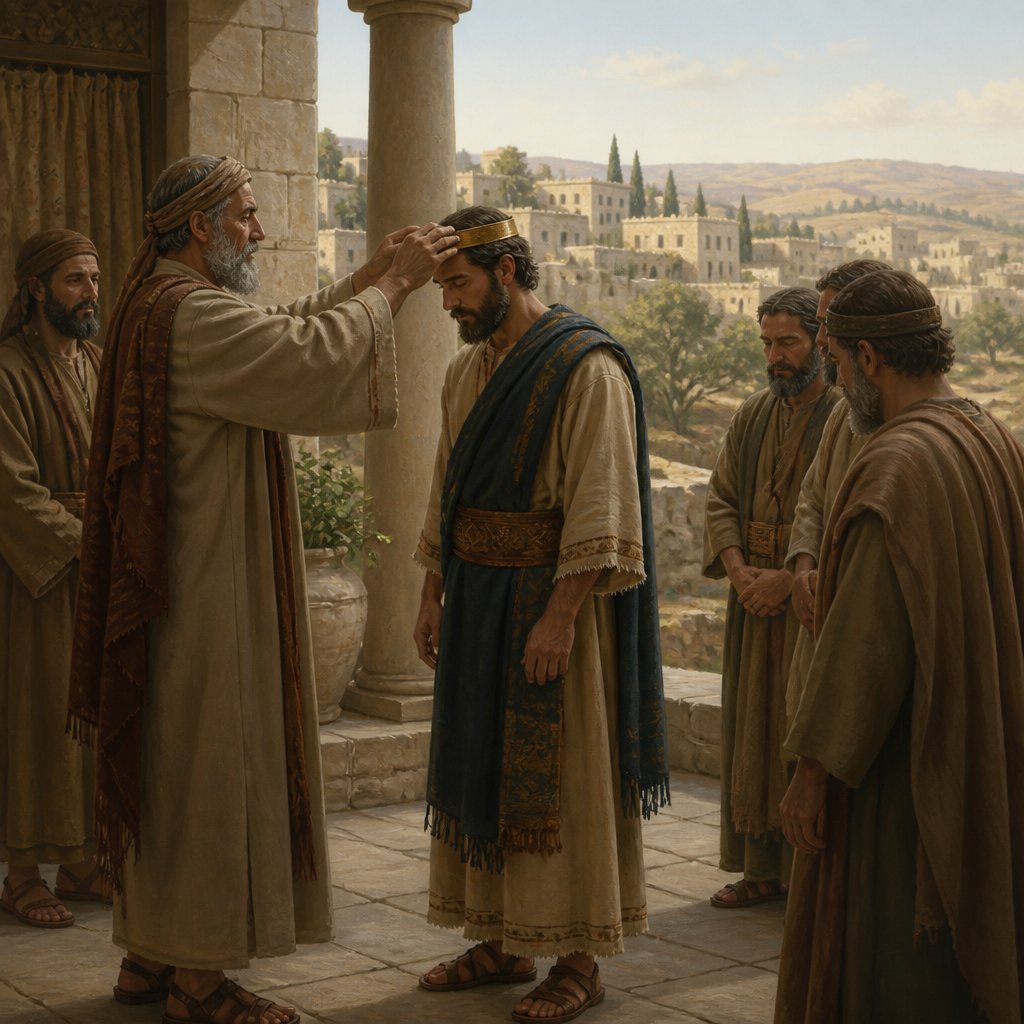
1 Kings 15:33 (KJV) states, "In the third year of Asa king of Judah began Baasha the son of Ahijah to reign over all Israel in Tirzah, twenty and four years."
This verse is a part of the historical books of the Old Testament, which chronicle the history of the Israelites and their monarchy. This particular verse describes the beginning of Baasha's reign over Israel, which happened in the third year of Asa’s reign in Judah.
To understand the full meaning and significance of this verse, it is important to put it into context within the broader narrative of the biblical passage. In the preceding verses, King Asa of Judah had been ruling for a few years when Baasha came to power in Israel. These historical accounts give readers an insight into the political dynamics and power struggles of the time.
One of the key themes in this verse is the recurring cycle of power struggles and leadership changes in the history of Israel. The political landscape in ancient Israel was marked by frequent changes in leadership, often accompanied by violence and conflict. The rise of Baasha represents yet another transition in authority, a pattern that is all too familiar in the history of the Israelite monarchy.
The mention of the city of Tirzah is also significant in this verse. Tirzah was a prominent city in ancient Israel and was known for its beauty and strategic location. By stating that Baasha began his reign in Tirzah, the verse provides geographical context and emphasizes the significance of this event in the history of Israel.
Symbolism in this verse is also present, as the number three often carries symbolic meaning in the Bible. In this case, the third year of Asa’s reign and the beginning of Baasha's reign could be interpreted as a significant turning point in the political and spiritual landscape of the region.
Moreover, the shift from the rule of Asa to the rule of Baasha also has symbolic implications. Asa is often portrayed as a king who sought to bring about religious reforms and maintain the worship of the one true God, while Baasha is depicted as a king who led Israel into idolatry and away from God. Therefore, this transition in leadership represents a shift in the spiritual direction of the nation, from one of adherence to Yahweh to one of idol worship.
This verse serves as a reminder of the consequences of leadership and the impact that it can have on a nation. It highlights the importance of righteous leadership and the role that kings and rulers play in shaping the spiritual and moral compass of a society. The reign of Baasha ultimately led to the decline of Israel and further division within the nation, underscoring the significance of leadership in the biblical narrative.
In conclusion, 1 Kings 15:33 is a verse that bears historical, symbolic, and moral significance in the biblical narrative. It provides insight into the political dynamics of ancient Israel, the symbolic significance of leadership transitions, and the broader themes of power and spiritual influence in the Old Testament. By examining the historical context and symbolic implications of this verse, readers can gain a deeper understanding of the biblical narrative and the enduring moral lessons it imparts.
Have questions about 1 Kings 15:33?
Dive deeper into this scripture with Bible Chat — an AI-powered tool for exploring God's Word through conversation. Ask questions, get context, and grow in your understanding of the Bible.
Get Our Apps


1 Kings 15:33 Artwork

1 Kings 15:33 - "In the third year of Asa king of Judah began Baasha the son of Ahijah to reign over all Israel in Tirzah, twenty and four years."
"In the third year of Asa king of Judah began Baasha the son of Ahijah to reign over all Israel in Tirzah, twenty and four years." - 1 Kings 15:33

1 Corinthians 15:33 - "Be not deceived: evil communications corrupt good manners."

2 Kings 15:33 - "Five and twenty years old was he when he began to reign, and he reigned sixteen years in Jerusalem. And his mother's name was Jerusha, the daughter of Zadok."

1 Kings 16:33 - "And Ahab made a grove; and Ahab did more to provoke the LORD God of Israel to anger than all the kings of Israel that were before him."

1 Kings 22:33 - "And it came to pass, when the captains of the chariots perceived that it was not the king of Israel, that they turned back from pursuing him."

1 Kings 6:33 - "So also made he for the door of the temple posts of olive tree, a fourth part of the wall."

1 kings 3:15

1 kings 3:15

1 Kings 7:33 - "And the work of the wheels was like the work of a chariot wheel: their axletrees, and their naves, and their felloes, and their spokes, were all molten."

1 Kings 15:31 - "¶ Now the rest of the acts of Nadab, and all that he did, are they not written in the book of the chronicles of the kings of Israel?"

1 Kings 10:15 - "Beside that he had of the merchantmen, and of the traffick of the spice merchants, and of all the kings of Arabia, and of the governors of the country."

"Be not deceived: evil communications corrupt good manners." - 1 Corinthians 15:33

1 Kings 15:1 - "Now in the eighteenth year of king Jeroboam the son of Nebat reigned Abijam over Judah."

1 Kings 1:33 - "The king also said unto them, Take with you the servants of your lord, and cause Solomon my son to ride upon mine own mule, and bring him down to Gihon:"

1 Timothy 6:15-16 – "God, the blessed and only Ruler, the King of kings and Lord of lords."

1 Kings 15:32 - "And there was war between Asa and Baasha king of Israel all their days."

1 Kings 15:16 - "¶ And there was war between Asa and Baasha king of Israel all their days."

1 Kings 11:1-5

1 Timothy 6:15-16 – "God, the blessed and only Ruler, the King of kings and Lord of lords."

1 Timothy 6:15-16 – "God, the blessed and only Ruler, the King of kings and Lord of lords."

1 Timothy 6:15-16 – "God, the blessed and only Ruler, the King of kings and Lord of lords."

1 Kings 1:15 - "¶ And Bath-sheba went in unto the king into the chamber: and the king was very old; and Abishag the Shunammite ministered unto the king."

1 Kings 15:9 - "¶ And in the twentieth year of Jeroboam king of Israel reigned Asa over Judah."

1 Timothy 6:15-16 – "God, the blessed and only Ruler, the King of kings and Lord of lords."

1 Kings 15:7 - "Now the rest of the acts of Abijam, and all that he did, are they not written in the book of the chronicles of the kings of Judah? And there was war between Abijam and Jeroboam."

1 Kings 18:33 - "And he put the wood in order, and cut the bullock in pieces, and laid him on the wood, and said, Fill four barrels with water, and pour it on the burnt sacrifice, and on the wood."

1 Kings 15:6 - "And there was war between Rehoboam and Jeroboam all the days of his life."

1 Kings 13:15 - "Then he said unto him, Come home with me, and eat bread."

1 Kings 4:15 - "Ahimaaz was in Naphtali; he also took Basmath the daughter of Solomon to wife:"